A Comparison of SBB Ball Valves and DBB Ball Valves
In industrial pipeline systems and instrumentation equipment, the safety isolation function of valves serves as the primary line of defense for production safety and personnel protection. Among these, Single Block and Bleed (SBB) ball valves and Double Block and Bleed (DBB) ball valves are two of the most common isolation devices with distinctly different functional orientations. Understanding their core differences is of great practical significance for engineers in equipment selection, system design, and safety management.
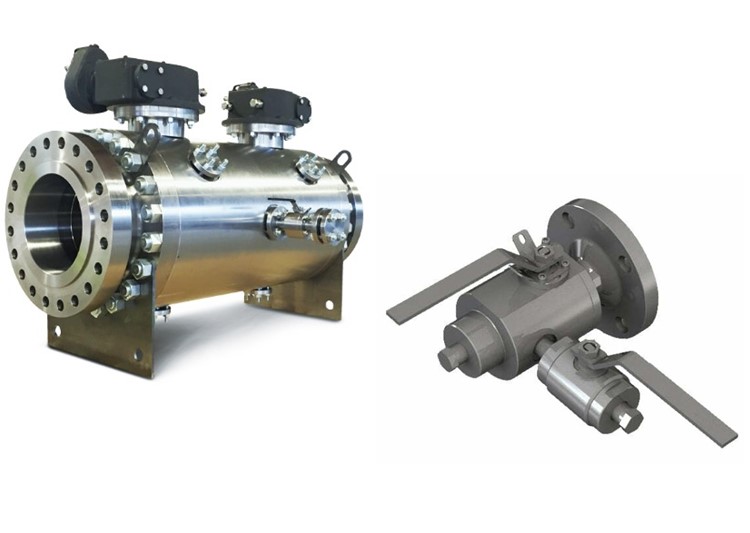
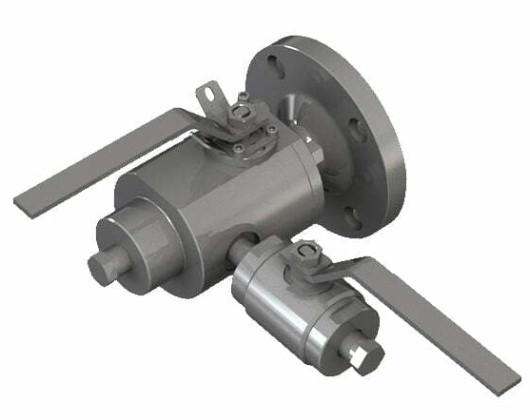
Structure and Function of SBB Ball Valves: The SBB ball valve is a relatively simple isolation device whose core components include one blocking valve and one bleed port. The blocking valve typically adopts a ball valve structure, controlling fluid on-off regulation through the rotation of the ball. The bleed port is used to release residual pressure and trapped media downstream of the blocking valve or within sealing cavities. In terms of working principle, when the SBB ball valve is in the closed position, the blocking valve cuts off the main flow channel of the medium. However, residual pressure may still remain downstream of the valve or inside specific sealing chambers. By opening the bleed port, this pressure can be safely discharged into the atmosphere or a recovery system, thereby preventing accidental leakage or equipment damage caused by pressure accumulation. This “single-point isolation plus pressure release” configuration makes SBB ball valves suitable for unidirectional flow systems or applications where isolation is required only on one side of the system. For example, during instrumentation maintenance, SBB ball valves can isolate process media and release pressure on the instrument side, providing a relatively safe working environment for maintenance personnel.
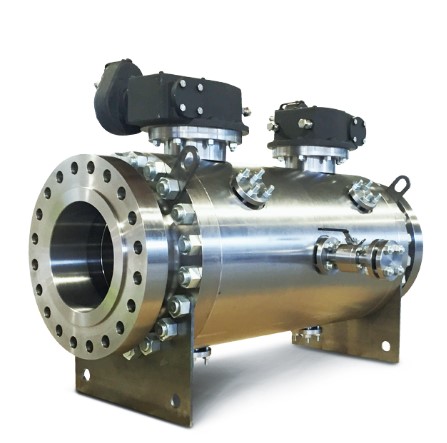
Structure and Function of DBB Ball Valves: DBB ball valves adopt a more complex “double safety protection” design. Their core structure consists of two blocking valves and one bleed valve located in the middle. The two blocking valves are installed in series to form a dual isolation barrier, while the middle bleed valve is used to release pressure and medium trapped between the two blocking valves. The working mechanism of DBB ball valves reflects the safety philosophy of “positive isolation.” The upstream blocking valve prevents medium from entering the pipeline system, while the downstream blocking valve provides additional sealing protection. The middle bleed valve ensures that the cavity between the two valves remains depressurized. This design means that even if one blocking valve fails in sealing performance, the other valve can still independently prevent medium flow, while the bleed valve can promptly release any penetrating pressure. This “double isolation plus intermediate pressure relief” configuration provides redundant protection for high-risk media handling and is a standard configuration in critical industries such as oil and gas and chemical processing.
After understanding the fundamental structural differences between SBB and DBB ball valves, it is necessary to further analyze how these differences translate into actual performance characteristics. The variation in structural design directly determines significant disparities in key performance indicators such as isolation capability, safety level, and maintenance requirements, which form the core basis for engineering selection.
The number of isolation points is the most intuitive distinction between SBB and DBB valves. SBB provides only single-point isolation, and its sealing reliability depends on the performance of a single valve. DBB provides dual-point isolation with double sealing protection. From a statistical perspective, the probability of simultaneous failure of two independent sealing points is much lower than that of a single-point failure, which forms the mathematical foundation for the higher safety level of DBB valves.
In terms of sealing performance, SBB valves generally provide medium-level sealing performance, meeting the requirements of general industrial applications. DBB valves offer high-level sealing protection. Their double sealing structure can effectively cope with harsh working conditions such as high pressure, high temperature, and corrosive media.
The safety protection capability of SBB ball valves is considered basic-level protection and is suitable for systems with relatively low risk and low media hazard. For example, SBB valves can provide sufficient safety protection in water treatment systems, low-pressure air pipelines, or general process instrumentation isolation.
DBB ball valves represent an enhanced safety standard and are specifically designed for critical applications where leakage is strictly prohibited. When handling flammable, explosive, toxic, or high-value media, the dual isolation mechanism of DBB valves can reduce leakage risk to a minimum. Industry statistics show that in upstream oil and gas operations, DBB valves account for more than 80% of applications, demonstrating their irreplaceable role in high-risk environments.
SBB ball valves feature a simple structure and intuitive operation. Generally, a single action is sufficient to complete both isolation and bleeding functions. Maintenance requirements are relatively low, mainly focusing on wear of the sealing surface of the blocking valve and ensuring the bleed port remains unobstructed.
Although DBB ball valves are also designed for convenient operation (usually in an integrated operating structure), their maintenance complexity increases due to more components. It is necessary to periodically check the sealing condition of both blocking valves, ensure that the intermediate bleed passage is not blocked, and verify the integrity of the dual isolation system. In addition, DBB valves require higher installation precision to ensure proper alignment of the isolation units and maintain optimal sealing performance.
SBB and DBB ball valves are not simply a matter of superiority or inferiority but represent specialized solutions for different risk levels and operating conditions. The theoretical performance differences must ultimately be validated in specific industrial scenarios.
Due to their compact structure and lower cost, SBB ball valves are widely used in the following scenarios:
- Conventional process pipelines: In low-risk fluid transmission systems, SBB valves can meet basic isolation requirements. Examples include cooling water systems and general raw material transport pipelines.
- Unidirectional flow systems: When the medium flows in only one direction and reverse pressure is not a concern, the unidirectional isolation capability of SBB valves is sufficient.
- Instrumentation isolation: During the installation and maintenance of pressure gauges, flow meters, and transmitters, SBB ball valves provide an economical and practical solution. They can isolate instruments without interrupting main pipeline operation while allowing pressure release for calibration or replacement.
- Low-pressure and non-hazardous media systems: For compressed air, nitrogen, or relatively low-hazard media such as water or steam, SBB valves provide adequate safety protection.
DBB ball valves play a core role in the following high-risk and high-demand industrial sectors:
- Oil and gas industry: This is the most important application field for DBB ball valves. In offshore drilling platforms, onshore oil and gas fields, refineries, and natural gas processing plants, DBB valves are used for wellhead units, gathering pipelines, processing equipment, and tank isolation. Due to the flammable and explosive nature of hydrocarbon media, any leakage may cause fire, explosion, or environmental pollution, making double isolation a mandatory safety requirement.
- Chemical processing plants: In reactors, separation towers, and storage tanks, DBB ball valves are used to isolate toxic, corrosive, or high-value chemicals. For example, in the chlor-alkali industry, DBB valves are used to isolate liquid chlorine systems, while in ammonia synthesis plants, they are used to isolate high-pressure synthesis gas.
- Power industry: In thermal power plants and nuclear facilities, DBB ball valves are applied in steam systems, cooling water systems, and fuel supply systems. Particularly in high-temperature and high-pressure steam pipelines, DBB valves can effectively prevent steam leakage, protect personnel safety, and reduce energy loss.
- Pipeline transportation systems: In long-distance oil and gas pipelines and urban gas networks, DBB ball valves are used for line block valves, station equipment, and pigging launcher-receiver systems. Their dual isolation function provides safety assurance for pipeline maintenance, emergency repair, and pigging operations.
- Pharmaceutical and food industries: In production processes with extremely high hygiene and purity requirements, DBB ball valves help prevent cross-contamination and ensure product quality. Although the media in these industries may not be highly hazardous, product purity requirements make reliable isolation equally important.
After understanding the performance differences and application scenarios of SBB and DBB ball valves, enterprises must ultimately balance investment cost and safety benefits. This section provides a practical selection methodology from both economic and decision-making perspectives.
From a procurement cost perspective, SBB ball valves have a significant price advantage. Due to their simpler structure, fewer components, and relatively lower machining precision requirements, their market price is typically 30%–60% of DBB valves of the same specification. For budget-limited or large-scale applications, the economic advantage of SBB valves is an important consideration.
The initial investment of DBB valves is higher, mainly due to their complex structural design, higher machining precision requirements, more components, and stricter quality inspection standards. However, when evaluating total cost of ownership, the safety benefits and potential risk avoidance provided by DBB valves must be considered. In the petrochemical industry, a single severe leakage accident may cause losses reaching millions or even hundreds of millions of dollars, including production shutdown losses, environmental remediation costs, fines, and reputation damage. In comparison, the additional investment in DBB valves is relatively insignificant.
SBB ball valves are compact in structure, occupying less space and having lighter weight, making them suitable for space-constrained environments such as offshore platforms, ships, and mobile equipment.
DBB ball valves, because they contain two isolation units, are usually longer and heavier than SBB valves of the same specification. In space-limited layouts, sufficient installation space must be reserved. However, modern DBB valve designs are moving toward integrated and compact configurations, and many products optimize flow channel design and structural layout to effectively control overall dimensions.
In practical engineering selection, the following decision logic is recommended:
Priority selection of DBB ball valves when:
- The medium has flammable, explosive, toxic, or corrosive characteristics
- The system operates under high pressure, extreme temperature, or significant process fluctuations
- Leakage consequences are severe, including casualties, major environmental pollution, or substantial economic losses
- Regulatory or industry standards mandate double isolation
- The system requires frequent maintenance or inspection where isolation reliability is critical
SBB ball valves may be selected when:
- The medium is of low hazard, such as water, air, or nitrogen
- System pressure is low and operating conditions are stable
- Leakage consequences are controllable and do not cause serious safety or environmental impact
- Budget constraints are strict and risks are manageable
- Installation space is extremely limited and cannot accommodate DBB valves
SBB and DBB ball valves represent two fundamentally different design philosophies in industrial isolation technology: simplified design versus redundancy design. SBB emphasizes economic practicality and is suitable for risk-controlled conventional applications, while DBB is known for its superior safety and reliability, making it an essential choice for high-risk environments.
The essential difference between the two lies in the number of isolation points and the resulting safety level. SBB provides single-point isolation to meet basic safety requirements, whereas DBB achieves positive isolation and redundant protection through dual isolation design. During selection, factors such as medium characteristics, operating conditions, safety requirements, regulatory standards, and cost budget must be comprehensively evaluated to make technically reliable and economically reasonable decisions.
For engineering personnel, a deep understanding of the technical differences between SBB and DBB valves and mastery of their selection principles and application guidelines are fundamental skills for ensuring safe, reliable, and economical operation of industrial systems. Only by using the right valve at the right time and in the right place can the industrial safety objective of safety first, prevention-oriented truly be achieved.