Through Conduit Knife Gate Valve
The through conduit knife gate valve features a gate that remains in constant contact with the seat for a tight seal. It operates with a circular port that aligns and disengages during opening and closing, preventing medium from remaining in the valve cavity. This compact, lightweight valve offers manual or pneumatic control and ensures bi-directional sealing with a dual-seat design and flow holes in the gate, preventing crystallization and accumulation of the medium.
Through Conduit Knife Gate Valve Product List
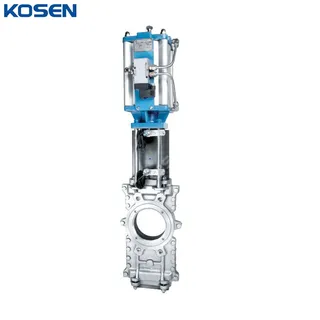
Pneumatic Actuated Knife Gate Valve, A351 CF8M, DN150, PN10
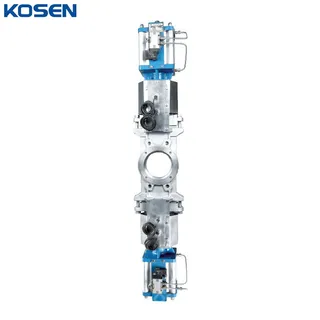
Pneumatic Actuated Knife Gate Valves, A351 CF8M, DN50, PN10
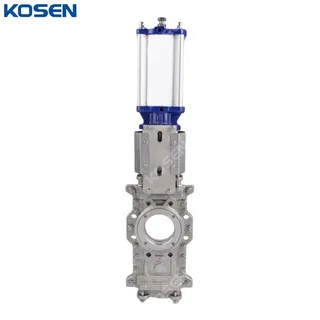
Pneumatic Knife Gate Valve, ASTM A351 CF8, DN100, PN10, 4 IN
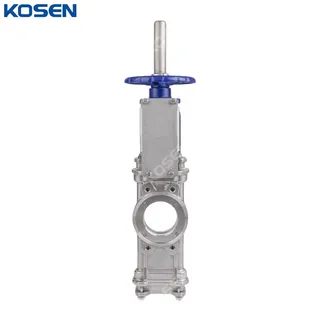
PTFE Seated Knife Gate Valve, A351 CF8M, DN50, PN10, 2 Inch
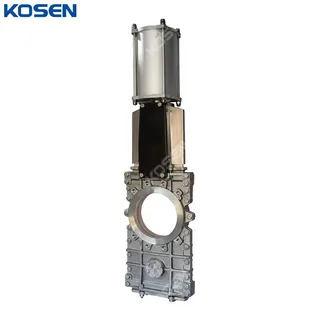
O-Port Knife Gate Valve, A351 CF8, 12 IN, CL150, Pneumatic

Wafer Knife Gate Valve, A351 CF8, 14 Inch, CL150, Bevel Gear
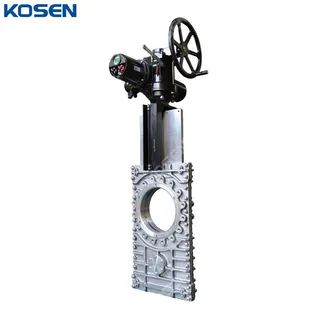
Electric Actuated Knife Gate Valve, A351 CF8, 16 IN, CL150
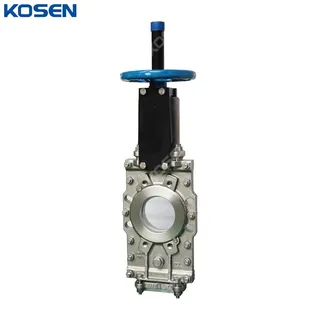
Through Conduit Knife Gate Valve, ASTM A351 CF8, DN100, PN10
The fundamental principle of a through-conduit knife gate valve is simple and intuitive. Its core component is the gate plate, which features a circular bore precisely aligned with the valve's flow passage.
- When the valve is open: The gate plate moves vertically (or in some designs, rotates) so that its bore aligns with the internal passage of the valve body. In this position, the flow path is fully open, allowing the medium to pass through smoothly with minimal obstruction, similar to an open channel.
- When the valve is closed: The gate plate shifts so that its bore is no longer aligned with the valve body passage, completely blocking the flow channel and stopping fluid movement, similar to a closed barrier.
This simple on-off mechanism eliminates unnecessary complexity. With fewer moving parts, the design offers easy operation, reduced maintenance requirements, and fast switching performance. These advantages make it particularly suitable for industrial applications requiring rapid isolation or flow control.
One of the key reasons through-conduit knife gate valves are widely recognized is their advanced sealing system. Effective sealing ensures reliable operation under demanding conditions while extending service life and reducing maintenance costs.
The valve is equipped with a floating seat structure that maintains continuous contact between the gate plate and the seat during closure, ensuring a tight, leak-proof seal even in high-pressure or slurry service conditions.
A major advantage of this design is its self-compensating capability. As wear, deformation, or minor gaps develop over time due to continuous operation, the floating seat automatically adjusts to maintain sealing integrity, thereby improving durability and reducing the need for frequent maintenance.
Through-conduit knife gate valves can be equipped with either metallic or soft sealing systems, depending on application requirements:
- Metallic Seal: Suitable for severe service conditions such as high pressure, high temperature, and corrosive media. Metallic seals provide excellent resistance to thermal stress, corrosion, and mechanical wear.
- Soft Seal: Used in applications requiring extremely tight shut-off under moderate operating conditions. Soft sealing materials offer high elasticity and superior surface conformity, ensuring excellent sealing performance.
This dual sealing capability allows the valve to be widely applied across industries such as chemical processing, mining, pulp and paper, and wastewater treatment.
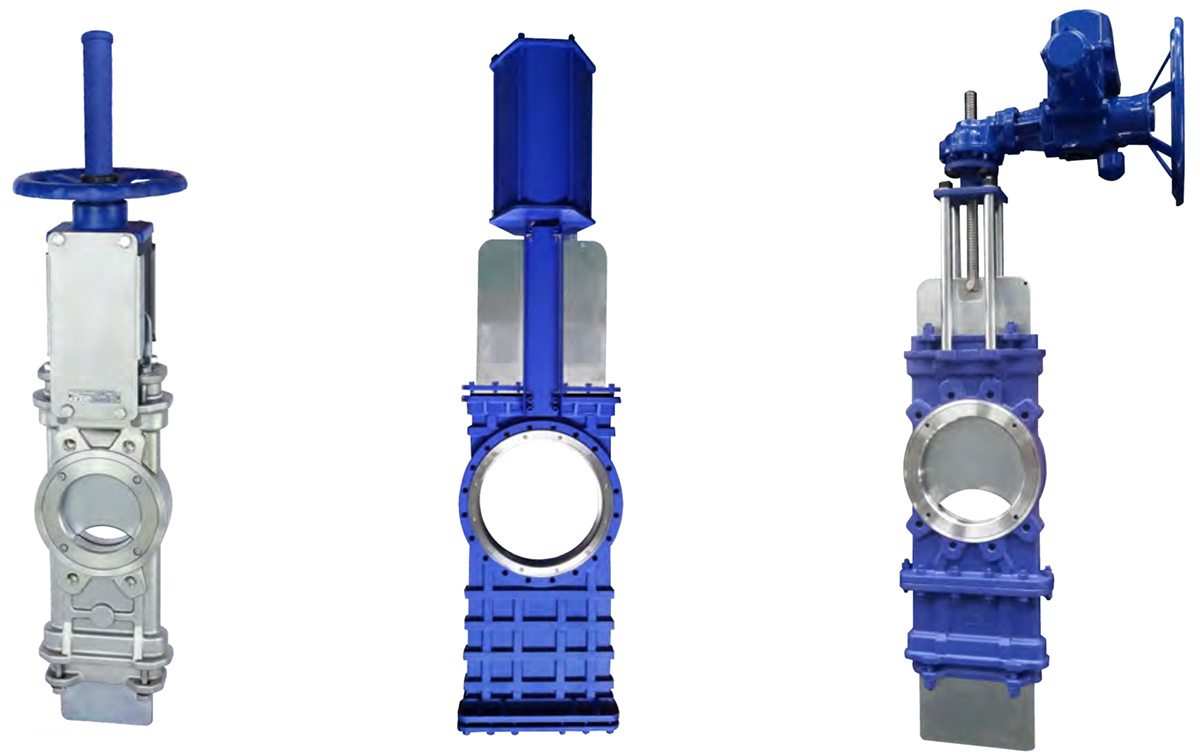
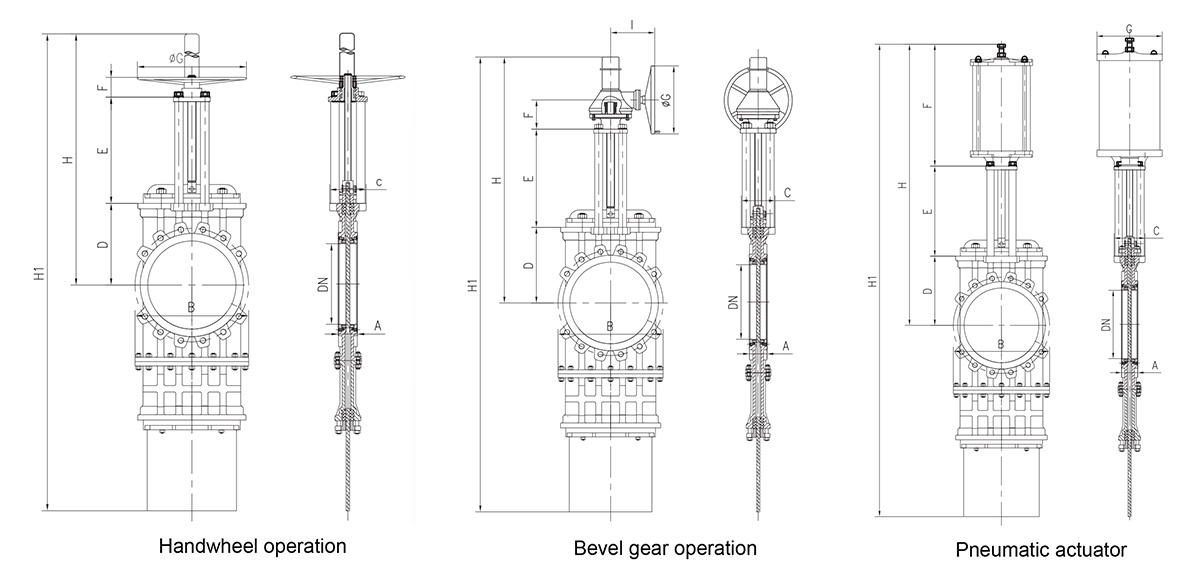
Different Operation Available: