Media Hub

Read the latest news on industrial valves and valve technologies. Here, you'll find updates on new products, helpful maintenance tips, and the latest trends in the industry. Whether you're interested in learning about new valve features, ways to keep your equipment running smoothly, or what's coming next in valve technology, we've got you covered with all the essential information.

1-12 of 199 results
What You Need to Know About Hastelloy Valves

What You Need to Know About Hastelloy Valves

Industry News
Apr 20, 2026
0
Hastelloy valves are high-performance industrial valves made from nickel-based alloys designed for extreme corrosive and high-temperature environments. With excellent resistance to acids, alkalis, and aggressive chemical media, they ensure reliable flow control across chemical, petrochemical, oil and gas, marine, and pharmaceutical industries. Available in multiple types such as ball, gate, globe, plug, and check valves, they combine durability, long service life, and safety compliance. Despite higher cost and weight, their superior corrosion resistance and low maintenance requirements make them a dependable solution for demanding industrial applications where conventional materials fail.
Guide to Manifold Valves: Design, Operation & Applications

Guide to Manifold Valves: Design, Operation & Applications

Industry News
Apr 17, 2026
3
Manifold valves are compact, integrated devices designed to simplify fluid control systems by combining multiple valve functions  into a single unit. Widely used in instrumentation and process industries, they are essential for connecting pressure gauges, transmitters, and differential pressure sensors while ensuring safe operation and reliable isolation from process media. This article explores the fundamental concepts, main types (2-valve, 3-valve, and 5-valve manifolds), structural features, material selection, and key industrial applications. It also highlights their advantages, including reduced leakage risk, simplified maintenance, space efficiency, and improved system reliability, making manifold valves a critical component in modern industrial fluid control systems.
An Complete Guide to Monoflange Valve

An Complete Guide to Monoflange Valve

Industry News
Apr 16, 2026
3
A monoflange valve is a compact and integrated instrumentation valve solution designed to replace traditional multi-valve assemblies in industrial systems. By combining isolation and venting functions within a single flanged body, it significantly reduces space requirements, weight, and potential leakage points while improving safety and installation efficiency. Available in configurations such as single block, block and bleed, and double block and bleed (DBB), it is widely used in demanding applications across oil and gas, chemical, petrochemical, power generation, and refining industries. With excellent sealing performance, strong resistance to harsh conditions, and faster response due to reduced process distance, the monoflange valve offers a reliable and cost-effective solution for modern process control and pressure measurement systems.
L-Type vs. T-Type 3-Way Ball Valves: How to Choose

L-Type vs. T-Type 3-Way Ball Valves: How to Choose

Industry News
Apr 15, 2026
4
This article provides a comprehensive overview of 3-way ball valves, focusing on the differences between L-port and T-port designs in terms of structure, working principles, and functional characteristics. It explains how each type controls fluid flow, highlights their respective advantages and limitations, and outlines typical application scenarios such as switching, mixing, and distribution. The guide also covers actuation options, including manual, electric, and pneumatic types, and presents key selection criteria such as functional requirements, material compatibility, and operating conditions. Additionally, it addresses common selection mistakes and offers practical recommendations for installation and maintenance, helping ensure reliable and efficient operation in industrial pipeline systems.
Top Entry Ball Valve vs. Side Entry Ball Valve

Top Entry Ball Valve vs. Side Entry Ball Valve

Industry News
Apr 14, 2026
3
Top entry ball valves feature a removable top bonnet, allowing technicians to access internal components without removing the valve from the pipeline. Widely used in industrial facilities, they are ideal for applications requiring frequent maintenance or handling corrosive media, including textile, food processing, detergent, chemical, rubber, pulp and paper, and water treatment industries. Their design ensures reliable operation, ease of service, and suitability for demanding process conditions.
Inverted Bucket vs. Float Steam Traps: What's the Difference

Inverted Bucket vs. Float Steam Traps: What's the Difference

Industry News
Apr 13, 2026
2
This article provides a detailed comparison of float and inverted bucket steam traps, exploring their working principles, key features, industry applications, and selection criteria. Float traps offer continuous drainage, simple construction, and are ideal for low-pressure, stable-load systems, while inverted bucket traps provide mechanical durability, water hammer resistance, and suit high-pressure or high-flow conditions. Understanding their differences helps optimize steam system efficiency, energy use, and equipment lifespan.
Guide to Choosing Inconel Valves: Why and How

Guide to Choosing Inconel Valves: Why and How

Industry News
Apr 11, 2026
2
This article provides a comprehensive overview of Inconel valves, highlighting their exceptional corrosion resistance, high-temperature stability, and reliable mechanical strength. It explains what Inconel alloys are, including common grades such as Inconel 600, 625, and 718, and how these materials perform in extreme industrial environments. The guide explores key application areas such as petrochemical processing, power generation, marine engineering, and aerospace, where durability and safety are critical. It also discusses important limitations, including high cost, manufacturing complexity, and limited availability. Finally, the article offers practical guidance on valve selection, covering operating conditions, valve types, material choices, and industry standards, helping users make informed decisions for demanding applications.
What Is a High-Performance Butterfly Valve

What Is a High-Performance Butterfly Valve

Industry News
Apr 10, 2026
2
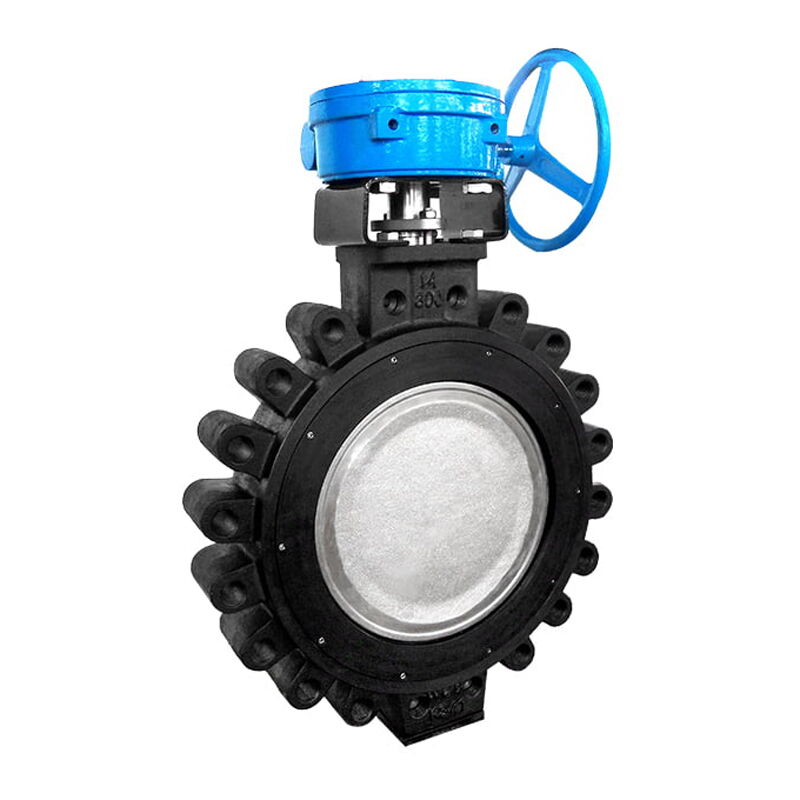
High-performance butterfly valves are advanced rotary valves designed for severe industrial conditions where standard valves are insufficient. Featuring double-offset or triple-offset structures, they significantly reduce friction, improve sealing performance, and extend service life. With upgraded materials such as stainless steel, carbon steel, PTFE, and special alloys, these valves offer excellent resistance to high temperature, high pressure, and corrosive media. They deliver key advantages including low torque operation, bidirectional flow control, compact design, easy maintenance, and long service life. Widely used in oil and gas, chemical processing, power generation, water treatment, food, and marine industries, high-performance butterfly valves provide reliable and cost-effective flow control solutions for demanding applications.
Comparison of Flanged and Welded Valve Connections

Comparison of Flanged and Welded Valve Connections

Industry News
Apr 09, 2026
2
This article compares flanged, butt-welded, and socket-weld valve connections, analyzing their sealing performance, maintenance requirements, installation complexity, cost, and suitability for different process conditions. It guides engineers in selecting the optimal connection type for safety, reliability, and long-term efficiency across industries such as oil & gas, chemical, power, and municipal systems.
Complete Guide to Valve Torque and Actuator Selection

Complete Guide to Valve Torque and Actuator Selection

Industry News
Apr 08, 2026
2
This article provides a comprehensive guide to valve torque and actuator selection in industrial automation, explaining the three key torque types—breakaway, running, and seating—and the critical role of Maximum Allowable Stem Torque (MAST). It explores the main factors influencing torque, including valve design, sealing materials, media conditions, and operating speed, while highlighting the differences between on/off and modulating applications. The guide also outlines the characteristics of manual, electric, pneumatic, and hydraulic actuators, and presents a practical step-by-step selection process covering data collection, safety factors, torque verification, and system compatibility. Overall, it emphasizes the importance of accurate torque evaluation and proper actuator sizing to ensure reliable operation, extend equipment life, and enhance system safety.
Leakage Prevention and Maintenance of Knife Gate Valves

Leakage Prevention and Maintenance of Knife Gate Valves

Industry News
Apr 07, 2026
7
This guide provides a comprehensive overview of knife gate valve leakage prevention and maintenance, detailing common causes, inspection techniques, material selection, actuator use, and systematic repair procedures. It emphasizes proper installation, regular maintenance, and adherence to industry standards to ensure reliable sealing, extend valve lifespan, and maintain efficiency and safety in industrial systems handling abrasive, viscous, or corrosive media.
Swing Check Valves vs. Tilting Disc Check Valves

Swing Check Valves vs. Tilting Disc Check Valves

Industry News
Apr 03, 2026
15
This guide compares swing check valves and tilting disc check valves, detailing their working principles, advantages, limitations, and performance differences. Swing check valves offer low pressure drop, high throughput, and cost-effectiveness, making them ideal for solid-laden media and energy-sensitive systems, while tilting disc check valves provide rapid closure, reduced water hammer, and reliable sealing for clean media and critical safety applications. Practical selection guidelines are provided, helping engineers match valve characteristics to system conditions for safe, efficient, and economical pipeline operation.
Previous Page1 / 17Next Page