GB Standard Valves: A Guide to Industrial Piping
This passage introduces GB standard valves made to Chinese national standards. GB means mandatory standards, while GB/T stands for voluntary ones. These valves adopt DN nominal sizes and PN pressure ratings, with unified specs for dimensions, materials, and pressure tests, such as GB/T 13927-2022 modified from ISO 5208:2015. Compared with ANSI, API, and ISO standards, they fit domestic engineering. Common types include gate, globe, ball, butterfly, and check valves widely used in waterworks, HVAC, power and chemical industries. They bring better interchangeability, lower costs and stable quality, yet proper selection needs checking working conditions, standards and material compatibility carefully.
GB standard valves are industrial valves designed, manufactured, tested, and inspected in accordance with applicable Chinese national standards. They provide a common technical framework for valve dimensions, materials, pressure ratings, structural design, manufacturing quality, and performance verification. By following the relevant standards and project specifications, manufacturers and buyers can improve product consistency, installation compatibility, and operational safety across industrial piping systems.
China's national standards establish unified technical requirements for products, processes, and services. The national standardization framework is administered by the Standardization Administration of China (SAC), while the State Administration for Market Regulation (SAMR) oversees important aspects of standardization and market supervision.
Under China's Standardization Law, national standards are classified as mandatory or voluntary. Mandatory national standards use the prefix GB, while recommended national standards use GB/T. The distinction is important because not every standard beginning with GB is mandatory, and a GB/T standard may become binding in a particular application when referenced by applicable laws, regulations, or contractual requirements. <Cite refs={["turn297457search0","turn297457search7","turn297457search11"]}/>
For valve manufacturers, distributors, engineering contractors, and procurement specialists, understanding these designations is essential when preparing technical documentation or evaluating supplier compliance.
The main categories are:
- GB: Mandatory national standards that must be implemented within their applicable scope.
- GB/T: Recommended national standards that establish recognized technical requirements and practices.
- Industry standards: Technical standards developed for particular industries when specific requirements need to be unified.
- Association standards: Standards developed by relevant organizations to address industry needs, technological development, or market requirements.
- Enterprise standards: Standards established by individual companies for their own products, manufacturing processes, or management systems.
These categories serve different purposes and should not be treated as interchangeable. For example, an enterprise standard may specify additional product features, but it cannot override applicable mandatory requirements.
A valve is not defined by a single standard. Its compliance requirements typically involve multiple documents covering different aspects of engineering and manufacturing.
Depending on the product and application, the relevant standards may address:
- Valve type, design, and construction.
- Pressure-temperature ratings and pressure-containing components.
- Materials for the body, bonnet, stem, disc, ball, and other wetted parts.
- Face-to-face dimensions and end connections.
- Manufacturing tolerances and surface quality.
- Pressure testing, seat leakage, and shell integrity.
- Marking, traceability, inspection, and documentation.
- Special requirements for particular services, such as fire protection or hazardous process fluids.
A valve manufacturer must identify the standards applicable to the specific valve type rather than assume that one general standard covers every requirement.
For example, China's GB/T 13927-2022, Industrial Valves—Pressure Testing, is a current national standard for industrial valve pressure testing. It was published on December 30, 2022, and took effect on July 1, 2023, replacing GB/T 13927-2008. The official national standards database also records that the 2022 edition modifies ISO 5208:2015.
This illustrates how China's valve standards provide specific requirements for individual stages of product verification while also incorporating relevant international technical developments.
One of the main benefits of standardized valves is the use of defined nominal sizes and pressure designations. In Chinese engineering documentation, nominal size is commonly expressed as DN, while nominal pressure is expressed as PN, where the applicable dimensional and rating system uses these designations.
DN is a nominal size designation rather than a direct measurement of the valve's internal bore. Similarly, PN is a nominal pressure designation, not a universal statement that a valve can withstand that pressure at every operating temperature.
The actual allowable operating pressure depends on factors such as the valve's design, material, temperature, construction, and applicable rating standard. Engineers must therefore consult the relevant pressure-temperature tables and product documentation instead of interpreting DN and PN as standalone performance guarantees.
Standardized size and rating designations make it easier to compare products and prepare piping specifications. They also reduce ambiguity when multiple manufacturers supply equipment for the same project.
Valve dimensions play a major role in installation compatibility. Face-to-face dimensions determine the distance between the valve's end connection planes, while end-connection standards define relevant details such as flange dimensions, bolt-hole arrangements, and facing types.
When a valve is selected according to the specified dimensional standard, it is easier to integrate the product into a piping layout without unnecessary modifications to adjacent pipework.
However, a shared nominal diameter does not automatically guarantee interchangeability. Two valves may have the same DN and PN designations but different face-to-face dimensions, flange configurations, pressure-temperature ratings, or connection requirements.
Before replacing an existing valve, engineers should verify at least the following:
- Nominal size and actual connection dimensions.
- Nominal pressure designation and applicable rating system.
- Flange standard, facing type, and bolt-hole arrangement.
- Face-to-face or end-to-end dimensions.
- Flow direction, installation orientation, and actuator clearance.
- Material compatibility and operating temperature.
- Required shutoff performance and pressure-test criteria.
This verification process is particularly important in retrofit projects, where the new valve must fit an existing piping system without compromising safety or functionality.
Material selection is another essential part of valve standardization. Industrial valves may be manufactured from carbon steel, stainless steel, alloy steel, cast iron, ductile iron, copper alloys, or specialized corrosion-resistant materials, depending on the application.
The selected material must meet the requirements of the relevant product standard and remain suitable for the operating medium, temperature, pressure, and environmental conditions.
For example, carbon steel valves are widely used in many conventional industrial applications, while stainless steel valves may be selected for improved corrosion resistance. High-temperature steam service, low-temperature applications, and aggressive chemical processes may require more specialized materials.
Standardized material specifications help manufacturers and buyers establish consistent requirements for chemical composition, mechanical properties, heat treatment, and inspection. Material certificates and traceability records can provide additional evidence that the supplied valve corresponds to the specified grade.
Nevertheless, compliance with a material standard alone does not establish that a valve is suitable for every service. Engineers must consider the complete operating environment and verify that all pressure-containing and wetted components are compatible with the intended application.
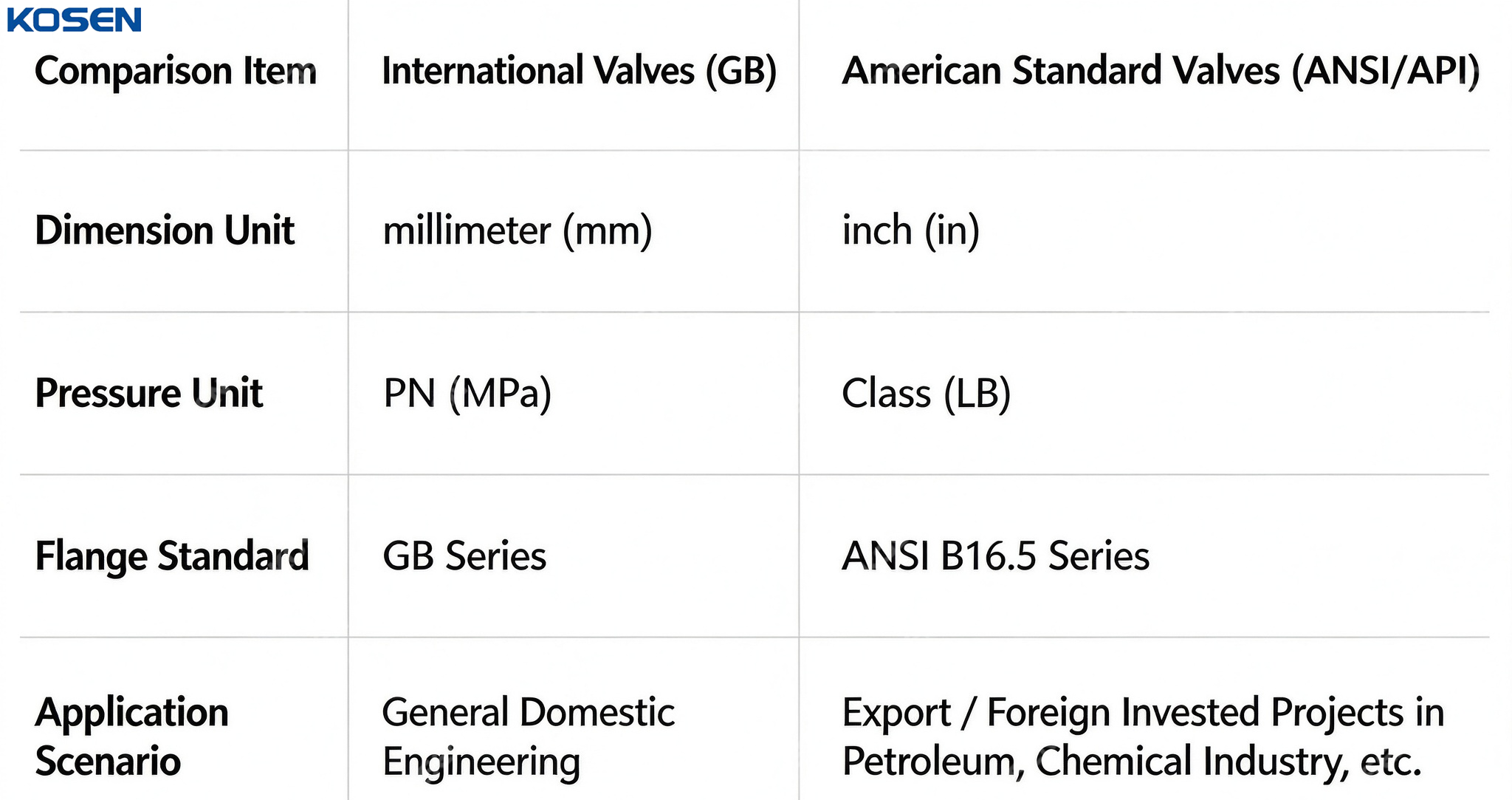
Industrial valve projects may involve Chinese national standards, international standards, or standards developed for specific industries. Although these systems can overlap technically, their requirements are not automatically identical.
| Standard system | Main role in valve engineering | Typical application context |
|---|---|---|
| GB / GB/T | Chinese national standards | Domestic Chinese industrial projects and specifications |
| ISO | International standards | Cross-border engineering and harmonized technical requirements |
| API | Standards developed by the American Petroleum Institute | Oil and gas equipment, petroleum processing, and related applications |
| ASME | Standards developed by the American Society of Mechanical Engineers | Pressure equipment, piping, dimensions, and related engineering requirements |
The specific document matters more than the name of the standards organization. Different standards may address different aspects of a valve, and two documents covering similar products may specify different dimensions, testing procedures, material requirements, or acceptance criteria.
For instance, GB/T 13927-2022 modifies ISO 5208:2015 for industrial valve pressure testing. This demonstrates a technical relationship between the two documents, but it does not establish that every Chinese valve standard is equivalent to an ISO, API, or ASME standard.
A valve manufactured to a Chinese national standard may be suitable for an international project if it meets the project's complete technical requirements and receives the necessary approvals. Conversely, a valve manufactured to an international standard should not automatically be considered compliant with a Chinese project specification.
Yes, provided the valves satisfy the applicable design, safety, performance, documentation, and regulatory requirements of the project. However, the purchasing team must establish the acceptance criteria before ordering.
International projects may specify API requirements for certain oil and gas valves, ASME requirements for pressure equipment or piping interfaces, and ISO standards for particular product or testing characteristics. A Chinese supplier may be able to manufacture products meeting these requirements, but this must be verified against the actual specification.
For cross-border procurement, buyers should pay particular attention to:
- Whether the specified valve design standard is accepted by the project.
- Whether flange dimensions and pressure ratings match the piping system.
- Whether materials comply with the project material specification.
- Whether pressure tests and leakage acceptance criteria are equivalent to those required.
- Whether inspection certificates, material records, and test reports are available in the required format.
- Whether any third-party inspection, certification, or regulatory approval is required.
A well-prepared technical datasheet should list the applicable standard for each major requirement rather than simply state "GB standard" or "international standard."
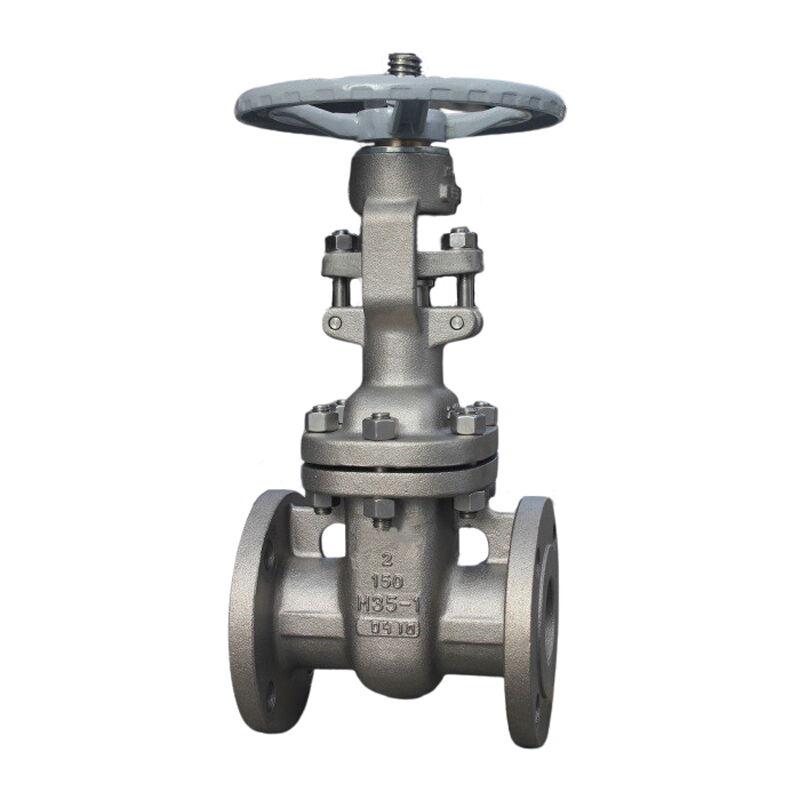
Gate valves are commonly used for on-off isolation in industrial piping systems. When fully open, they generally provide a relatively direct flow path, making them suitable for applications where low flow resistance is desirable.
They are widely used in water supply networks, power plants, industrial utilities, and many process systems. Their suitability depends on pressure, temperature, medium compatibility, and the specific valve design.
Gate valves are generally not intended for routine throttling unless the manufacturer explicitly approves the design for that duty. Prolonged operation at partially open positions may cause vibration, erosion, or damage to internal components under unsuitable flow conditions.
For procurement, buyers should verify body and trim materials, pressure rating, end connections, stem design, bonnet construction, and applicable design and testing standards.
Globe valves are frequently used where flow regulation or controlled throttling is required. Their internal flow path changes direction, and the disc moves relative to a seat to regulate the flow area.
Compared with a conventional gate valve, a globe valve generally produces a higher pressure drop at comparable operating conditions. That trade-off can be acceptable when controllability is more important than minimizing flow resistance.
Globe valves are used in steam systems, utility services, and process applications requiring frequent adjustment. Engineers should evaluate flow characteristics, actuator requirements, pressure drop, and the potential for cavitation or erosion where relevant.
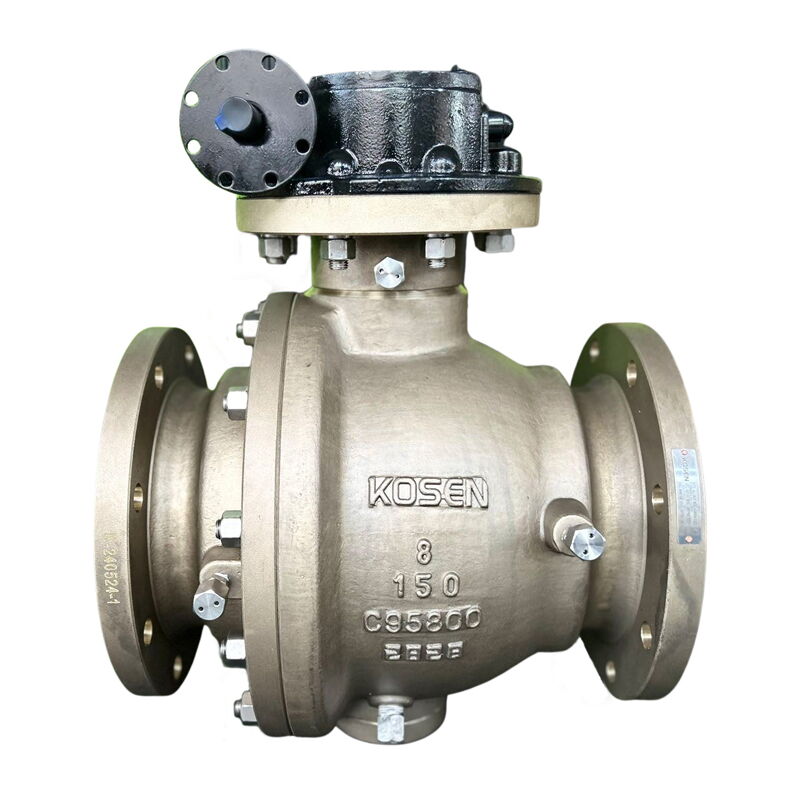
Ball valves use a rotating ball with a bore to control flow. Quarter-turn operation allows rapid opening and closing, and many designs provide reliable shutoff when properly selected and maintained.
They are widely used in water treatment, chemical processing, oil and gas facilities, and industrial utility systems. Depending on the design, ball valves may feature floating or trunnion-mounted balls, soft or metal seats, and manual or automated actuation.
Selection should consider the medium, pressure, temperature, seat material, required leakage performance, and whether the valve is intended for isolation, throttling, or specialized service.
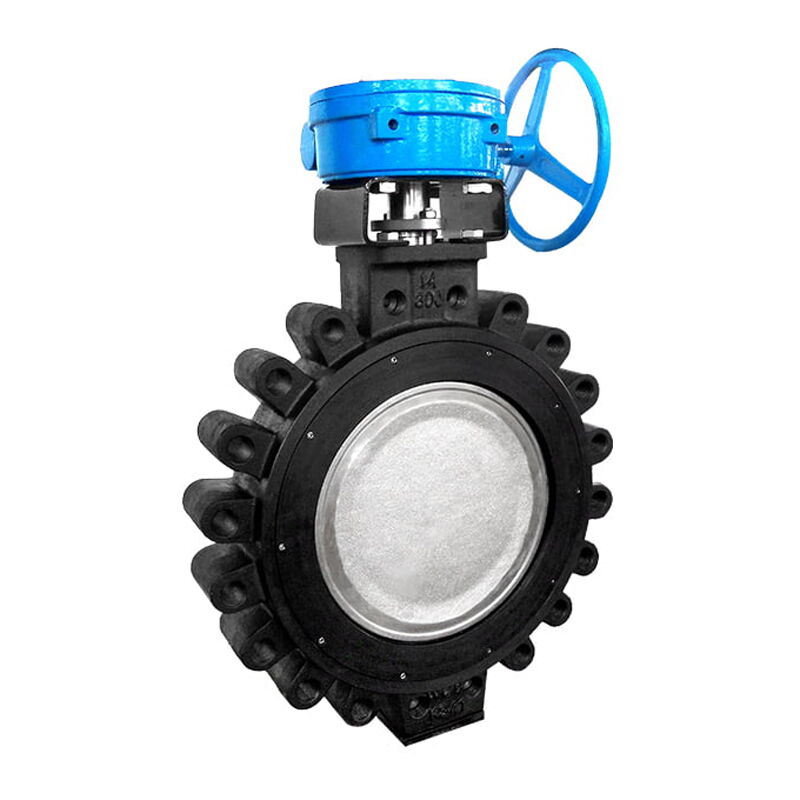
Butterfly valves regulate flow through a disc rotating within the pipe. Their compact structure and relatively low weight make them attractive for large-diameter piping systems.
Common applications include water distribution, HVAC systems, cooling-water circuits, and certain industrial process lines. Different body, disc, seat, and connection designs are available to meet varying service requirements.
Engineers should consider pressure rating, disc material, seat compatibility, operating torque, flow characteristics, and the potential effects of the disc on system performance.
Check valves are designed to prevent reverse flow and help protect pumps, pipelines, and associated equipment. Common designs include swing check valves, lift check valves, and dual-plate or other wafer-style configurations.
The appropriate design depends on flow velocity, installation orientation, pressure drop, fluid characteristics, and the system's susceptibility to water hammer. A check valve that closes too slowly may permit reverse flow, while unsuitable dynamic behavior can contribute to pressure surges.
Correct sizing and application-specific evaluation are therefore essential, even when the valve meets the relevant dimensional and manufacturing standards.
Municipal water networks rely on valves for isolation, flow management, maintenance, and system protection. Gate valves, butterfly valves, check valves, and other standardized products are widely used in water transmission, distribution, pumping stations, and treatment facilities.
Standardized dimensions simplify procurement for large infrastructure projects, where many valves may be installed across different locations. Common specifications also help maintenance teams stock replacement products and reduce delays when repairs are required.
However, water quality and treatment chemistry must be considered. Chloride levels, disinfectants, temperature, and other chemical characteristics can affect material selection, especially for stainless steel components and elastomeric seals.
For drinking-water applications, additional requirements concerning material safety, hygiene, and regulatory acceptance may apply beyond the general valve product standard.
Heating, ventilation, and air-conditioning systems use valves to control chilled water, hot water, condenser water, and other utility fluids. Common products include butterfly valves, globe valves, ball valves, and balancing or control valves.
Standardized connections and dimensions support efficient installation and replacement in commercial buildings, industrial facilities, and public infrastructure. Product availability can also help reduce maintenance downtime.
Nevertheless, HVAC applications still require appropriate engineering. Valve sizing, pressure drop, flow characteristics, actuator selection, insulation, and compatibility with glycol solutions or other additives can affect system performance.
Power plants and industrial utility systems use valves in cooling-water networks, auxiliary systems, compressed-air lines, and steam-related services. The required valve type and material depend strongly on the pressure, temperature, and fluid conditions.
For high-temperature steam or other demanding duties, engineers must verify the applicable design code, pressure-temperature rating, material properties, and testing requirements. A general-purpose valve that meets a basic national standard may not be suitable for a critical pressure or temperature application without additional qualification.
Where failure could affect personnel safety or plant availability, procurement specifications should include the necessary inspection, testing, traceability, and documentation requirements.
Chemical plants use a wide variety of valves to control process fluids, cooling systems, utility lines, and treatment chemicals. The choice of valve depends on chemical compatibility, operating conditions, leakage requirements, and the consequences of failure.
Carbon steel may be suitable for certain compatible services, whereas stainless steel, duplex stainless steel, or specialized alloys may be required for corrosive media. Lined valves and specialized sealing materials may also be considered where appropriate.
Compliance with the applicable valve standard establishes a technical baseline, but it does not replace a chemical compatibility assessment. The body, trim, seats, gaskets, packing, and actuator components must all be appropriate for the intended service.
Standardized dimensions and connection requirements make it easier to replace valves during planned maintenance and equipment upgrades. When the replacement matches the original dimensional and technical specification, the need for pipe modifications can be reduced.
This is particularly valuable for facilities operating many valves across extensive piping networks. Maintenance teams can use standardized documentation to identify compatible replacements and reduce the time required for procurement and installation.
However, interchangeability must be verified at the product level. Matching DN and PN designations alone is not sufficient when the original and replacement valves use different design or connection standards.
Standardized products can be easier to source because manufacturers often maintain established production processes, supply chains, and inspection procedures for commonly specified configurations.
For routine applications, this can contribute to competitive purchase prices, shorter lead times, and easier access to replacement parts. Common product configurations may also simplify technical comparisons between suppliers.
Total lifecycle cost should still include more than the purchase price. Installation, energy consumption, maintenance frequency, seal replacement, corrosion resistance, and expected service life all influence the overall economics of valve selection.
A lower-cost valve may become more expensive over time if it requires frequent maintenance or cannot withstand the operating conditions.
A clear technical specification gives manufacturers, inspectors, and purchasers a common basis for evaluating conformity. Depending on the applicable standards and project requirements, quality verification may include dimensional inspection, material verification, visual examination, pressure testing, and review of manufacturing records.
For example, the current GB/T 13927-2022 standard provides a defined reference for industrial valve pressure testing. Applying the correct edition helps reduce uncertainty about the required test framework.
Standardized inspection does not mean every valve is identical in every respect. Manufacturers may still differ in machining accuracy, material sourcing, process control, workmanship, and internal quality systems. Buyers should therefore evaluate actual evidence of conformity rather than relying on the standard designation alone.
Start by identifying the fluid, design pressure, operating pressure, design temperature, operating temperature, flow requirements, and installation environment. Determine whether the service involves corrosive chemicals, suspended solids, steam, potable water, flammable fluids, or other special conditions.
These parameters influence the valve type, body material, trim materials, sealing system, and pressure rating. They also help determine whether a standard industrial valve is sufficient or whether a specialized design is required.
Specify the required design, dimensional, material, testing, and marking standards. Check that each standard applies to the selected valve type and that the edition is current or otherwise expressly required by the project.
If a project calls for several standards, clarify their respective scopes and resolve any inconsistencies before production. This is particularly important for international projects involving multiple technical specifications.
Confirm DN, PN, or the applicable alternative rating system, face-to-face dimensions, flange standard, facing type, and other connection details. Review pressure-temperature ratings for the actual material and design.
Where a replacement valve is involved, compare the original equipment drawing or datasheet with the proposed product documentation. Do not assume that products with the same nominal size will fit without modification.
Request the material specifications and certificates required by the project. For critical services, verify traceability for pressure-containing components and other specified parts.
The inspection plan may also require dimensional reports, pressure-test records, non-destructive examination, or third-party inspection. The precise requirements should be agreed upon before manufacture rather than left until final delivery.
A qualified supplier should be able to explain how its products comply with the specified standards and provide supporting technical documentation.
When evaluating manufacturers, consider:
- Relevant manufacturing experience and product range.
- Material procurement and traceability controls.
- Machining, assembly, and inspection capabilities.
- Pressure-test facilities and documented procedures.
- Quality management systems and corrective-action processes.
- Technical support, spare-parts availability, and after-sales service.
Certification to a quality management standard can provide useful evidence of an established management system, but it does not by itself prove that every supplied valve meets every project-specific technical requirement.
Advances in digital manufacturing, automated inspection, and production data management are creating opportunities to improve valve quality and traceability. Manufacturers can use digital records to link material batches, machining operations, assembly steps, inspection results, and finished-product identification.
Such practices can make it easier to investigate defects, identify nonconforming products, and maintain consistent manufacturing processes. Automated measurement and testing can also improve repeatability when equipment is properly calibrated, and procedures are validated.
The value of these technologies depends on implementation. Digital records and automation do not replace sound engineering design, qualified personnel, or appropriate inspection criteria. Instead, they support more effective control of the manufacturing process.
China's standardization framework recognizes the role of international standards in supporting technical cooperation and trade. The relationship between GB/T 13927-2022 and ISO 5208:2015 illustrates how specific national standards can incorporate international technical work.
For valve manufacturers seeking international customers, the practical challenge is to understand where national and international requirements align and where differences remain. Product development teams can benefit from mapping relevant standards, maintaining current technical documentation, and designing products for clearly defined market requirements.
As industrial supply chains become more interconnected, this approach can help manufacturers serve domestic projects while improving their ability to respond to export specifications.
GB standard valves provide a common technical foundation for industrial piping systems in China. By defining requirements for design, materials, dimensions, testing, and other product characteristics, applicable national standards help manufacturers, engineers, and purchasers work from a consistent set of technical expectations.
Their advantages include easier procurement, improved dimensional compatibility, more systematic quality verification, and practical support for maintenance. However, a standard designation alone does not guarantee suitability for every service or automatic interchangeability between manufacturers.
The most reliable approach combines correct standard selection with application-specific engineering, material verification, pressure-temperature assessment, and documented quality control. For domestic infrastructure projects and international industrial procurement alike, understanding the scope of each applicable standard is essential to selecting valves that meet operational requirements and support long-term system reliability.