Are Gate Valves Suitable for High Temperatures?
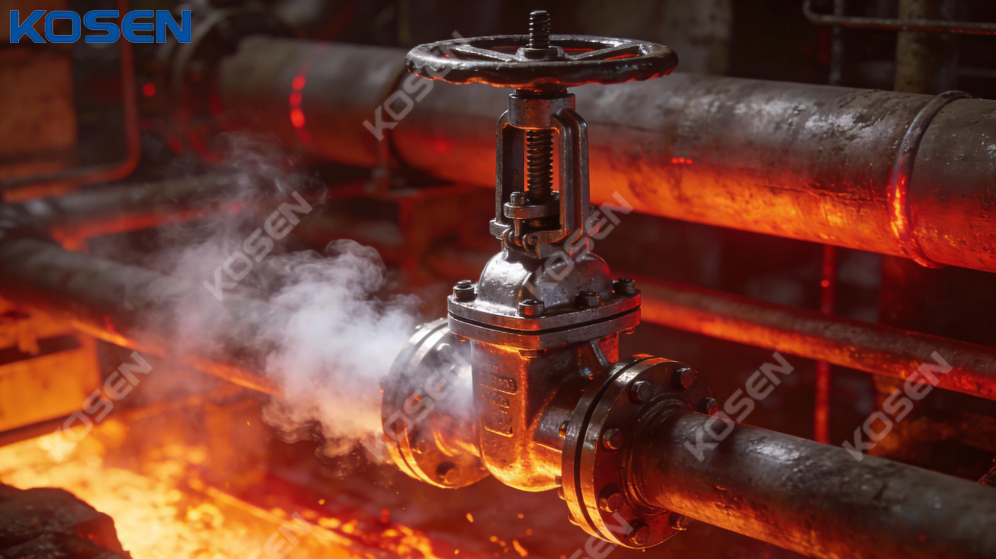
Gate valves can provide reliable performance in high-temperature industrial applications when their materials, sealing structures, and pressure-temperature ratings are correctly selected. This article explores the suitability of WCB carbon steel, stainless steel 304 and 316, and chromium-molybdenum alloy steel for demanding services, including steam systems, thermal oil pipelines, power generation, and petrochemical processing. It also examines the effects of thermal expansion, creep, oxidation, and thermal cycling on valve performance. By evaluating metal-to-metal sealing, high-temperature packing, gasket materials, structural design, and applicable standards such as ASME B16.34, engineers can improve valve reliability, prevent leakage, and extend service life.
Gate valves can be used in high-temperature applications, provided their materials, pressure ratings, sealing systems, and structural designs are suitable for the operating conditions. Carbon steel may be appropriate for many moderate-to-high-temperature services, while chromium-molybdenum alloy steels are often preferred for demanding steam and power-generation applications. The correct selection must consider both temperature and pressure, as well as thermal cycling, corrosion, leakage requirements, and expected service life.
Gate valves are widely used in industrial pipelines because they provide a relatively unobstructed flow path when fully open and can offer reliable shutoff when properly designed and maintained. Their applications include power generation, petroleum refining, chemical processing, metallurgy, and industrial heating systems. In these industries, pipelines may carry superheated steam, hot oil, combustion gases, or other process fluids at elevated temperatures and pressures.
However, a gate valve that performs satisfactorily at ambient temperature may not provide the same reliability when exposed to prolonged heating. Elevated temperatures can reduce material strength, accelerate oxidation, affect sealing surfaces, and cause differential expansion between the valve body, gate, stem, and bonnet. If these effects are not addressed during selection and engineering, the valve may experience excessive leakage, difficult operation, or premature failure.
The essential question is therefore not simply whether a gate valve can withstand a particular temperature. Engineers must determine whether the complete valve assembly can maintain its required pressure containment, shutoff performance, and mechanical integrity throughout the intended operating cycle.
High-temperature gate valves are used in several industrial environments, each presenting different material and design requirements.
- Power generation: Main steam, auxiliary steam, boiler feed-related piping, and other high-temperature services require materials with suitable elevated-temperature strength and resistance to long-term degradation.
- Petroleum refining: Hot oil, process steam, and refinery feed or transfer lines may require a combination of temperature resistance, pressure capability, and chemical compatibility.
- Petrochemical processing: Cracking units, high-temperature process lines, and associated utility systems may impose demanding thermal and corrosion conditions.
- Metallurgy: Industrial furnaces and related process systems may involve elevated temperatures, abrasive particles, or corrosive gases.
- Thermal oil systems: Heat-transfer fluids circulate at elevated temperatures, requiring compatible valve materials, packing, gaskets, and operating arrangements.
- Industrial steam networks: Steam distribution systems may experience temperature fluctuations, pressure changes, and repeated startup and shutdown cycles.
These applications demonstrate that high-temperature suitability is a system-level engineering decision. A valve intended for saturated steam at moderate pressure may require a different design from one installed in a superheated steam line at high pressure.
Temperature influences nearly every major component of a gate valve. The body must contain the pressure, the gate and seats must maintain the required shutoff performance, the stem must transmit operating force, and the packing and gaskets must prevent leakage to the environment.
Most metallic materials lose some of their mechanical strength as temperature increases. The extent of this reduction depends on the material grade, manufacturing condition, temperature, stress level, and exposure duration.
For pressure-containing components, this means that a valve rated for a particular pressure at ambient temperature may have a lower allowable working pressure at a higher temperature. Engineers must therefore use the applicable pressure-temperature rating rather than relying exclusively on the nominal pressure class.
ASME B16.34 establishes pressure-temperature ratings and related requirements for many industrial valves. Its ratings vary by material group, pressure class, and temperature. Material-specific notes and restrictions must also be considered. <Cite refs={["turn912280search1","turn912280search4"]}/>
For example, a Class 150 carbon steel gate valve cannot automatically be assumed to retain its ambient-temperature pressure rating when handling high-temperature steam. Its allowable pressure must be verified against the applicable standard and the manufacturer's approved rating data.
When a gate valve heats up, its body, gate, stem, bonnet, and internal components expand. Although these components may be manufactured from similar materials, their temperatures may not rise at the same rate because of differences in geometry, mass, insulation, and exposure to the process fluid.
Unequal expansion can change the clearances between the gate and seats. Depending on the design, this may increase operating torque, affect sealing contact, or cause the gate to bind. The risk becomes more significant during rapid heating, uneven temperature distribution, or repeated startup and shutdown cycles.
Thermal expansion must therefore be considered alongside the material's maximum service temperature. A material with sufficient strength at steady-state temperature may still perform poorly if the valve is exposed to severe thermal transients.
Creep is the gradual deformation of a material under sustained stress at elevated temperature. It is particularly important in high-temperature pressure equipment that operates for long periods.
In a gate valve, long-term degradation can affect the body, bonnet, stem, and other loaded components. Material selection must account for the expected service temperature, operating stress, and design life rather than merely the maximum temperature reached during a short test.
Certain carbon steels also have material-specific limitations associated with prolonged high-temperature exposure. For example, ASME B16.34-related guidance identifies restrictions and cautions for some carbon steel materials at elevated temperatures. <Cite refs={["turn912280search3","turn912280search4"]}/>
This is one reason that high-temperature power plant valves often use alloy steels designed for elevated-temperature service.
High-temperature oxidation can progressively degrade exposed metal surfaces. The actual risk depends on the process atmosphere, material composition, temperature, and exposure duration. Steam chemistry, sulfur-containing compounds, chlorides, and other contaminants can create additional corrosion challenges.
Thermal cycling introduces another mechanism of deterioration. Repeated heating and cooling can cause differential expansion, stress concentration, gasket relaxation, and fatigue in components subjected to repeated temperature changes.
For this reason, engineers should evaluate both the maximum operating temperature and the complete operating profile, including startup, shutdown, standby, and upset conditions.
Body material is one of the most important factors determining high-temperature suitability. Common options include carbon steel, austenitic stainless steel, and chromium-molybdenum alloy steel. Each has advantages and limitations.
ASTM A216 Grade WCB is a widely used cast carbon steel for industrial valve bodies. It is commonly selected for general process service because it offers a practical balance of mechanical properties, manufacturability, and cost.
WCB gate valves are suitable for many steam, hot water, oil, and general industrial applications when their pressure-temperature ratings and material limitations are respected.
However, WCB should not be treated as a universal high-temperature material. Its allowable pressure decreases as temperature increases, and prolonged exposure to certain elevated-temperature conditions can introduce material degradation concerns. Reference material based on ASME B16.34 identifies approximately 427°C (800°F) as an important caution threshold for prolonged exposure of relevant carbon steel grades, while actual material restrictions and allowable pressures must be verified for the specific valve. <Cite refs={["turn912280search3","turn912280search4"]}/>
WCB may be appropriate when the operating conditions remain within the approved rating envelope and when corrosion resistance, temperature cycling, and expected service life are adequately addressed.
Typical applications include:
- General industrial steam distribution.
- Hot oil transfer within the valve's approved limits.
- Non-corrosive process pipelines.
- Utility systems in refineries and manufacturing plants.
The selection should be supported by the applicable material specification, pressure-temperature rating, and manufacturer documentation.
Austenitic stainless steels, including grades commonly identified as 304 and 316, are used when corrosion resistance is an important requirement.
Their suitability for high-temperature service depends on the exact grade, product form, casting or forging specification, pressure rating, and process environment. Stainless steel is not automatically superior to carbon steel for every high-temperature application.
Type 316 contains molybdenum, which generally improves resistance to certain forms of localized corrosion compared with Type 304. This can be useful in some chloride-containing or chemically aggressive environments, although neither grade is immune to every corrosion mechanism.
At elevated temperatures, stainless steels can also experience reduced allowable stress, oxidation, thermal expansion, and other material-specific limitations. Their thermal expansion behavior differs from that of many carbon and low-alloy steels, which can influence clearances and interactions between dissimilar components.
When specifying a stainless steel gate valve, engineers should verify the exact body material designation, trim and seat materials, temperature rating, and chemical compatibility. A stainless steel valve intended for corrosive service at moderate temperature may not be the most appropriate option for a high-pressure superheated steam application.
Chromium-molybdenum alloy steels are commonly used in demanding high-temperature services because their elevated-temperature strength and resistance to certain degradation mechanisms can make them more suitable than conventional carbon steel.
Typical valve material designations include:
- ASTM A217 WC6: A chromium-molybdenum cast steel commonly associated with elevated-temperature pressure service.
- ASTM A217 WC9: A higher-alloy chromium-molybdenum cast steel used in demanding high-temperature applications.
- ASTM A182 F11 and F22: Forged alloy steel grades used for suitable pressure-containing components and valve constructions.
These materials are frequently considered for power generation, high-temperature steam, and selected refinery services. ASME B16.34 material group tables include alloy steel grades such as WC6 and WC9 with pressure-temperature ratings and material-specific limitations. <Cite refs={["turn912280search0","turn912280search3"]}/>
The chromium and molybdenum additions contribute to the alloy's high-temperature performance, but the exact suitability depends on composition, heat treatment, component thickness, operating stress, and service conditions.
For high-temperature applications, purchasing specifications should identify the required material grade and manufacturing standard rather than simply stating "alloy steel." Heat treatment, material traceability, inspection, and the applicable pressure-temperature rating should also be confirmed.
| Material | Main advantage | Key limitation | Typical selection consideration |
|---|---|---|---|
| ASTM A216 WCB carbon steel | Economical and widely available | Strength and long-term suitability depend on temperature and stress | General industrial steam and hot-fluid services within approved ratings |
| Stainless steel 304 | General corrosion resistance | Not universally suitable for high-temperature or aggressive chemical service | Applications requiring a suitable balance of corrosion resistance and temperature capability |
| Stainless steel 316 | Improved resistance to certain localized corrosion mechanisms | Temperature rating and chemical compatibility still require verification | Selected corrosive process services |
| ASTM A217 WC6 | Suitable elevated-temperature alloy steel properties | Higher material and manufacturing requirements than standard carbon steel | Selected high-temperature steam and process applications |
| ASTM A217 WC9 | Designed for demanding elevated-temperature pressure service | Requires correct material qualification and rating verification | High-temperature power and industrial process systems |
This comparison is intended for preliminary selection, not as a substitute for engineering calculations or manufacturer-approved ratings. No single material is universally best; the correct choice depends on the combined effects of temperature, pressure, chemistry, and service duration.
Selecting a suitable body material is necessary but insufficient. A high-temperature gate valve also requires an appropriate sealing design that can withstand the operating environment.
Metal-seated gate valves use metallic sealing surfaces to achieve shutoff. When correctly designed and manufactured, they can be suitable for high-temperature applications in which elastomeric sealing elements would be unsuitable.
Their performance depends on seat geometry, surface finish, material hardness, alignment, contact stress, and the presence of particles or deposits in the process fluid.
Metal-to-metal sealing does not mean that leakage is impossible. The specified leakage acceptance criteria depend on the valve design, applicable standard, pressure differential, and service requirements.
Engineers should therefore specify the required shutoff performance and test standard rather than assuming that every metal-seated gate valve provides identical sealing capability.
Soft-seated gate valves use non-metallic materials such as elastomers or engineered polymers to achieve sealing. These materials can provide effective shutoff in applications within their rated operating envelopes.
However, many conventional rubber-seated designs are unsuitable for high-temperature steam or other demanding thermal services. Elevated temperatures may cause elastomer degradation, loss of elasticity, swelling, hardening, or permanent deformation. Certain polymers may also soften or lose mechanical properties above their specified service limits.
The appropriate conclusion is not that every soft-seated valve is unsuitable for all elevated temperatures. Rather, the exact seal material must be explicitly rated for the process temperature, pressure, and chemical environment. A conventional soft-seated water valve should never be substituted for a high-temperature industrial gate valve without verifying its complete service rating.
Stem packing prevents process fluid from leaking along the valve stem. In high-temperature service, conventional packing materials may degrade, lose resilience, or become less effective as temperature and mechanical stress increase.
Flexible graphite packing is widely used in appropriate high-temperature valve applications because of its thermal stability and sealing characteristics. Nevertheless, packing performance also depends on construction, compression, oxidation resistance, stem condition, and the manufacturer's temperature and pressure limitations.
Packing should be selected as part of the complete valve specification. Engineers should verify compatibility with the process medium and consider emissions requirements where hazardous or environmentally sensitive fluids are involved.
The bonnet joint is another potential leakage path. Elevated temperature can affect gasket compression, bolt loading, and the relative expansion of the joint components.
Flexible graphite gaskets and suitable spiral-wound metallic gaskets are used in many high-temperature industrial applications, but their suitability depends on the specific construction, filler material, winding alloy, pressure, and process fluid.
Bolting material is equally important. A gasket that can tolerate the process temperature does not guarantee that the complete joint will retain the required sealing force if the bolts or flange design are unsuitable.
A reliable specification must therefore address the body, bonnet, bolting, gaskets, stem packing, gate, and seat as a coordinated assembly.
One of the most common selection mistakes is choosing a gate valve solely by its nominal pressure class. A class designation does not represent one fixed allowable working pressure at every temperature.
Under ASME B16.34, pressure-temperature ratings depend on the applicable material group and pressure class. At higher temperatures, the allowable pressure for many materials decreases. Material-specific notes may also restrict prolonged service at particular temperatures. <Cite refs={["turn912280search1","turn912280search4"]}/>
A sound selection process should include the following steps:
- Establish the maximum design temperature, not just the usual operating temperature.
- Determine the maximum design pressure and any relevant pressure transients.
- Identify the exact valve body material and its applicable material group.
- Check the pressure-temperature table for the specified valve standard and edition.
- Verify that the selected pressure class meets the design conditions.
- Confirm that the trim, stem, packing, gaskets, bolting, and end connections are suitable for the same service.
- Check any restrictions associated with prolonged exposure, heat treatment, product form, or flange-end construction.
For example, a WCB gate valve intended for a high-temperature steam line must be checked against the rating for its actual material group and pressure class. If the pressure at the maximum design temperature exceeds the applicable allowable value, a higher pressure class or a different material and design may be necessary.
The final selection should also consider the ratings of connected piping, flanges, gaskets, and other components. The weakest applicable component can limit the permissible operating conditions of the assembled system.
High-temperature performance also depends on the valve's mechanical design. Several structural features may be important, particularly in steam systems and installations subject to substantial thermal cycling.
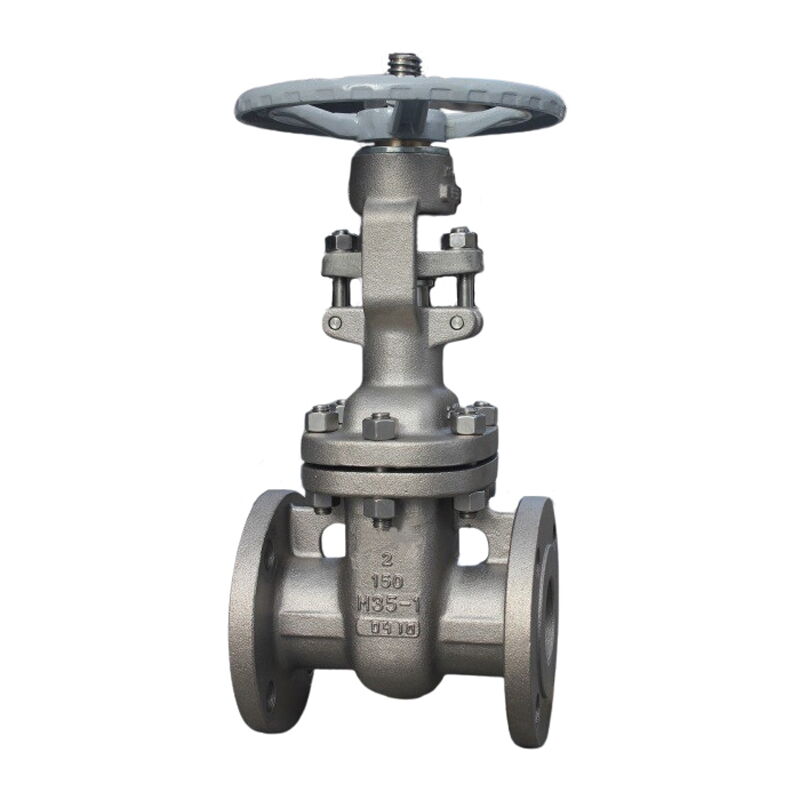
A rising-stem gate valve provides a visible indication of stem travel in many common configurations. This can help operators determine whether the valve is open or closed, although the position indication must still be interpreted according to the specific design.
A non-rising-stem design keeps the stem movement within the valve envelope and may be useful where installation space is limited. However, visual confirmation of gate position can be less straightforward.
The choice should consider operating access, maintenance requirements, available space, and the manufacturer's suitability assessment for the intended high-temperature service.
Gate valves may use different gate geometries, including solid wedges and flexible wedges. Their behavior under temperature changes depends on the specific design, material, and operating conditions.
A solid wedge is mechanically straightforward but may be more sensitive to certain forms of body or seat distortion. A properly engineered flexible wedge can accommodate some differential movement between the valve body and gate, potentially improving performance in applications involving thermal variation.
Neither design is universally superior. The correct selection depends on the valve manufacturer's engineering, the pipeline conditions, the required shutoff performance, and the operating cycle.
In some gate valve configurations, fluid can become trapped in the body cavity when the valve is closed. If that trapped fluid heats up and expands, cavity pressure may increase substantially.
The resulting pressure rise can affect valve operation or create a pressure hazard if the design does not account for the condition.
For relevant services, engineers should review whether the gate valve requires a pressure-relief provision, a specified gate orientation, or another manufacturer-approved design arrangement. The need depends on the valve construction, fluid characteristics, system layout, and operating procedure.
Thermal binding may also occur when differential expansion creates excessive contact between the gate and seats. Appropriate valve design and operating procedures help mitigate the risk, but the exact solution must be determined for the selected valve and service.
Steam and thermal oil are both common high-temperature media, but they impose different engineering requirements.
Steam systems can involve saturated steam, superheated steam, condensate, and repeated transitions between operating states. Each condition affects valve selection differently.
Superheated steam at high pressure generally demands careful evaluation of elevated-temperature strength, pressure-temperature ratings, packing, gaskets, and thermal transients. Startup procedures may also need to account for condensate drainage and gradual warming to reduce thermal shock and water hammer risks.
For demanding power-generation services, suitable chromium-molybdenum alloy steel valves may be considered when supported by the design conditions and applicable standards.
The specification should state the steam pressure, temperature, valve size, pressure class, body material, trim, end connection, packing arrangement, and required testing.
Thermal oil systems transfer heat through a circulating fluid. The required valve material depends on the fluid chemistry, maximum film and bulk temperatures, operating pressure, and risk of fluid degradation.
The design should also consider the consequences of leakage. Hot thermal oil can cause burns, fire hazards, or equipment damage if released onto hot surfaces.
Valve packing and gasket materials must be compatible with the selected heat-transfer fluid. Engineers should verify whether the fluid manufacturer imposes restrictions on materials, contamination, or operating temperature.
In systems with frequent heating and cooling cycles, the valve design should also accommodate differential expansion and repeated thermal stress.
High-temperature gases introduce additional considerations, including oxidation, gas chemistry, pressure fluctuations, and potential erosion from entrained particles.
The selected body and trim materials must be suitable for the actual gas composition and temperature. Where gases are hazardous or environmentally regulated, stem packing and external leakage control may require additional attention.
A valve selected for clean hot air may not be appropriate for sulfur-bearing combustion gases or corrosive process streams at the same temperature.
Several recurring mistakes can compromise valve reliability even when the nominal material designation appears suitable.
A statement such as "suitable for 450°C service" is incomplete unless the corresponding pressure, material grade, pressure class, and design conditions are specified.
The allowable pressure of a valve can change significantly with temperature. The complete pressure-temperature envelope must be checked before procurement.
Stainless steel provides corrosion resistance in many environments, but it does not automatically offer superior performance in every high-temperature application.
Some alloy steels are specifically developed for demanding elevated-temperature pressure service. The correct choice depends on the combination of mechanical strength, corrosion behavior, thermal expansion, and cost.
A high-temperature body material cannot compensate for unsuitable packing or gaskets. The complete assembly must be rated for the intended conditions, including any chemical compatibility requirements.
A valve that operates at a stable temperature may experience different stresses from one subjected to repeated rapid heating and cooling. Thermal cycling can affect sealing, alignment, bolt loading, and operating torque.
A valve with the same nominal size and pressure class may still have a different material group, end-connection rating, trim design, or temperature limitation. Substitution should be reviewed against the original engineering specification rather than accepted on dimensional similarity alone.
Before placing an order, engineers, procurement teams, and valve manufacturers should confirm the following information.
| Selection parameter | Questions to resolve |
|---|---|
| Process medium | Is the medium steam, thermal oil, hot gas, or another fluid? |
| Temperature | What are the normal, maximum design, startup, and upset temperatures? |
| Pressure | What are the design pressure, operating pressure, and potential transient conditions? |
| Body material | Is the specified grade suitable for the temperature and pressure under the applicable standard? |
| Trim and seats | Are the materials compatible with the medium and the required shutoff performance? |
| Packing | Is the packing suitable for the temperature, pressure, and emissions requirements? |
| Bonnet gasket and bolting | Can the complete joint maintain integrity under thermal cycling? |
| Pressure class | Does the applicable pressure-temperature rating satisfy the design conditions? |
| Valve structure | Are the wedge, stem, bonnet, and body-cavity arrangements suitable for the application? |
| End connections | Are flanges or welded ends appropriate for the service and compatible with the piping specification? |
| Operating method | Is manual, gearbox, electric, or pneumatic operation appropriate for the required torque and environment? |
| Quality assurance | Are material certificates, inspection records, and pressure test documentation available as required? |
This checklist can be incorporated into technical bid evaluations and procurement procedures. It also provides a consistent basis for comparing offers from different manufacturers.
Correct selection must be supported by manufacturing quality and appropriate maintenance throughout the valve's service life.
For critical applications, procurement specifications should identify the required material standards, heat treatment, inspection scope, testing requirements, and documentation.
Depending on the project and applicable standards, quality assurance may include material verification, dimensional inspection, nondestructive examination, pressure testing, and functional checks.
Material traceability is particularly important for alloy steel valves used in high-temperature pressure service. Procurement teams should ensure that the delivered valve corresponds to the approved specification and that required material certificates and inspection records are supplied.
Pressure testing verifies specified aspects of pressure containment and sealing under test conditions. It does not, by itself, demonstrate that a valve will provide an unlimited service life at its maximum temperature. High-temperature suitability must be established through the approved design and rating data.
Maintenance procedures should reflect the manufacturer's instructions and the severity of the application.
Typical activities may include:
- Inspecting the body, bonnet, stem, packing gland, and bolted joints for leakage or deterioration.
- Checking operating torque and investigating abnormal resistance.
- Monitoring packing leakage and performing approved adjustments when necessary.
- Inspecting external corrosion and the condition of protective coatings.
- Verifying actuator or gearbox performance where fitted.
- Reviewing temperature and pressure trends for abnormal operating behavior.
- Examining recurring leakage or binding to determine the underlying cause.
Personnel should not force a stuck gate valve or make unapproved adjustments while the valve is under pressure. Where disassembly is necessary, the system must be placed in a safe condition under an approved isolation procedure.
For severe service, the maintenance strategy should also consider thermal cycles, operating hours, process chemistry, and any history of recurring defects.
Gate valves can provide reliable service in high-temperature pipelines when their materials, sealing systems, pressure-temperature ratings, and structural designs are matched to the application. WCB carbon steel is suitable for many general industrial services within its approved limits, while stainless steels may be preferred for selected corrosive environments and chromium-molybdenum alloy steels may be more appropriate for demanding high-temperature steam and power-generation duties.
The most reliable selection process evaluates the complete valve assembly rather than the body material alone. Engineers should verify pressure-temperature ratings, packing and gasket compatibility, thermal expansion behavior, body-cavity pressure risks, and expected service life against the applicable standards and manufacturer documentation.
For valve manufacturers, EPC contractors, procurement specialists, and plant operators, a well-defined technical specification is the foundation of safe and economical high-temperature service. Combining correct material selection with manufacturing quality, controlled operation, and preventive maintenance helps reduce leakage, avoid premature failure, and improve the long-term reliability of industrial pipeline systems.