Fluoropolymer-Lined Valves for Corrosive Service

Fluoropolymer-lined valves have become an important engineering solution for controlling aggressive fluids in chemical processing, pharmaceuticals, water treatment, semiconductor manufacturing, mining, pulp and paper, and other industries where conventional metallic materials may suffer unacceptable corrosion. The fundamental concept is to separate the structural function of the valve body from the corrosion-resistance function of the wetted surface. A metallic body provides mechanical strength and pressure containment, while a fluoropolymer liner creates a chemically resistant barrier between the process medium and the metal substrate. This architecture can make it possible to use economical substrate materials while achieving corrosion resistance that would otherwise require expensive nickel alloys or other highly corrosion-resistant materials. Modern lined-valve designs are available in ball, butterfly, plug, globe, diaphragm, and control-valve configurations, allowing engineers to match the valve geometry to the process requirement rather than treating corrosion resistance as a standalone material-selection problem.
The value of fluoropolymer lining is particularly evident when the process medium combines corrosivity with demanding cleanliness or leakage requirements. PTFE and related fluoropolymers are characterized by strong chemical inertness, low friction, non-stick behavior, and broad temperature capability. Chemours, for example, describes PFA as chemically inert and resistant to virtually all chemicals except specific highly reactive substances, while its published data identify a broad continuous-service temperature capability for the particular PFA film product. These characteristics explain why fluoropolymer-lined equipment has become established in aggressive chemical service. Nevertheless, "fluoropolymer-lined" should never be interpreted as "immune to every chemical under every condition." The actual liner formulation, temperature, pressure, concentration, permeation behavior, mechanical loading, and valve construction must all be evaluated before specifying the equipment.
The defining characteristic of a lined valve is its composite construction. The external metallic body carries mechanical loads and provides the dimensional stability necessary for installation and pressure containment, while the internal fluoropolymer liner forms the primary wetted barrier. In a properly designed valve, the process fluid should contact the liner rather than the structural metal. This arrangement can substantially reduce the corrosion burden placed on the body and may eliminate the need to manufacture the entire pressure-containing structure from an expensive corrosion-resistant alloy.
The liner is not simply a thin coating applied for cosmetic protection. Its thickness, attachment method, molding process, dimensional stability, and relationship with the valve's sealing components are critical engineering parameters. Commercial lined-valve designs can incorporate molded PFA or PTFE liners, reinforced PTFE seats, conductive fluoropolymer options, specialized packing systems, and mechanical features intended to maintain liner stability during pressure and temperature cycling. For example, Flowserve's Atomac lined ball valves offer multiple liner materials, including FEP and PFA, together with PTFE-based seating configurations and designs intended to reduce friction and stem side loading.
A completely corrosion-resistant alloy valve can provide excellent service, but its material cost can become substantial as valve size, pressure rating, and alloy complexity increase. Fluoropolymer lining provides an alternative strategy: use a structurally appropriate metal substrate and reserve the expensive chemical-resistant material for the wetted surfaces. This approach can reduce material costs while retaining strong corrosion protection, particularly in applications where the process medium is highly aggressive but the mechanical pressure requirements can be satisfied by the substrate.
However, economic advantages should be evaluated over the entire lifecycle rather than through purchase price alone. A correctly selected lined valve can reduce corrosion-related maintenance, unplanned replacement, and contamination risks. Conversely, a poorly selected liner can fail prematurely through thermal degradation, mechanical damage, permeation, or vacuum collapse. The most economical solution is therefore the one that achieves the required service life and reliability under the actual process conditions.
PTFE is one of the most widely recognized fluoropolymers for corrosion-resistant valve applications. Its low coefficient of friction and high chemical resistance make it attractive for seats, linings, packing, and other wetted components. In valve service, PTFE can provide excellent resistance to many acids, alkalis, salts, and organic chemicals. Its low-friction behavior can also help reduce operating torque, which is particularly valuable for automated ball and plug valves.
However, PTFE has limitations that must be considered in mechanical design. Creep and deformation under sustained load can become important at elevated temperatures, and the actual pressure-temperature envelope of a valve depends on more than the nominal temperature capability of the raw polymer. Seat loading, liner geometry, pressure differential, thermal expansion, and mechanical support all affect real-world performance. Consequently, engineers should use the manufacturer's valve-specific pressure-temperature rating rather than applying a generic PTFE temperature figure to every lined valve.
PFA combines many of the chemical-resistance characteristics associated with PTFE with thermoplastic processing advantages. Chemours describes PFA as chemically inert and solvent-resistant to virtually all chemicals, while also reporting low permeability and broad thermal capability for its PFA film products. These properties have helped PFA become an important material in semiconductor, pharmaceutical, specialty chemical, and high-purity applications where both corrosion resistance and contamination control are important.
PFA can also be processed through molding and related thermoplastic techniques, making it useful for producing relatively complex lined components. Some valve manufacturers use molded PFA liners to improve dimensional stability and provide a consistent wetted surface. Flowserve's Atomac portfolio, for example, includes PFA-lined ball valves designed for chemical, pharmaceutical, petrochemical, wastewater, and other industrial applications. The specific grade and manufacturing method remain important, however, because PFA products are not automatically equivalent across manufacturers or service conditions.
FEP is another fluoropolymer used where chemical resistance, thermal stability, and processability are required. Chemours describes FEP as providing inertness to nearly all industrial chemicals and solvents, together with high-temperature stability and useful low-temperature properties. In valve engineering, FEP can be used as a lining or protective layer depending on the design and application.
The selection between PTFE, PFA, and FEP should therefore be based on actual operating requirements rather than the general assumption that one fluoropolymer is always superior. Temperature, pressure, chemical concentration, mechanical loading, permeability, dimensional stability, fabrication method, cleanliness requirements, and cost all contribute to the decision. A process engineer should request the manufacturer's chemical compatibility and pressure-temperature data for the exact valve and liner configuration.
One of the most serious mistakes in lined-valve selection is treating chemical resistance as a simple yes-or-no property. The same chemical can behave differently at different temperatures and concentrations, while mixtures can create interactions that are not apparent from single-component compatibility tables. Oxidizing environments, solvents, elevated temperatures, pressure, and combinations of chemicals may significantly alter the service envelope.
Therefore, chemical compatibility should be evaluated against the complete process description. Engineers should identify the chemical composition, concentration, temperature range, pressure, flow condition, residence time, potential impurities, cleaning chemicals, and abnormal operating scenarios. If the process involves a proprietary mixture, laboratory or manufacturer compatibility data may be required. A valve that is chemically resistant at ambient temperature may not have the same service capability at elevated temperature or under high-pressure conditions.
Fluoropolymers can be highly chemically resistant without being completely impermeable to every fluid. Permeation of gases or vapors through polymeric materials can become relevant in certain chemical services. The concern is not necessarily direct chemical attack on the polymer; instead, molecules may gradually migrate through the liner and potentially reach the metallic substrate. If the liner-substrate interface is vulnerable, this can create corrosion beneath the liner even when the exposed liner surface appears intact.
This is particularly important in aggressive gas, solvent, and high-temperature applications. Engineers should therefore consider not only whether the fluoropolymer chemically survives the medium but also whether its permeability characteristics are appropriate for the pressure, temperature, and exposure duration. Liner thickness, attachment method, venting provisions, and valve construction can all influence the consequences of permeation.
Temperature has a major influence on fluoropolymer performance. As temperature increases, polymer stiffness, creep behavior, dimensional stability, and pressure capability can change. A material may retain chemical resistance at a temperature at which its mechanical performance is no longer adequate for the valve's pressure and sealing requirements. This distinction is critical: chemical resistance and mechanical suitability are separate engineering questions.
Commercial lined valves therefore have defined pressure-temperature limits that depend on the liner and valve construction. For example, one Flowserve PFA-lined ball-valve design specifies a temperature range extending from approximately -60°C to 200°C, while its pressure rating is separately defined as Class 150. This illustrates why engineers should never infer a valve's allowable pressure from the polymer's standalone temperature capability. The valve manufacturer's pressure-temperature curve is the governing information for equipment selection.
Repeated heating and cooling can create differential expansion between the metallic body and fluoropolymer liner. Metals and fluoropolymers have significantly different coefficients of thermal expansion, so thermal cycling can place mechanical stresses on the liner and its attachment points. Over time, poorly designed or improperly installed liners may deform, wrinkle, loosen, or develop sealing problems.
A high-quality lined valve therefore needs a liner system capable of accommodating thermal movement without compromising process containment. Body construction, liner geometry, attachment features, seat design, and sealing arrangement all contribute to thermal-cycle performance. For processes involving frequent steam cleaning, hot chemical circulation, rapid temperature changes, or intermittent operation, thermal cycling should be explicitly included in the valve specification.
Positive pressure tends to press the liner against the structural body, whereas vacuum or negative-pressure conditions can create a fundamentally different mechanical loading situation. If the liner is not adequately supported, pressure differential can cause deformation, buckling, or separation from the substrate. This is one reason why a valve that performs successfully in positive-pressure service cannot automatically be assumed suitable for vacuum service.
The risk becomes more important during pump-out, draining, condensation, cooling, or process upset conditions where a system may unexpectedly develop vacuum. The engineer should determine the maximum possible vacuum, not merely the normal operating pressure. If the valve may encounter full vacuum or severe negative pressure, the manufacturer should confirm that the exact lined configuration is rated for the condition. Vacuum service should be treated as a design requirement from the beginning rather than as an afterthought.
A practical specification should clearly identify whether the valve will encounter atmospheric pressure on one side and vacuum on the other, whether the vacuum is continuous or intermittent, and whether temperature changes occur simultaneously. These factors can influence liner stability. The valve manufacturer may use specific reinforcement, liner geometry, or construction methods to improve resistance to vacuum-induced deformation.
This issue also demonstrates why generic fluoropolymer material data cannot replace valve-specific engineering information. A polymer may possess excellent chemical resistance and broad temperature capability while the completed lined valve still has a restricted vacuum rating. The pressure capability of the complete assembly is ultimately determined by the interaction between the liner, substrate, seats, body, and mechanical design.
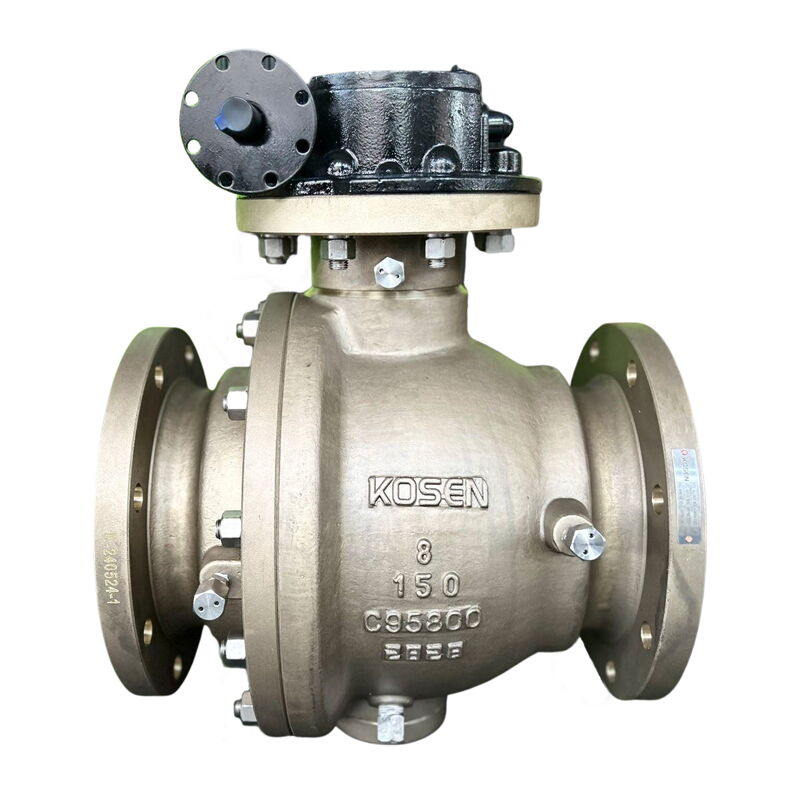
Lined ball valves are particularly attractive for applications requiring tight shutoff, relatively low operating torque, and rapid isolation. Their quarter-turn operating mechanism makes them suitable for automated systems, while full-port designs can minimize pressure loss. Flowserve's Atomac AKH2, for example, uses a full-port configuration intended to reduce pressure loss and pumping costs, with low-friction materials and designs intended to reduce operating torque and fugitive emissions.
For corrosive chemical services, the ball, seats, stem sealing system, and body liner must be evaluated together. A chemically resistant body liner is not sufficient if the stem packing or seat material is incompatible with the process. For high-cycle applications, ball and stem design can also influence durability. A monoblock ball-and-stem configuration may provide advantages for sticky or viscous media, while floating-ball designs can offer different sealing and torque characteristics. Flowserve's AKH8, for example, is designed specifically for sticky, adhesive, and highly viscous fluids and high-cycle applications.
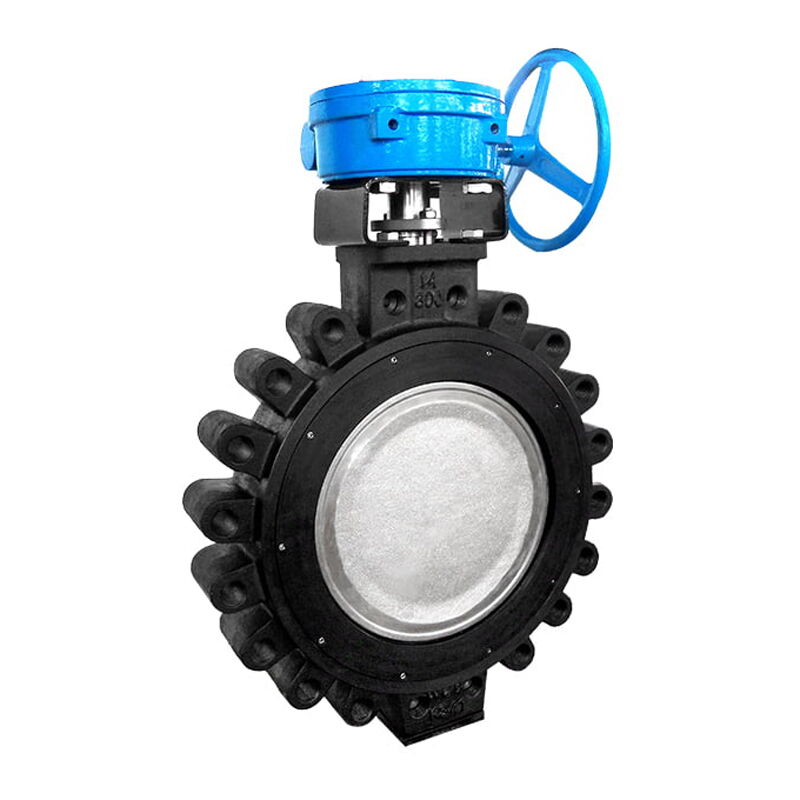
Lined butterfly valves are particularly attractive for larger-diameter pipelines because their compact construction and relatively low weight can provide advantages compared with other valve types. They are widely considered for water treatment, chemical processing, corrosive utilities, and isolation applications where large flow passages are required.
The liner can function as both a corrosion barrier and a sealing element. Consequently, compatibility, compression, temperature, and mechanical interaction between the disc and liner are critical. Flowserve's Batley Valve BV 18000 PTFE-lined butterfly valve, for example, uses PTFE or FEP lining and is designed for corrosion-resistant isolation and control applications. Its documented design incorporates low-friction bearing technology and liner-support features intended to maintain sealing performance.
Where continuous throttling or precise flow control is required, a lined globe or angle valve may be more appropriate than a simple isolation valve. The challenge is that throttling introduces velocity, turbulence, pressure-drop, and erosion considerations that are less dominant in simple on-off service. The liner must therefore withstand not only chemical attack but also the mechanical effects of fluid flow.
Modern lined control valves can combine PFA or other fluoropolymer body protection with specialized trim and sealing technologies. Flowserve's Kämmer LinedFlow control valve, for example, uses PFA lining and offers configurations intended for corrosive liquids and gases, with specialized sealing and trim options. This demonstrates the evolution of lined valves from simple corrosion barriers toward engineered control solutions for demanding process applications.
Diaphragm valves can be particularly useful where contamination control, tight isolation, and aggressive media handling are important. Because the diaphragm separates the operating mechanism from the process fluid, the valve can reduce exposure of mechanical components to corrosive substances. This architecture can be advantageous in pharmaceutical, chemical, and specialty-process applications.
For high-purity applications, however, the complete wetted-path design must be evaluated. Dead legs, surface finish, cleanability, sterilization conditions, diaphragm material, and connection design may be more important than corrosion resistance alone. A valve intended for pharmaceutical service therefore requires a different selection philosophy from one used for bulk acid transfer.
Chemical processing remains one of the most important markets for fluoropolymer-lined valves. Acid production, chlor-alkali processes, solvent handling, specialty chemicals, fertilizer production, and wastewater treatment can involve fluids that rapidly attack carbon steel and many conventional stainless steels. Lined valves provide a practical way to create a corrosion-resistant wetted path while maintaining a structurally robust metallic body.
Flowserve identifies chemical, petrochemical, pharmaceutical, wastewater, and other industrial sectors among the applications for its fluoropolymer-lined valve portfolio. In these facilities, valve reliability has consequences beyond maintenance cost. A failed valve can cause process contamination, chemical release, production interruption, environmental exposure, or personnel hazards. Correct lining selection is therefore part of the plant's overall risk-control strategy.
Pharmaceutical manufacturing places special emphasis on contamination control, cleanability, and material compatibility. Fluoropolymer materials can provide useful combinations of chemical resistance and low surface interaction, particularly when the process involves aggressive cleaning agents or high-purity chemicals.
However, engineers should distinguish between "corrosion resistant" and "pharmaceutical compliant." A material may be chemically appropriate without meeting the regulatory, extractables, surface-finish, or hygienic requirements of a specific pharmaceutical process. Validation requirements, cleaning procedures, sterilization temperatures, and applicable material-contact regulations should therefore be considered during specification.
Semiconductor processes can involve extremely aggressive chemical mixtures combined with stringent contamination requirements. Fluoropolymers such as PFA and PTFE are consequently important materials in wet-process chemical systems. Chemours specifically identifies PFA and PTFE as suitable for aggressive chemical mixtures used in semiconductor processing because of their combination of chemical and temperature resistance.
In this sector, valve selection extends beyond basic pressure and corrosion resistance. Metallic contamination, particle generation, surface quality, permeability, cleaning compatibility, and long-term purity can all affect process yield. High-purity PFA-lined valves and related fluoropolymer components can therefore function as process-quality equipment rather than merely corrosion-protection equipment.
Preventing corrosion does not automatically guarantee zero emissions. A lined valve can have a chemically resistant wetted liner while still experiencing external leakage through the stem seal, body joint, packing, or other interfaces. This is why advanced lined-valve designs increasingly focus on fugitive-emission control as well as internal corrosion protection.
Flowserve's Atomac AKH3.2, for example, is documented as having API 641 and ISO 15848 fugitive-emission certification, together with live-loaded packing and specific body-joint features intended to minimize leakage. For plants handling toxic, volatile, or environmentally regulated chemicals, these features can be highly significant. Valve specifications should therefore address internal seat leakage and external fugitive emissions as separate performance requirements.
Lined valves should be tested according to the applicable design and purchase specifications. Internal pressure testing, seat leakage testing, visual examination, liner inspection, and, where required, specialized liner-integrity testing can help identify defects before commissioning. Some manufacturers use high-voltage inspection processes to verify liner integrity. Flowserve documents such an inspection approach for one of its lined ball-valve designs.
Maintenance teams should also monitor changes in valve torque, leakage, operating time, and process performance. Increasing operating torque may indicate seat deterioration, liner deformation, contamination, or mechanical problems. External leakage or unexpected process contamination should trigger immediate investigation because liner failure can expose the metallic substrate to an aggressive medium.
A common procurement mistake is to specify a lined valve solely by nominal pipe size and pressure class. These parameters are necessary but insufficient. The specification should also identify process chemistry, concentration, operating and design temperature, operating and design pressure, vacuum conditions, flow rate, pressure drop, cycling frequency, valve function, required leakage class, actuator requirements, and cleanliness requirements.
For automated valves, actuator torque is particularly important. Fluoropolymer seats often have favorable friction characteristics, but process pressure, temperature, seat design, and valve geometry still determine the required operating torque. A correct valve body paired with an undersized actuator can produce unreliable operation, while excessive actuator sizing can increase cost and mechanical loading.
Fluoropolymer liners are corrosion-resistant, but they are not immune to mechanical erosion or abrasion. Suspended solids, crystals, abrasive particles, and high-velocity flow can gradually damage the wetted surface. Throttling service is especially demanding because the pressure drop is concentrated across the valve, increasing local velocity and turbulence.
If the process contains solids, engineers should evaluate particle size, hardness, concentration, velocity, and valve geometry. A valve type that is excellent for clean acid service may perform poorly in an abrasive slurry. In such cases, alternative materials, specialized trim, reduced velocity, or a different valve architecture may be necessary.
Repeated thermal cycling can be as damaging as continuously high temperature. The liner and metallic body expand and contract differently, potentially stressing seals and attachment points. Rapid temperature transitions can further increase these effects. Processes involving steam-out, hot-water cleaning, cryogenic service, or batch chemical reactions should therefore include thermal cycling in the valve selection criteria.
The manufacturer's temperature rating should be treated as a design limit rather than a target operating temperature. Continuous operation near the maximum allowable value may reduce mechanical margin and service life. A sensible engineering design normally considers the full temperature envelope, including startup, shutdown, cleaning, upset, and emergency conditions.
Preventive maintenance for lined valves should focus on detecting problems before liner damage becomes a process-containment failure. Inspection priorities include visible corrosion around external interfaces, stem leakage, unusual operating torque, seat leakage, body-joint condition, actuator performance, and evidence of process contamination.
If a valve is removed from service, the liner can be inspected for cracks, blisters, deformation, delamination, discoloration, abrasion, and other signs of chemical or thermal damage. The inspection findings should be compared with process history. For example, localized damage may indicate flow erosion, while widespread deformation may point toward temperature or vacuum exposure.
Digital plant systems provide opportunities to move from scheduled replacement toward condition-based maintenance. Valve position, actuator torque, cycle count, operating pressure, temperature, and leakage information can be trended over time. A gradual increase in actuator torque may indicate increasing friction or liner degradation, while changes in leakage may indicate seat or sealing-system deterioration.
For critical services, these trends can be integrated into maintenance planning. Instead of waiting for a valve to fail, engineers can identify abnormal behavior and schedule inspection during a planned shutdown. This reduces unplanned downtime and improves the reliability of the corrosion-control system.
Fluoropolymer technology continues to evolve through improved formulations, reinforcement, processing, and liner architecture. Materials such as modified PTFE, PFA, FEP, conductive fluoropolymers, and specialized grades can be selected for different combinations of chemical resistance, dimensional stability, electrical behavior, and mechanical performance. Chemours, for example, documents conductive PFA grades designed for applications requiring chemical and thermal resistance together with controlled electrical conductivity.
These developments are relevant to industries where static electricity, contamination, and aggressive chemistry intersect. However, material innovation does not eliminate the need for engineering validation. Each new liner system must still be evaluated against pressure, temperature, chemical compatibility, mechanical loads, and regulatory requirements.
The next stage of development is likely to combine advanced liner materials with intelligent valve monitoring. Smart actuators and positioners can provide information about valve position, operating torque, cycle frequency, travel time, and abnormal behavior. When combined with process data, these signals can help identify degradation before it becomes a visible leak or functional failure.
For chemical plants, this represents an important shift from passive corrosion resistance toward active asset management. The lined valve becomes part of a broader digital maintenance system in which material performance, mechanical condition, and process behavior are continuously evaluated.
Fluoropolymer-lined valves have evolved from relatively simple corrosion-resistant components into sophisticated process-control equipment capable of addressing demanding chemical, pharmaceutical, petrochemical, wastewater, semiconductor, and high-purity applications. Their fundamental advantage comes from combining the mechanical strength of a metallic substrate with the chemical resistance of a fluoropolymer wetted barrier. PTFE, PFA, and FEP each offer valuable characteristics, but their suitability depends on the actual chemical composition, concentration, temperature, pressure, mechanical loading, and cleanliness requirements.
The most important engineering principle is that liner selection cannot be separated from valve design. Vacuum conditions, thermal cycling, pressure-temperature limits, permeation, abrasion, stem sealing, seat performance, and fugitive emissions all need to be evaluated together. Ball, butterfly, globe, plug, and diaphragm valves each offer different advantages depending on whether the primary requirement is rapid isolation, high flow capacity, tight shutoff, throttling, or contamination control. Modern lined-valve designs already demonstrate how fluoropolymer materials can be integrated with advanced sealing, low-friction, anti-static, and fugitive-emission technologies.
Ultimately, the best fluoropolymer-lined valve is not simply the one with the most corrosion-resistant material. It is the valve whose liner, body, seats, seals, actuator, pressure rating, temperature range, and maintenance strategy have all been matched to the real process conditions. As industrial facilities pursue higher safety, tighter emissions control, greater cleanliness, and longer maintenance intervals, properly engineered fluoropolymer-lined valves will remain an important defense against corrosion and a key component of reliable fluid-control systems.