How to Choose the Right Control Valve
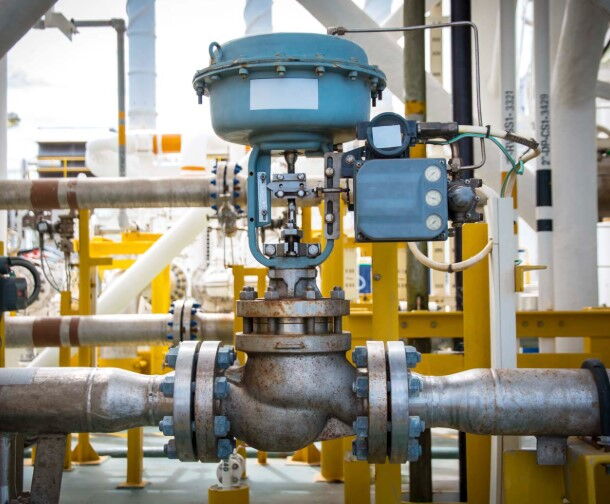
In industrial production processes, control valves play a vital role. Much like a precise faucet, they accurately regulate parameters such as fluid flow rate and pressure, thereby ensuring the stable operation of the entire production system. However, with the wide variety of control valves available on the market, how can one choose the most suitable option? This article provides a detailed explanation of the key considerations in control valve selection, helping you make an informed decision among numerous choices.
- Smooth Operation: The operation of a control valve must be smooth and reliable. In practical applications, frequent opening, closing, and modulation of valves are common. If valve movement is not smooth, it may cause flow fluctuations and consequently affect process stability. For example, in chemical production, certain reactions require extremely precise flow control. Any sticking or lagging in valve operation may result in incomplete reactions or even safety incidents.
- Good Throttling Performance at Small Openings: In many processes, control valves are required to perform fine adjustments at small openings. This demands good controllability at low openings, avoiding sudden flow changes or loss of control. For instance, in fine chemical production, some materials are added in very small quantities, making small-opening control performance particularly critical.
- Appropriate Flow Characteristics: Flow characteristics describe the relationship between valve opening and flow rate. Common types include linear, equal percentage, and quick-opening characteristics. The appropriate flow characteristic should be selected based on specific process requirements. For example, linear flow characteristics are more suitable for applications with small pressure differential changes and high flow control accuracy requirements, whereas equal percentage characteristics are advantageous in applications requiring wide flow range adjustment with large pressure differential variations.
- Sufficient Rangeability: Rangeability refers to the ratio of the maximum controllable flow to the minimum controllable flow. When selecting a control valve, its rangeability must meet process requirements. Insufficient rangeability may prevent accurate flow control under certain operating conditions. For example, if a system requires a rangeability of 50:1 but the selected valve only provides 10:1, effective control at low flow rates may not be achievable.
- Low Resistance and High Flow Capacity: Low flow resistance and high flow capacity are important performance indicators. Low resistance reduces energy loss as fluid passes through the valve, improving overall system efficiency. High flow capacity means that a valve can pass a larger flow at the same nominal size. This is particularly important for improving production efficiency and reducing energy consumption. For example, in large petrochemical installations, excessive valve resistance can significantly increase pump energy consumption and operating costs.
- Reasonable Response Speed: Response speed refers to the time required for a control valve to transition from one position to another. In fast-response systems, this is especially critical. For instance, in steam systems requiring rapid pressure regulation, slow valve response may cause large pressure fluctuations, adversely affecting process stability.
- Leakage Rate: Leakage rate is a key indicator of sealing performance. Different processes have different leakage requirements. In the production of hazardous chemicals, leakage tolerance is extremely low, as even minor leakage may cause serious safety incidents. Therefore, the appropriate leakage class must be selected according to process requirements. Generally, leakage for single-seat globe valves should be ≤0.01% of the rated Cv, while for double-seat valves it should be ≤0.1% of the rated Cv.
- Shutoff Differential Pressure: Shutoff differential pressure refers to the maximum pressure differential a valve can withstand when fully closed. This parameter is often overlooked but is critically important. Insufficient shutoff differential pressure may prevent complete closure, resulting in leakage. In high-pressure-differential applications, this factor is especially crucial. For example, in high-pressure steam systems, inadequate shutoff capability can cause steam leakage, leading to energy loss and potential safety hazards.
Even in seemingly clean media, clogging can occur. Impurities and particles in pipelines may enter the valve and cause blockage, which is a common failure mode. Therefore, anti-clogging performance must be considered. Generally, rotary (quarter-turn) control valves have much better anti-clogging performance than linear-motion valves due to their more favorable flow path design, which reduces the accumulation of debris. With technological advancements, the application of rotary control valves is expected to become increasingly widespread.
Corrosion resistance is a critical factor in control valve selection and includes resistance to erosion, cavitation, and chemical corrosion. It directly affects service life and economic performance. Valve materials should be selected based on the process medium and operating conditions. For non-corrosive fluids, stainless steels such as 1Cr18Ni9 and 1Cr18Ni9Ti are commonly used. For strongly corrosive fluids, materials must be selected based on fluid type, concentration, temperature, and pressure, such as 1Cr18Ni9Ti, 0Cr18Ni12Mo2Ti, Alloy 20, Hastelloy, and titanium alloys.
- Pressure Resistance: Pressure resistance mainly involves the valve's nominal pressure and operating pressure. The selected valve must meet process pressure requirements, while also accounting for the effects of differential pressure. High differential pressure may cause cavitation and reduce valve life. Therefore, nominal and operating pressure ratings should be selected based on actual conditions.
- Temperature Resistance: Temperature resistance refers to the maximum allowable operating temperature of the valve. Process temperatures vary widely. Generally, temperatures below 450 °C are relatively easy to manage; 450–600 °C is more challenging; above 600 °C, conditions become complex. For example, for carbon steel valves with PN 1.6 MPa rating: at 200 °C, the maximum allowable pressure is 1.6 MPa; at 250 °C, it drops to 1.5 MPa; at 400 °C, it is only 0.7 MPa. Therefore, valve materials and structures must be selected carefully according to temperature conditions.
In practical applications, control valves with good appearance and lighter weight are generally preferred. Aesthetic design enhances overall equipment presentation, while lightweight construction facilitates installation and maintenance. Thus, valves with simple appearance and moderate weight should be selected whenever possible.
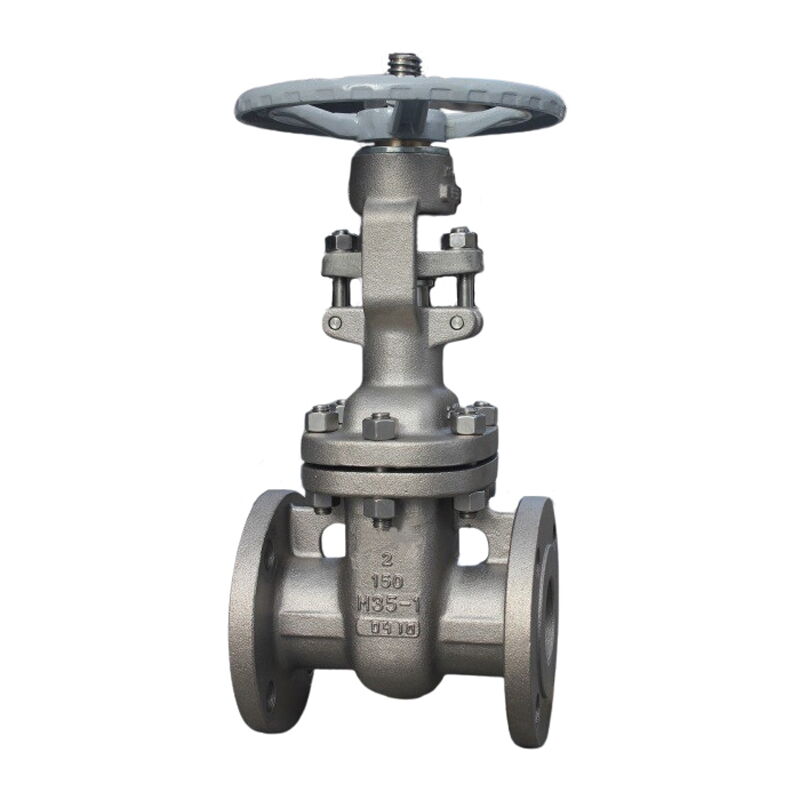
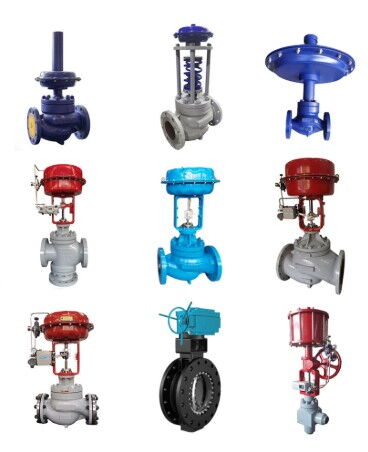
- Single-Seat Globe Valve: Suitable for applications with small flow rates, low leakage requirements, and small pressure differentials. Valves with diameters below 20 mm are also widely used in higher differential pressure applications. However, they are not suitable for very large pressure differentials or for high-viscosity or particulate-laden fluids.
- Double-Seat Globe Valve: Suitable for applications with large flow rates, large pressure differentials, and less stringent leakage requirements. Not suitable for high-viscosity or particulate-laden fluids, shutoff applications, or small-opening operation, where vibration may occur.
- Sleeve (Cage) Valve: Suitable for clean fluids without solid particles. Performs well under large pressure differentials and in applications prone to flashing or cavitation. Not suitable for high-temperature applications, as thermal expansion may cause the plug to seize due to small clearances.
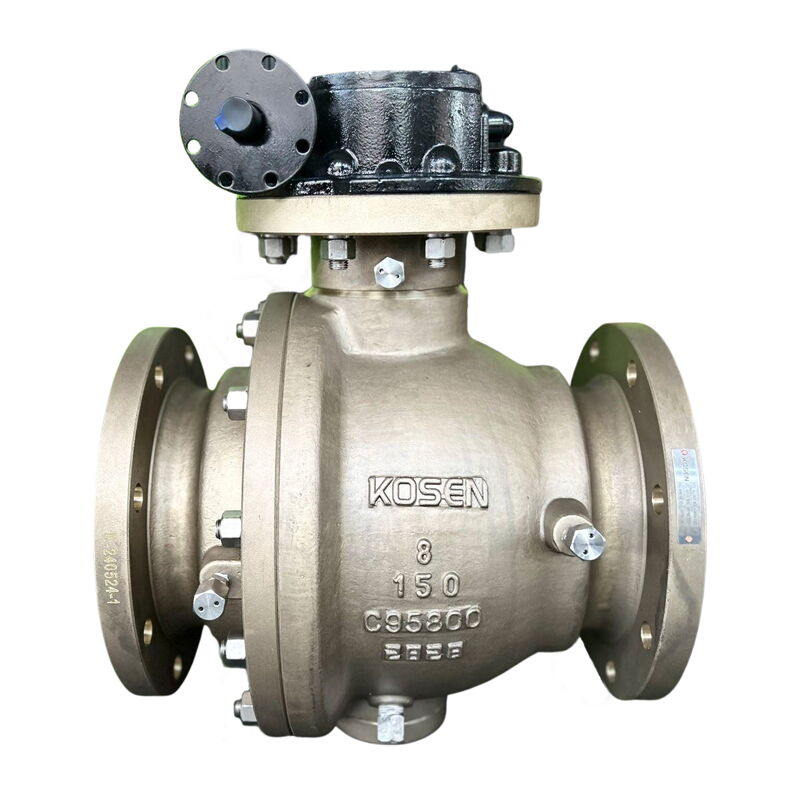
- Ball Valve: Suitable for high-viscosity, fibrous, particulate, and dirty fluids. Can meet requirements for wide rangeability (up to 200:1 or 300:1). “O”-type ball valves are typically used for on-off service, while “V”-type ball valves are used for continuous control with flow characteristics close to equal percentage. Soft seat materials enable tight shutoff applications.
- Angle Valve: Generally suitable for high-viscosity or suspended-solid fluids (with flushing connections if necessary), gas–liquid two-phase or flashing fluids, and piping systems requiring right-angle connections. High-pressure angle valves are suitable for high static pressure and large differential pressure conditions, provided internal materials and structures are properly selected.
- Eccentric Rotary Valve: Suitable for applications requiring large flow capacity, wide rangeability (up to 50:1 or 100:1), large differential pressure, and tight shutoff.
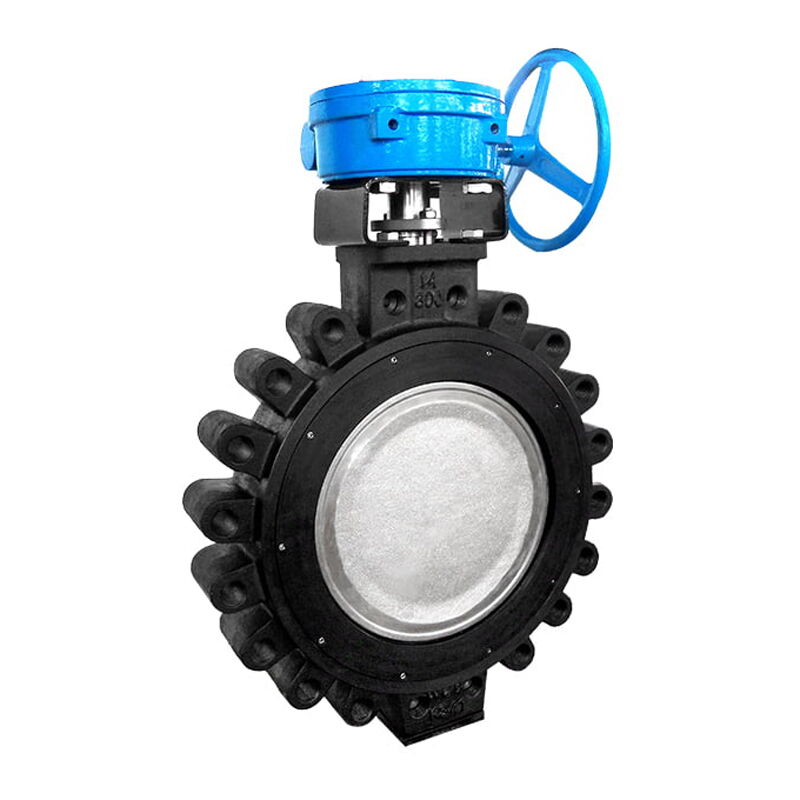
- Butterfly Valve: Suitable for large-diameter, large-flow, low-pressure-differential applications, as well as slurry or particulate-laden fluids. For tight shutoff requirements, rubber or PTFE soft seals should be used. Corrosive fluids require appropriate corrosion-resistant linings.
- Three-Way Valve: Suitable for mixing and diverting applications with fluid temperatures below 300 °C, and for simple ratio control. The temperature difference between the two fluids should not exceed 150 °C.
- Diaphragm Valve: Suitable for highly corrosive, high-viscosity, particulate- or fiber-containing fluids where flow characteristics are not critical. Not suitable for pressures above 1 MPa or temperatures above 150 °C due to diaphragm liner limitations.
- Bellows-Sealed Valve: Suitable for vacuum systems and applications involving highly toxic, volatile, or valuable fluids.
- Cryogenic Control Valve: Suitable for low-temperature and deep cryogenic applications. For media temperatures between −100 and 40 °C, valves with heat-dissipating fins (heat absorption) and flexible graphite packing may be used. For temperatures between −200 and −100 °C, long-neck cryogenic valves are recommended.
- Body-Separated Control Valve: Suitable for high-viscosity, particulate, crystalline, and fibrous fluids. For strong acids, alkalis, or highly corrosive fluids, corrosion-resistant linings should be used, and valve internals should be made of corrosion-resistant materials. Flow characteristics are better than diaphragm valves.
- Low-Noise Valve: Suitable for applications involving liquid flashing, cavitation, or gas flow velocities exceeding sonic speed at the vena contracta, with predicted noise levels above 95 dB(A).
- Quick-Acting Shutoff Valve: Suitable for two-position control systems and applications requiring emergency opening or closing during process upsets.
- Self-Operated Control Valve: Suitable for applications with small flow variations, low control accuracy requirements, or limited instrument air supply.
- Linear Flow Characteristic: Suitable when pressure drop across the valve is constant or changes little, the main process variable changes slightly, pressure drop exceeds two-thirds of the maximum pressure, or valve resistance ratio S > 0.75. Linear valves have narrower plug profiles than equal percentage valves, making them less prone to wear in services with suspended solids. For slow processes, linear characteristics are also recommended when S > 0.4.
- Equal Percentage Flow Characteristic: Suitable for applications with increasing load and decreasing pressure drop, wide control range requirements, large system pressure losses, and significant changes in valve opening and pressure drop. Recommended when system dynamics are not well understood in fast processes.
- Quick-Opening Characteristic: Suitable for two-position applications or when maximum flow capacity is required quickly. Also applicable when the controller must be set with a wide proportional band.
- Flow Direction: Different valve types have different flow direction requirements. Ball valves and standard butterfly valves are generally non-directional. Three-way valves, Venturi angle valves, and cage valves with balanced holes have specified flow directions. Single-seat valves, angle valves, high-pressure valves, unbalanced cage valves, and small-flow control valves can select flow direction as required. In two-phase flow discharge, flow capacity should be calculated separately for each phase and then summed.
- Flow Capacity: Larger flow requires larger flow capacity, larger valve size, and higher cost. Oversized valves often operate at small openings, leading to severe plug erosion, while undersized valves cannot meet process requirements. Typically, the design maximum flow is taken as 1.1–1.5 times the steady-state maximum flow.
- Valve Body Materials: Cast iron bodies are not suitable for steam, wet gas, flammable fluids, or ambient temperatures below −20 °C. Cast steel and forged steel bodies generally meet or exceed the pressure, temperature, and corrosion resistance requirements of connected piping. Standard manufacturer designs are preferred. Forged steel offers better quality, impact resistance, ductility, toughness, and strength than cast steel, but at higher cost.
- Internal Trim Materials: For non-corrosive fluids, stainless steels such as 1Cr18Ni9 and 1Cr18Ni9Ti are commonly used. For corrosive fluids, materials should be selected based on fluid type, concentration, temperature, pressure, oxidizing properties, and flow velocity. Common corrosion-resistant materials include 1Cr18Ni9Ti, 0Cr18Ni12Mo2Ti, Alloy 20, Hastelloy, and titanium alloys. Wear-resistant materials are suitable for high-velocity, erosive conditions, such as heat-treated 9Cr18, 17-7PH, chromium–molybdenum steels, and G6X. For high-viscosity or fibrous media, O-type and V-type ball valves are commonly used. In flashing, cavitation, or particulate-laden services, valve plug and seat surfaces should be hardened, such as by Stellite hardfacing. Internals must resist corrosion, erosion, cavitation, and flashing damage.
Control valve selection is a complex and meticulous process requiring comprehensive consideration of many factors. From basic performance requirements to sealing, corrosion resistance, pressure and temperature capabilities, valve type selection, flow characteristics, flow direction and capacity, and material selection, every aspect is critical. Only by selecting the appropriate control valve based on specific process requirements and operating conditions can optimal performance be achieved, improving efficiency, reducing costs, and ensuring safe operation. In practice, it is recommended to communicate thoroughly with experienced technical professionals or suppliers and make scientifically sound decisions based on real-world experience. This article aims to provide useful guidance and help you navigate the control valve selection process with greater confidence and effectiveness.