Top Entry Ball Valve: Design, Structure and Applications
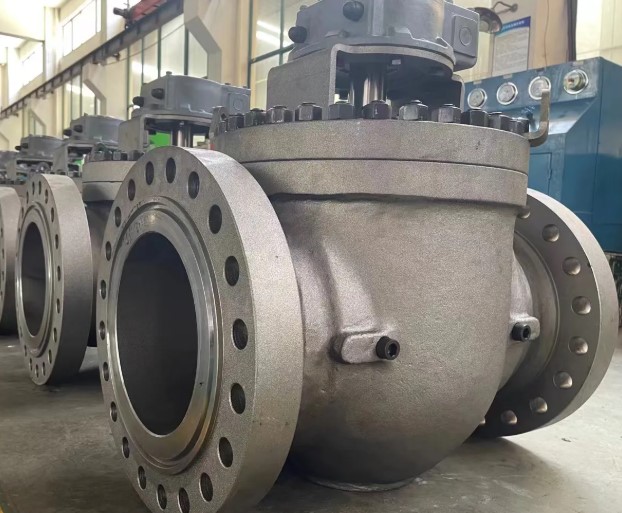
A top entry ball valve is a special type of ball valve characterized by its inlet located at the top of the valve body. This design allows internal components such as the ball and seat to be installed or removed directly from the top of the valve without disconnecting the valve from the pipeline system. This structural feature greatly facilitates maintenance and repair in industrial piping systems, significantly reducing downtime and improving production efficiency, particularly in continuous processing industries such as oil and gas, chemical, and power generation.
Compared with conventional ball valves, top entry ball valves integrate advantages of both gate valves and ball valves. They retain the rapid opening and low flow resistance characteristics of ball valves while also offering reliable sealing performance and convenient maintenance similar to gate valves. Depending on structural configuration, top entry ball valves can be divided into floating ball type and trunnion-mounted fixed ball type, each suitable for different pressure ratings and operating conditions.
The long-term stable operation of top entry ball valves under severe service conditions is mainly attributed to their unique structural design. Compared with ordinary ball valves, innovations in sealing configuration, ball structure, and preload control effectively address sealing challenges under high temperature, high pressure, and wear-prone environments while enabling online maintenance.
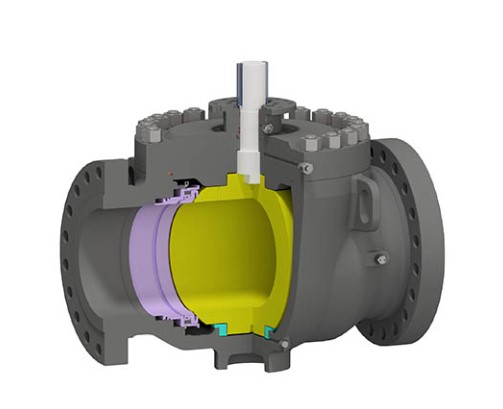
The most important design feature of the top entry ball valve is the double-inclined sealing surface of the valve body. Instead of flat surface contact, the valve body sealing surface is machined into two coordinated inclined planes, forming an inclined contact relationship among the seat, body, and ball.
Design principle: The flow-through hole of the ball is designed with an eccentric structure relative to the ball center, typically with an eccentric angle of about 5 degrees, creating a certain inclined surface on the ball body. Meanwhile, the large-diameter end of the valve body flow port is offset by approximately 3° to 5° relative to the valve body centerline.
During assembly, the ball and two sealing rings are inserted from the top of the valve body into the pre-machined double-inclined surfaces. Sealing is achieved through the combined effect of the inclined surfaces and the compression spring installed inside the valve stem.
This double-inclined design offers several significant advantages. First, it provides automatic compensation capability. When minor wear occurs on the sealing surface, the spring force automatically compensates for the loss, maintaining reliable sealing performance. Second, the operating torque is relatively low, making valve operation easier. Third, the sealing contact pressure is more evenly distributed, extending the service life of the sealing pair.
It should be noted that machining of the double-inclined sealing surface requires extremely high manufacturing precision. During production, the flange end face is used as the reference datum, and special fixtures are employed to align the valve body bore before precision machining. Such high-precision processing is fundamental to ensuring sealing performance.
Depending on pipeline pressure and operating conditions, top entry ball valves may adopt either soft sealing or metal sealing structures.
The soft seat is usually embedded within the outer metal seat ring, which helps reduce deformation during operation and prevents direct erosion of soft sealing materials by the medium. The inner metal ring is further inserted into the seat to form a sandwich structure of “metal – soft sealing material – metal”.
An additional important function of this design is fire resistance. If the soft sealing material is damaged by fire, the inner and outer metal protection rings can still provide sealing capability, meeting the fire protection requirements of API-6D standards. This feature is particularly important in flammable and explosive environments such as petrochemical facilities.
High-quality polytetrafluoroethylene (PTFE) is commonly used for soft sealing rings due to its low friction coefficient, stable performance, resistance to aging, and excellent sealing properties, enabling reliable sealing under normal operating conditions.
When the operating temperature reaches 425°C or when the valve is used in environments containing solid particles or dust, metal sealing must be adopted.
Metal sealing requires more specialized processing techniques. The sealing pair may undergo hard chromium plating treatment. Depending on the ball material, surface hardening processes such as chromium plating, corrosion-resistant alloy overlay welding, plasma nitriding, or supersonic metal particle spraying may be applied.
The seat sealing contact surface is often overlay welded with Stellite alloy or other corrosion-resistant materials followed by plasma nitriding treatment. The ball and seat must be precisely matched through lapping to form a continuous sealing band, achieving the goal of zero leakage.
In floating top entry ball valves with nominal size ≤ DN200, a compression spring is applied to the ball to generate preload force, ensuring continuous close contact between sealing surfaces under all operating conditions.
The seat-to-body contact surface is designed with a 10° wedge angle to enable self-locking. Even under high medium pressure acting along the pipeline direction, the seat will not shift. This structure combines the self-locking characteristics of gate valves with the sealing advantages of ball valves.
To address potential leakage between the valve body and seat, an O-ring is added to the back side of the seat sealing surface. This improvement effectively eliminates backside leakage without increasing closing torque.
For early designs of trunnion-mounted top entry ball valves, problems such as unadjustable spring preload and difficult assembly were common. Improvements include the use of ASTM 302 stainless steel instead of 304 stainless steel for spring material due to its higher stiffness and comparable corrosion resistance.
In addition, a spring seat and adjustment nut are introduced. Threads are machined on both the outer seat surface and spring seat, allowing preload control by adjusting the nut. This design allows the spring to be pre-compressed before ball installation, simplifying assembly. After installation, preload force can be precisely adjusted.
To meet diverse operating requirements, top entry ball valves have evolved into several structural variants based on ball support method, flow passage configuration, and sealing material.
Floating top entry ball valve: The ball is not rigidly fixed and may float slightly under medium pressure. Sealing is achieved by medium pressure pushing the ball against the seat. This structure is generally suitable for medium and low-pressure conditions and is characterized by simple structure and relatively low cost.
Trunnion-mounted top entry ball valve: The ball is fixed by upper and lower shafts and does not move under fluid pressure. Sealing is achieved through spring preload force. This type is suitable for high-pressure and large-diameter applications, offering stable operating torque and reliable sealing performance.
Shaft-supported top entry ball valve: Additional stability is provided by a through-shaft support structure. This design is suitable for large-diameter high-pressure applications and can withstand greater medium thrust forces.
Full bore top entry ball valve: The ball and seat diameter are equal to the inner diameter of the pipeline, maintaining a flow passage size consistent with the pipe. This design minimizes flow resistance, making it suitable for applications requiring low pressure drop and pipeline cleaning operations.
Reduced bore top entry ball valve: The ball and seat diameter are smaller than the pipeline diameter. Although this configuration results in higher pressure loss, it is an economical choice when cost control or installation space is limited.
Soft-seal top entry ball valve: Elastic materials such as PTFE are used as sealing pairs. This type offers excellent sealing performance, low operating torque, and is suitable for normal temperature and clean media conditions.
Metal-seal top entry ball valve: Metal-to-metal sealing structures are adopted to withstand high temperature, high pressure, and erosive media, making them suitable for severe service environments.
Working Principle: The operation of a top entry ball valve is based on the rotational motion of the ball. A metal ball with a through hole is used as the opening and closing element inside the valve. When the ball rotates so that the ball bore aligns with the flow direction of the fluid, a straight-through channel is formed and the medium can pass smoothly through the valve. In this state, the flow resistance coefficient is very small and approaches the resistance characteristics of a straight pipe section. When the ball rotates 90 degrees so that the ball bore is perpendicular to the fluid flow direction, the solid portion of the ball blocks the flow channel, achieving shutoff sealing. The rotation of the ball is usually controlled by a valve handle or actuator, allowing simple and rapid operation.
Operating Characteristics: The opening and closing torque of top entry ball valves is relatively small, making operation convenient. This advantage is derived from the double-inclined sealing structure and reasonable spring preload design. The valve switching position can be equipped with a locking device to prevent accidental operation and ensure correct valve positioning. In terms of operation mode, top entry ball valves offer strong adaptability. They can be operated manually using a handle or equipped with pneumatic, electric, or hydraulic actuators to achieve remote automatic control, meeting modern industrial automation requirements.
Top entry ball valves are widely favored in industrial applications due to multiple outstanding advantages, particularly in maintenance convenience and long-term economic performance.
This is the most prominent advantage of top entry ball valves. With an integrated wedge-type top entry structure, internal components can be repaired or replaced without removing the valve from the pipeline. The maintenance procedure is simple: remove the middle flange bolts and nuts, lift the bonnet and stem assembly from the valve body, then remove the ball and seat assembly for online repair or replacement.
This design significantly improves work efficiency and operating conditions. When valve failure occurs in a pipeline, maintenance can be performed quickly, minimizing production losses. This advantage is especially significant for large pipeline systems or installations with limited space.
Top entry ball valves are usually manufactured from high-strength materials such as stainless steel, giving them excellent resistance to high temperature, high pressure, and corrosive environments.
High-quality V-shaped packing is installed inside the bonnet to provide sealing and friction reduction functions. This packing also offers good self-sealing performance.
The middle flange uses metal gaskets with strong tensile and compressive resistance, improving corrosion and temperature resistance and extending service life. The overall structure is compact and aesthetically designed, meeting relevant manufacturing standards.
The double-inclined sealing structure combined with spring automatic compensation allows the valve to automatically compensate for sealing surface wear during long-term operation, maintaining reliable sealing performance. The fire-safe structure also complies with API-6D requirements, improving operational safety.
Metal sealing structures are treated by surface hardening and matching lapping processes to achieve zero leakage and meet strict gas-tight sealing requirements. Soft sealing structures utilize the excellent properties of PTFE materials to provide reliable sealing under normal working conditions.
Many top entry ball valves adopt full-bore design, effectively reducing flow resistance and pressure drop while improving energy efficiency. The valve supports bidirectional flow and offers flexible installation and stable operation regardless of flow direction.
Due to wear-resistant materials and automatic compensation structure, the service life of top entry ball valves is typically 1–2 times longer than that of ordinary ball valves. Surface hardening treatment, high-quality material selection, and optimized structural design jointly ensure long-term reliable operation.
Top entry ball valves are widely used across almost all industrial sectors.
In the petrochemical industry, they are extensively applied in oil and gas pipelines, as well as in production units such as oil extraction, refining, petrochemicals, and chemical fiber processing. They can handle various media including petroleum products, natural gas, and chemical fluids.
In the power energy industry, they are used in piping systems of thermal power, nuclear power, and combined heat and power plants, suitable for steam, water, and oil media.
In the metallurgical industry, they are suitable for oil engineering, corrosive fluid systems, and alumina powder conveying systems, capable of withstanding high temperature and abrasive media.
They are also widely used in light industry, construction, food processing, paper manufacturing, and water treatment. Applications include both onshore facilities and offshore engineering.
Typical operating conditions include high pressure, high temperature, low temperature, corrosive media, media containing solid particles, and viscous fluids. Selecting appropriate sealing materials and configurations according to specific service conditions is essential to ensure reliable valve operation.
- Structural difference: The most significant difference lies in the location of the maintenance entry. The top entry ball valve allows internal maintenance from the top of the valve body, while side entry ball valves allow fluid entry and exit from the side, usually requiring valve removal for maintenance.
- Maintenance convenience: Top entry ball valves offer superior maintenance advantages since internal inspection, cleaning, or component replacement can be performed without removing the pipeline.
- Space adaptability: Side entry ball valves are generally more compact and may be more suitable for pipeline systems with limited vertical installation space. Top entry ball valves require sufficient operating space above the valve.
- Pressure rating: Top entry ball valves can generally withstand higher operating pressures and are suitable for high-pressure applications requiring structural integrity and sealing stability.
- Selection recommendation: The choice between the two should be based on application conditions, including space limitation, pressure level, maintenance frequency, installation constraints, and cost factors. For applications requiring frequent maintenance or uninterrupted operation, top entry ball valves are preferred; for extremely space-limited installations with low maintenance requirements, side entry valves may be more suitable.
- Installation guidelines: Before installation, verify that the valve specification and model meet design requirements and check for any surface damage. Pay attention to flow direction markings during installation. Although top entry ball valves usually support bidirectional flow, some special designs may have directional requirements. Flange connections should be tightened evenly to avoid additional stress. After installation, perform opening and closing tests to ensure smooth operation and reliable sealing.
- Routine maintenance: Regularly check the valve packing gland for leakage and tighten or replace packing if necessary. Inspect valve stem thread lubrication and replenish grease in a timely manner. Monitor operating torque; a significant increase may indicate internal wear or medium accumulation.
- Online maintenance: When online maintenance is required, ensure that the pipeline medium is drained and pressure is fully released in accordance with safety operating procedures. Disassemble the bonnet in the correct sequence and protect sealing surfaces from damage. After replacing parts, readjust spring preload force to ensure sealing performance.
Top entry ball valves play an important role in modern industrial pipeline systems due to their unique double-inclined sealing structure, convenient online maintenance capability, and reliable sealing performance. From a design perspective, the automatic compensation mechanism of the double-inclined structure, reasonable spring preload design, and multiple sealing options collectively ensure reliable operation under various working conditions.
With the continuous improvement of industrial automation and increasing production efficiency requirements, the advantages of top entry ball valves will become more prominent. Whether in new construction projects or pipeline renovation, proper selection of top entry ball valves can improve system reliability and economic efficiency. For engineering designers and maintenance personnel, a deep understanding of the structural principles and characteristics of top entry ball valves helps maximize their advantages and ensure safe and stable industrial operation.