A Complete Guide to Mechanical Steam Traps
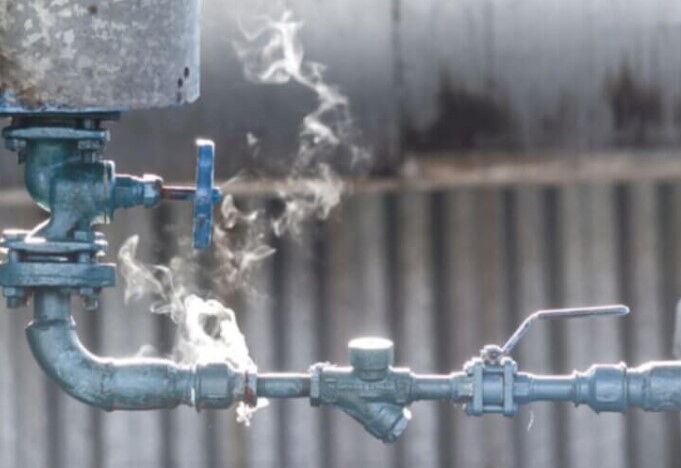
In industrial production, steam systems play a vital role, and steam traps are among the key components that ensure their efficient and reliable operation. Today, we take an in-depth look at mechanical steam traps, high-efficiency devices that discharge condensate while preventing steam loss by utilizing the density difference between condensate and steam.
Mechanical steam traps, also known as float-type steam traps, operate based on the density difference between condensate and steam. Changes in the condensate level cause a float to rise or fall, driving the valve to open or close, thereby achieving effective condensate discharge while blocking steam.
These traps offer numerous advantages: minimal subcooling, insensitivity to fluctuations in operating pressure and temperature, immediate discharge whenever condensate is present, and no water accumulation inside heating equipment. As a result, heating systems can operate at optimal heat transfer efficiency. With a maximum back pressure ratio of up to 80% and high operating efficiency, mechanical steam traps are considered ideal for process heating applications.
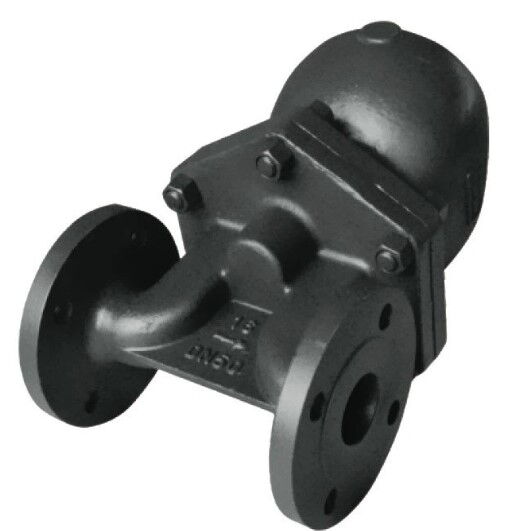
Mechanical steam traps are mainly classified into free float steam traps, free half-float steam traps, lever float steam traps, inverted bucket steam traps, and combined superheated steam traps. Their working principles are outlined below.
The free float steam trap features a simple structure with only one moving part: a precision-polished stainless steel hollow float. This float serves as both the sensing element and the valve closure, with no wearing parts, resulting in a long service life. YQ steam traps are equipped with a highly sensitive Y-series automatic air vent, enabling efficient automatic air removal and high operating quality.
When the system starts up, air in the pipeline is discharged through the Y-series air vent. Low-temperature condensate then enters the trap, raising the liquid level and lifting the float, which opens the valve and rapidly discharges condensate. Steam quickly enters the equipment, allowing fast warm-up. As the temperature increases, the thermostatic fluid in the air vent expands, causing the air vent to close. The trap then enters normal operation, with the float moving up and down in response to condensate level changes to continuously discharge condensate while preventing steam loss.
The valve seat of a free float steam trap always remains below the condensate level, forming a water seal that prevents steam leakage and ensures excellent energy efficiency. The minimum operating pressure is as low as 0.01 MPa, and performance remains unaffected by pressure or temperature fluctuations within the operating range. It continuously discharges condensate at saturation temperature with zero subcooling, ensuring no water retention in heating equipment and maximum heat transfer efficiency. With a back pressure ratio exceeding 85%, it is one of the most ideal traps for process heating equipment.
The free half-float steam trap has only one moving component: a downward-facing half-float bucket that functions as both the valve closure and the sealing element. The entire spherical surface provides sealing, resulting in a very long service life. It is resistant to water hammer, has no vulnerable parts, operates reliably without failures, and ensures zero steam leakage. The back pressure ratio exceeds 80%.
This trap discharges condensate at saturation temperature with zero subcooling, preventing water accumulation in heating equipment and maintaining optimal heat transfer efficiency.
At startup, air and low-temperature condensate enter the trap through a jet pipe. The bimetallic air-vent element pushes the bucket away from the seat, opening the valve and rapidly discharging air and condensate. When steam enters the bucket, buoyancy is generated while the internal temperature rises, causing the bimetallic element to contract. The bucket moves toward the valve seat, closing the valve. As steam inside the bucket condenses, buoyancy is lost, the bucket sinks, the valve opens, and condensate is discharged. This cycle repeats, enabling intermittent or continuous operation.
The lever float steam trap shares the same basic characteristics as the free float steam trap. Internally, a float is connected to a lever that drives the valve plug, opening and closing the valve in response to condensate level changes.
By using a double-seat design, the lever float steam trap significantly increases condensate discharge capacity, achieving a compact size with a large flow rate. With a maximum capacity of up to 100 tons per hour, it is an ideal choice for large heating equipment.
The inverted bucket steam trap, also known as an inverted bucket-type trap, uses an inverted bucket as the liquid-level sensing element. The bucket opening faces downward and is connected to a lever that operates the valve.
This trap can discharge air, withstand water hammer, and offers good resistance to contamination. It features minimal subcooling and a steam leakage rate of less than 3%, with a maximum back pressure ratio of 75%. However, due to its more complex linkage and lower sensitivity compared to free float traps, it is less responsive. Since valve closure relies on the upward buoyancy of steam, it is not suitable for applications where the operating differential pressure is below 0.1 MPa.
At startup, air and low-temperature condensate enter the trap, causing the bucket to sink under its own weight and open the valve, rapidly discharging air and condensate. When steam enters the bucket, buoyancy lifts it, driving the lever to close the valve. A small vent hole in the bucket allows part of the steam to escape while the remaining steam condenses, causing the bucket to lose buoyancy and sink again, reopening the valve. This process repeats in a cyclic, intermittent discharge mode.
The combined superheated steam trap features two isolated valve chambers connected by stainless steel tubes. It integrates the advantages of float-type and inverted bucket steam traps. With an advanced and well-engineered structure, it effectively discharges condensate formed during the disappearance of superheated steam under conditions of high temperature, high pressure, and low load, while preventing superheated steam leakage.
The maximum allowable temperature is 600 °C. The valve body is made entirely of stainless steel, and the valve seat is constructed from hard alloy steel, ensuring long service life. Designed specifically for superheated steam applications, this trap has obtained two national patents and filled a domestic technological gap.
When condensate enters the lower valve chamber, the auxiliary valve float rises with the liquid level and seals the steam inlet. Condensate then flows through the inlet guide tube into the upper main valve chamber. The inverted bucket sinks under its own weight, opening the main valve to discharge condensate. As the condensate level in the auxiliary chamber drops, the float descends and opens the auxiliary valve. Steam then enters the inverted bucket in the upper chamber, generating buoyancy and closing the main valve. When condensate accumulates again, the next operating cycle begins, resulting in intermittent discharge.
Mechanical steam traps operate on the principle of specific gravity difference, primarily the density difference between steam and water, rather than relying on temperature changes or velocity/phase variations, as other types of traps do. Valve operation depends on the float rising and falling with condensate flow, allowing highly accurate performance largely unaffected by external factors.
This is the most significant advantage of mechanical steam traps over thermostatic and thermodynamic steam traps, whose operation can be influenced by external conditions such as rain, wind, or insulation quality.
All steam systems generate condensate, even superheated steam systems with minimal condensate production. Therefore, steam traps are still essential, and understanding their behavior under extremely low load conditions is critical.
In superheated steam systems, condensate generation is typically very low. In such cases, inverted bucket traps may not have enough water to generate sufficient buoyancy, causing the bucket to drop to the bottom of the trap and allowing excessive superheated steam leakage. This not only wastes energy but may also increase back pressure.
Float-type traps can also be affected in superheated steam applications. In lever float steam traps, the valve head is positioned very close to the valve seat. Under low-flow conditions, high-velocity condensate passing through the valve may cause erosion of valve components, a phenomenon known as wire drawing. By contrast, in free float steam traps, the float moves above the valve seat rather than directly in the flow path, effectively preventing wire drawing even under low-load conditions.
With their unique operating principles and numerous advantages, mechanical steam traps play a crucial role in industrial steam systems. Whether free float, free half-float, lever float, inverted bucket, or combined superheated steam traps, each type has its own characteristics and is suited to specific operating conditions.
When selecting a steam trap, it is essential to evaluate system parameters and application requirements comprehensively. Proper selection ensures efficient condensate removal, minimized steam loss, enhanced energy efficiency, and stable, reliable operation of the entire steam system.