How to Choose the Right Gate Valves?
Among the various types of valves, gate valves have become indispensable components in industrial and civil pipeline systems due to their unique structure and wide range of applications. However, facing the wide variety of gate valve products on the market, how can one select the gate valve that best suits their own needs? This article will provide a detailed explanation of the key points for gate valve selection, helping you make a wise choice among numerous options.
Before delving into the key points of gate valve selection, it is necessary to have a clear understanding of the classifications and characteristics of gate valves. Gate valves can be categorized in multiple ways, and each classification corresponds to different application scenarios and performance characteristics.
Gate valves are mainly divided into flat gate valves and wedge gate valves.
Flat Gate Valves: The closure component is a plate parallel to the flow path. Its advantage is low flow resistance, causing minimal pressure loss as the medium passes through, which effectively reduces energy consumption. For example, in some large water supply pipeline systems, using flat gate valves can reduce the energy required for pumping. However, when the medium pressure is relatively low, the metal sealing surface of flat gate valves may not achieve an ideal sealing effect due to insufficient sealing force.
Wedge Gate Valves: The closure component is wedge-shaped. It can provide greater sealing force through a handwheel or electric actuator, achieving better sealing performance than flat gate valves. For example, in some chemical pipelines where the medium is slightly corrosive and pressure fluctuates, wedge gate valves can handle such conditions more effectively, ensuring the sealing integrity of the pipeline system.
Rising stem and non-rising stem gate valves are distinguished based on stem structure.
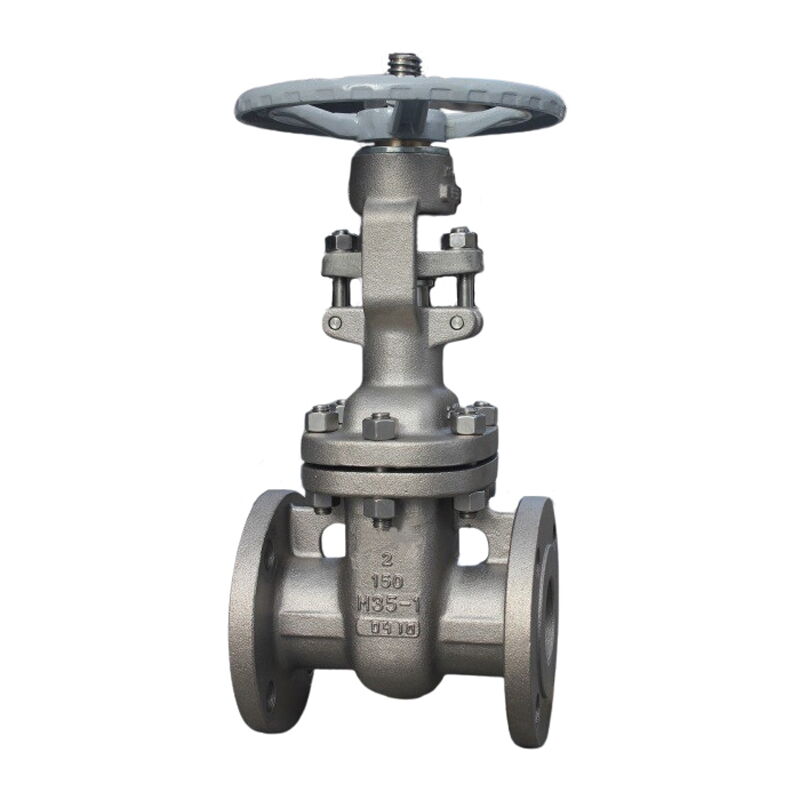
Rising Stem Gate Valves: The stem is fixed to the gate, and the stem nut is rotated to raise or lower the stem. During valve operation, the stem rises and falls with the gate. The advantage of this design is that the opening and closing position of the valve can be visually observed, providing operators with a clear indication. Additionally, with the stem exposed externally, lubrication and maintenance are convenient, extending the stem's service life. Rising stem gate valves are typically suitable for above-ground installations, such as factory workshop pipeline systems, where operators can easily observe and operate the valve.
Non-Rising Stem Gate Valves: The stem is threaded to the gate and rotates while the gate moves up and down inside the valve. Since the stem is hidden inside the valve body, it occupies less vertical space, which is advantageous in space-limited installation environments. For example, in underground pipeline systems, non-rising stem valves save space while the indicator at the top of the stem accurately shows the valve position, facilitating operation.
The main connection methods for gate valves include internal threading, flange, and welding.
Threaded Gate Valves: Generally suitable for small-diameter pipelines. They are convenient and quick to install but have relatively weaker sealing performance. They are common in household water supply systems or small industrial auxiliary pipelines.
Flanged Gate Valves: Widely used in normal-pressure pipeline systems. They feature strong structural stability and are easy to install and disassemble. In industrial production, pipelines require regular inspection and maintenance, and flanged gate valves can be conveniently removed and replaced to ensure normal pipeline operation.
Welded Gate Valves: Mainly used in high-pressure pipeline systems. Welding provides strong joints with low flow resistance, suitable for high-temperature, high-pressure, or continuous-operation pipelines. Once installed, welded gate valves are almost inseparable, but this connection method provides permanent and highly reliable sealing performance under high-pressure conditions.
Gate valves can be electric, pneumatic, or manual (bevel gear or handwheel).
Electric Gate Valves: Operated by electric actuators, they are easy to operate and can achieve remote control and automation. In large industrial automation systems, electric gate valves can work in coordination with other equipment to improve production efficiency.
Pneumatic Gate Valves: Driven by pneumatic actuators, they respond quickly and operate sensitively. In applications requiring fast opening and closing, such as feed lines for chemical reactors, pneumatic gate valves can quickly cut off or allow the flow of the medium.
Manual Gate Valves: The most traditional actuation method, operated via bevel gear or handwheel. Manual gate valves have simple structures, lower costs, and are suitable for situations where frequent operation or automation is not required, such as small civil pipeline systems or as backup valves.
Gate valves are mainly made of cast iron, carbon steel, and stainless steel.
Cast Iron: Lower cost, relatively low strength and poor corrosion resistance, suitable for situations with low strength and corrosion requirements, such as small civil water supply pipelines.
Carbon Steel: Higher strength, capable of withstanding greater pressure, but general corrosion resistance. In ordinary industrial pipeline systems where the medium is not strongly corrosive to carbon steel, carbon steel gate valves are an economical and practical choice.
Stainless Steel: Excellent corrosion resistance, capable of adapting to various complex media environments such as acidic, alkaline, and saline media. In industries like food processing and pharmaceuticals, where hygiene and corrosion resistance are required, stainless steel gate valves are preferred. However, stainless steel gate valves are relatively more expensive.
After understanding the classifications and characteristics of gate valves, we reach the critical stage of selection. Proper selection ensures that the gate valve can perform optimally in actual applications. Only by fully considering various factors can one select the most suitable valve to meet the needs of different pipeline systems. The key points are:
The properties of the medium are the first factor to consider. Gate valves are not suitable for media containing solid particles such as slurry because the sealing surface can be scratched, reducing sealing performance.
For high-temperature media prone to coking, single wedge gate valves are a suitable choice. Their simple structure provides flexible sealing under high-temperature conditions, accommodating coking.
Flexible wedge gate valves are suitable for steam, high-temperature oil, gas, and other media. They do not jam under high temperatures, maintain good sealing performance, and support frequent operation.
Double gate valves offer good sealing performance, and even if the sealing surface is worn, replacing the metal gasket can restore sealing. They are suitable for pipelines carrying steam, high-temperature oil, or gas, and are not affected by coking.
Pressure rating and temperature range are important criteria. Different valve materials and structures can withstand different pressures and temperatures:
Cast iron valves are generally suitable for low-pressure and low-temperature scenarios.
Carbon steel and stainless steel valves can withstand higher pressures and temperatures.
Selection should be based on the actual working pressure and temperature of the pipeline system.
For high-pressure systems, high-pressure gate valves, often welded, are required.
For high-temperature media like steam, materials and structures capable of withstanding high temperatures, such as flexible wedge gate valves, are needed.
The installation space and operation requirements of the pipeline system affect valve selection:
Limited space may require non-rising stem valves due to smaller vertical dimensions. Systems requiring frequent operation may benefit from electric or pneumatic valves for easier and more efficient operation. The pipeline connection type also determines the valve connection: flanged systems need flanged valves, while welded systems require welded valves.
Maintenance and service life are important factors in valve selection: Some valve designs simplify maintenance, such as parallel slide gate valves with easier-to-maintain seats and gate sealing surfaces, reducing maintenance costs. Service life is influenced by the medium's corrosiveness, operation frequency, and sealing performance. Selecting reliable valves with long service life reduces replacement frequency and cost.
With a comprehensive understanding of gate valve classification, selection criteria, installation, and maintenance, we can explore practical applications to better understand their role in various scenarios.
Industrial Applications: Flexible wedge valves in high-temperature oil pipelines ensure reliable sealing and frequent operation capability. High-pressure oxygen pipelines use welded valves to withstand high pressure and ensure stable supply. Stainless steel valves in purified water systems ensure corrosion resistance and hygiene compliance.
Civil Building Applications: Flanged valves in residential water mains enable easy installation and maintenance. Electric valves in high-rise fire-fighting water systems allow remote control for fast response during emergencies, enhancing system reliability.
Municipal Engineering Applications: Large flat gate valves in major water supply pipelines reduce energy loss due to low flow resistance, improving efficiency. In wastewater treatment plant auxiliary pipelines, appropriate gate valves can effectively control flow even if they are unsuitable for transporting sludge.
As an important type of valve, gate valve selection must comprehensively consider factors including medium characteristics, pressure and temperature, pipeline system requirements, and maintenance and service life. By reasonably choosing the type, connection method, actuation, and material, and paying attention to installation and maintenance, gate valves can perform effectively in various pipeline systems, improving safety and reliability. This guide aims to help you better understand the key points of gate valve selection and choose the right valve for practical applications.