What's Triple-Offset Bidirectional Sealing Butterfly Valve?
In industrial piping systems, butterfly valves are essential components for fluid control. Over the years, the evolution of butterfly valves has moved from conventional single-direction sealing designs to today's advanced triple-offset metal bidirectional sealing butterfly valves. This transition reflects continuous technological innovation aimed at improving valve performance to meet increasingly complex operating conditions. The triple-offset metal bidirectional sealing butterfly valve is particularly significant in industries where precision, reliability, and safety are critical. This article provides a comprehensive analysis of its structural features, unique advantages, and practical applications, offering a complete understanding of this sophisticated triple-offset butterfly valve.
Traditional single-direction sealing butterfly valves are typically double- or triple-offset hard-seal designs. The disc sealing surface geometry is generally conical or spherical, relying on radial compression of the disc and forward media thrust to create a wedge effect. This ensures flexible contact between the disc and the seal, allowing unidirectional sealing.
While effective in one direction, this design performs poorly under reverse flow conditions. It is suitable mainly for pipelines in systems where unidirectional sealing is sufficient, such as heating, water supply, oil and gas, metallurgy, and energy systems. Once the fluid reverses, sealing performance is compromised, limiting the valve's application range and making it unsuitable for complex conditions requiring reliable bidirectional sealing. The inability to maintain sealing in reverse flow situations represents a major limitation, especially in industrial processes that involve fluctuating or reversing flows, high pressures, or corrosive media.
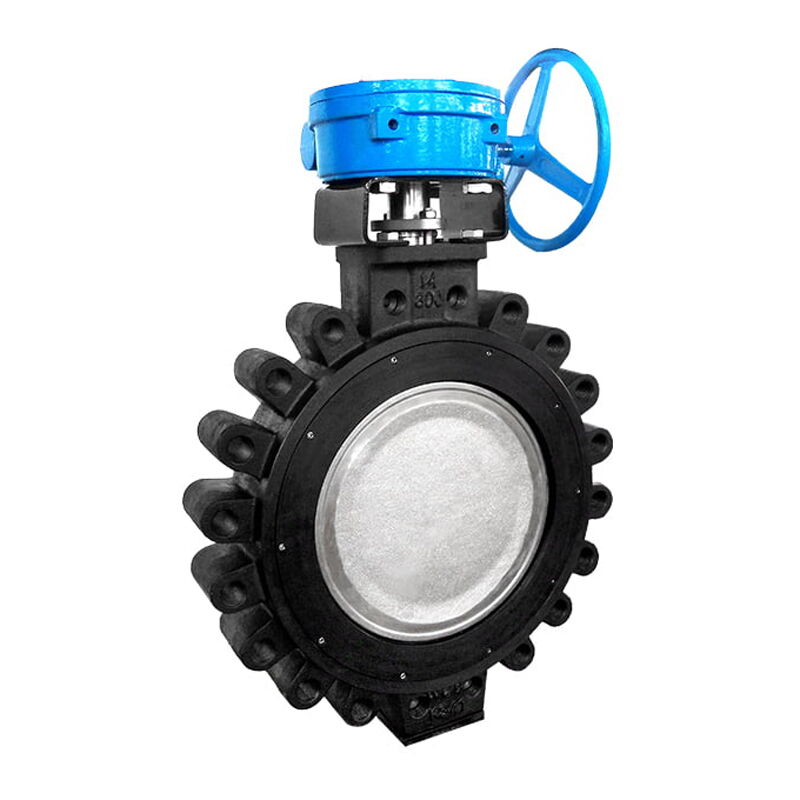
To overcome the structural shortcomings of single-direction sealing valves and expand applicability under more demanding process conditions, the triple-offset metal bidirectional sealing butterfly valve was developed. This valve inherits the strengths of conventional designs while introducing critical innovations that enhance performance and reliability.
One of the most significant innovations of the triple-offset valve is its parabolic sealing surface on the disc. Unlike traditional conical or spherical sealing surfaces, the curvature of the parabolic surface varies in a direction opposite to the disc's movement. This design ensures that, whether the media flows forward or backward, a wedge effect is created during valve operation. This produces consistent, flexible contact between the seal and the disc, achieving reliable bidirectional sealing.
The ability to maintain bidirectional sealing dramatically expands the valve's application scenarios, allowing it to handle complex fluid control requirements that involve changing flow directions, high pressures, and corrosive or abrasive media. In essence, the parabolic sealing geometry addresses a key limitation of conventional butterfly valves by providing dependable sealing under diverse and challenging conditions.
The triple-offset valve employs a floating disc structure combined with an eccentric parabolic seal, which together offer significant operational advantages. During valve opening, the seat remains relaxed and is free to float within the valve body groove. When closing, the seat moves with the disc, wedging into the optimal sealing position. The disc compresses the seat gradually, increasing sealing force until it reaches its maximum.
The valve seat undergoes elliptic deformation, with the long axis denoted as b and the short axis as R. The inner circumference satisfies the relationship π(b + R) > 2πR. Sealing compression is determined by the seal's contact pressure, allowing calculation of the long axis b and the angular offset a. This design produces elastic deformation in two directions: tensile along the long axis and compressive along the short axis. Consequently, whether media flows in the forward or reverse direction, the stress effect ensures reliable sealing, making the valve highly dependable in various operating conditions.
The floating structure, combined with the parabolic seal's curvature, reduces friction torque and radial offset (H₂). Under identical conditions, the H₂ offset of a triple-offset valve is only 40%–60% of that of a conventional single-direction valve, significantly lowering torque on the valve shaft. With the same materials and actuation force, the triple-offset valve meets higher process requirements and demonstrates superior performance in demanding industrial applications. This reduction in operating torque also extends the life of the actuator and reduces maintenance frequency, providing both operational and economic benefits.
Valve seat corrosion and wear are inevitable in industrial use. Conventional valves require complete shutdowns and seat replacement when damage occurs, leading to increased maintenance costs and production downtime. The triple-offset valve offers a distinct advantage: by adjusting the closing angle (a) and the seat compression, minor corrosion or damage can be compensated. The floating seat ensures the disc-seat contact remains optimal, eliminating leakage. This feature greatly enhances valve reliability, reduces maintenance effort, and minimizes the risk of production interruptions caused by maintenance activities.
The structural design of the triple-offset metal bidirectional sealing butterfly valve incorporates numerous advantages, enabling outstanding performance in industrial applications.
The elastic metal sealing ring of the valve seat ensures true zero-leakage performance. This seal maintains tight contact under varying pressures, temperatures, and media types, effectively preventing fluid leakage and ensuring safe pipeline operation. Whether operating under high pressure, high temperature, or corrosive conditions, the valve reliably prevents fluid escape, a critical feature for systems handling hazardous or environmentally sensitive media.
The parabolic sealing structure enables continuous zero-leakage in both forward and reverse directions. Unlike single-direction valves, the triple-offset valve maintains consistent sealing performance regardless of flow direction. This bidirectional capability is essential for pipelines with variable flow patterns, ensuring system stability and operational reliability.
The parabolic disc geometry aligns with the valve's operating trajectory, reducing friction and required actuation force. This makes the valve easier to operate, whether manually or via electric or pneumatic actuators. The design improves operational efficiency, reduces labor intensity, and allows precise control over valve opening and closing speeds, which is particularly valuable in automated industrial systems.
The fully metallic construction combined with zero-leakage design provides intrinsic fire safety. Non-metal components in conventional valves can fail under extreme heat, leading to leakage or loss of sealing. In contrast, the triple-offset valve withstands high temperatures while maintaining sealing integrity, preventing fire propagation and providing essential safety protection for industrial environments.
The sealing surfaces are treated with an ultra-hard coating to improve wear and corrosion resistance. This allows the valve to maintain long-term sealing performance even in harsh chemical or abrasive media, extending its service life. The coating also reduces the risk of leakage due to surface damage, lowers maintenance costs, and enhances the valve's overall reliability and cost-effectiveness.
Oil and Gas Industry: In oil and gas extraction, transportation, and processing, pipelines face high pressures, high temperatures, and corrosive media. The triple-offset valve ensures safe fluid transport, prevents leaks, reduces safety risks, and minimizes environmental impact. It is suitable for field gathering pipelines, refineries, and chemical plant process pipelines, providing reliable sealing performance even under challenging conditions.
Metallurgy: Metallurgical processes involve high-temperature, high-pressure, and corrosive media such as blast furnace gas, oxygen, and cooling water. The triple-offset valve effectively controls these flows, ensuring stable production processes. For example, in blast furnace gas pipelines, the valve withstands extreme temperature and pressure while preventing gas leakage. Its fully metallic structure, ultra-hard coating, and zero-leakage performance ensure long-term reliability and safety.
Energy Sector: In thermal power plants, nuclear power facilities, and other energy applications, triple-offset valves maintain safe and reliable flow of cooling water, steam, and other fluids under high-pressure and high-temperature conditions. The intrinsic fire safety and zero-leakage performance make them ideal for nuclear systems, preventing radioactive material leaks and ensuring secure operation.
Chemical Industry: Chemical production involves a variety of corrosive, toxic, or flammable media. The triple-offset valve prevents leakage, resists corrosion, and maintains operational safety. In pipelines transporting strong acids, such as sulfuric or hydrochloric acid, the fully metallic valve and ultra-hard coated sealing surfaces ensure long-term reliability. In processes involving flammable or explosive chemicals, the valve's zero-leakage performance and fire safety features reduce operational risk, providing critical protection for chemical facilities.
The triple-offset metal bidirectional sealing butterfly valve combines unique structural design, superior bidirectional sealing, low operating torque, intrinsic fire safety, and ultra-hard coated sealing surfaces. It addresses the limitations of conventional single-direction valves, reduces friction and radial offset, and enhances reliability and service life. Widely applied in oil and gas, metallurgy, energy, and chemical industries, this valve plays a critical role in ensuring safe, stable, and efficient industrial operations, offering both operational excellence and long-term economic benefits.