How to Select the Right Strainer for Pipeline Protection
In industrial production, pipeline systems serve as the core infrastructure for transporting various fluids, such as liquids and gases. However, these fluids often contain solid particles and other impurities. If such contaminants are not properly removed, they may cause damage to downstream equipment, reduce production efficiency, and even lead to safety incidents. Therefore, selecting an appropriate strainer to remove these impurities is essential to ensuring the reliable and stable operation of pipeline systems. This article provides a detailed overview of the principles and requirements for strainer selection, helping readers better understand and apply this critical knowledge.
A strainer is a compact device designed primarily to remove small amounts of solid particles from fluids. When fluid passes through a strainer, impurities are trapped by the internal screen or mesh, while clean fluid exits through the outlet. Although the operating principle is simple, it plays a vital role in protecting downstream equipment, such as compressors, pumps, and instruments, allowing them to operate normally and reliably. As a result, strainers help stabilize process operations and ensure safe production.
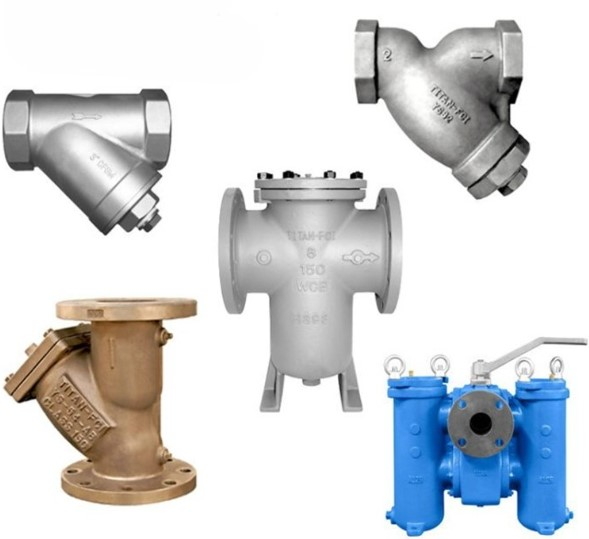
Before selecting a strainer, it is crucial to understand the different types available and their respective features. A wide variety of strainers exist on the market, each designed for specific structures and application scenarios. Based on structure and function, the most common types include Y strainers, basket strainers, and T strainers. The following sections provide a detailed introduction to these common strainer types to assist in proper selection.
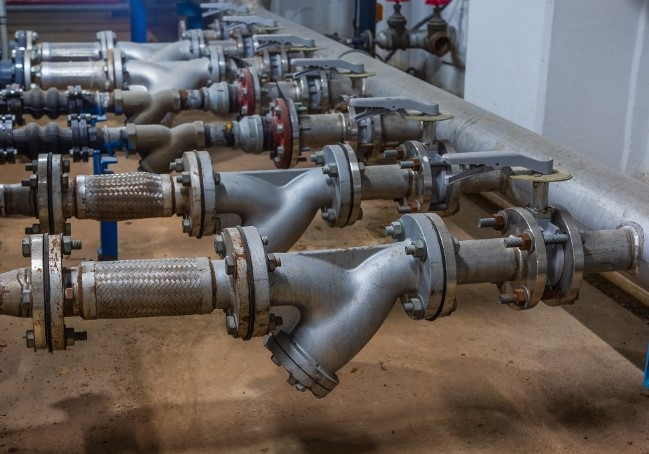
The Y strainer is a commonly used straining device and is classified as a coarse pipeline strainer. It is mainly used to remove relatively large solid particles from liquids, gases, or other media. Installed directly in the pipeline, a Y strainer effectively removes large impurities from the fluid, thereby protecting machinery and instruments from damage.
Its key advantages include a simple structure, low flow resistance, convenient blowdown, and ease of use and maintenance. During cleaning, the removable strainer element can be easily taken out, cleaned, and reinstalled. Y strainers are typically installed at the inlet of pressure-reducing valves, control valves, fixed water level valves, or other equipment to remove impurities from the medium and ensure proper operation of valves and equipment.
A basket strainer is a small device used to remove small amounts of solid particles from liquids and is widely applied in industries such as petroleum, chemical processing, synthetic fibers, pharmaceuticals, and food processing. In addition to protecting compressors, pumps, and other equipment and instruments, basket strainers also help improve product purity and gas cleanliness.
A basket strainer consists of a housing, drain cover, strainer element, strainer screen, bolts, and other components. When liquid flows through the main pipeline into the strainer basket, solid impurity particles are trapped inside the basket, while clean fluid passes through and exits via the outlet. After a period of operation, the top cover can be opened and the basket-shaped strainer element removed, cleaned, and reinstalled, restoring it to like-new condition. Owing to this ease of maintenance and high efficiency, basket strainers are widely used and highly favored across many industries.
A T strainer is a device used to remove solid impurities during liquid pipeline transport and is also suitable for filtering large particles from gases or other media. Installed in the pipeline, it effectively removes large solid contaminants from the fluid, thereby protecting machinery and instruments.
As liquid flows through the T strainer, impurities are filtered out, ensuring the normal operation of pumps, compressors, instruments, and other equipment. T strainers feature strong fouling resistance, convenient wastewater discharge, a large circulation area, low pressure loss, simple structure, and compact size. The straining material is typically stainless steel, offering excellent corrosion resistance and long service life.
T strainers are available in straight-through and baffle types. Screen mesh sizes range from 10 to 120 mesh, and the operating temperature range is 0–450 °C. Selection can be customized according to user requirements.
After gaining a basic understanding of common strainer types and their characteristics, it becomes clear that selecting a strainer is not simply a matter of choosing one at random. Instead, precise matching based on actual operating conditions and process requirements is essential. The following sections detail the key principles and requirements for strainer selection.
In principle, the inlet and outlet diameters of the strainer should not be smaller than the inlet diameter of the matching pump and are typically consistent with the inlet pipeline diameter. This ensures that excessive pressure loss does not occur due to sudden changes in pipe diameter, thereby maintaining stable system operation.
The rated pressure of a strainer is determined by the maximum pressure that may occur in the pipeline. The strainer must be capable of operating safely at the highest working pressure without leakage or structural failure. Therefore, the rated pressure should be selected based on actual system pressure to ensure safety and reliability.
The selection of filtration opening size mainly depends on the particle size of the impurities to be removed, which is determined by process requirements. Different strainers are equipped with screens of varying specifications to capture different particle size ranges. For example, Y strainers typically offer filtration accuracy between 20 and 400 microns, while conical strainers can filter particles as small as 10 microns. Accurately understanding particle size and characteristics is critical for protecting downstream equipment and ensuring final product quality.
Strainer materials are generally selected to match the material of the connected process pipeline. Depending on operating conditions, cast iron, carbon steel, low-alloy steel, or stainless steel strainers may be used.
For steam systems, strainers must have excellent high-temperature resistance; for oil and fuel systems, they must resist corrosion and chemical reactions; and for water systems, various strainer types may be selected based on impurity content and contamination levels. The strainer design must withstand the system's maximum operating pressure and temperature.
Flow rate refers to the volume of fluid passing through the system per unit time. Selecting a strainer that matches system flow requirements is essential to ensure effective filtration and prevent damage to downstream equipment. The strainer should operate at maximum flow without causing excessive pressure drop. If the rated flow is too low, the strainer may clog quickly, requiring frequent cleaning and maintenance. Proper flow matching is key to optimal performance and minimizing costly downtime.
Fluid pressure is another critical factor in strainer selection. The strainer must operate safely at the highest system pressure without leakage or structural failure. In addition, attention should be paid to pressure differential across the strainer. Excessive pressure drop can reduce flow rate and increase energy consumption, thereby raising operating costs.
Fluid temperature is also an important consideration. The strainer must withstand the system's maximum operating temperature to avoid melting, deformation, or performance degradation. Temperature changes can also affect fluid viscosity, which in turn may influence filtration efficiency.
The size and type of particles to be removed are key selection factors. Different strainers use screens with varying mesh sizes to capture specific particle ranges. A precise understanding of particle characteristics helps ensure proper strainer selection, protects downstream equipment, and guarantees product quality.
Maintenance and cleaning requirements must also be considered during selection. Basket strainers and Y strainers generally feature simple structures that are easy to disassemble and clean, while conical strainers may require more time and labor. Cleaning frequency, maintenance difficulty, and associated downtime should all be evaluated.
To better illustrate the practical value of strainers, the following examples demonstrate their application across various industries, including steam systems, cooling water systems, and oil and fuel pipelines.
In boiler steam pipelines, Y-type steam strainers prevent rust particles from entering steam traps and control valves. Because steam systems typically operate at high temperatures and pressures, strainers must offer excellent heat resistance and corrosion resistance. Y strainers are easy to disassemble and clean, effectively protecting downstream equipment and preventing failures caused by clogging.
In cooling water systems, T strainers prevent impurities from clogging water pumps, thereby avoiding unplanned shutdowns in industrial cooling processes. Impurities can reduce pump efficiency or cause damage. T strainers, with their strong fouling resistance, easy drainage, and low pressure loss, effectively remove contaminants and protect pumps and related equipment.
In oil and fuel pipelines, strainers protect burners and engines from contaminants, preventing efficiency loss. Because oils and fuels may be corrosive or chemically reactive, strainers must resist corrosion and chemical attack. Their design must withstand maximum system pressure and temperature to ensure reliable and safe operation under demanding conditions.
Selecting the right strainer is essential to ensuring the reliable operation of pipeline systems. Key factors include inlet and outlet diameter, rated pressure, filtration opening size, strainer material, flow rate, fluid pressure, fluid temperature, particle size and type, and maintenance requirements. Proper strainer selection not only removes impurities effectively and protects downstream equipment but also improves production efficiency, reduces operating costs, and ensures smooth industrial operation. Regular maintenance and inspection are equally critical for long-term, stable performance. It is hoped that this article will help readers better understand and apply strainer selection principles, providing strong support for industrial production systems.