Single Disc Gate Valve vs. Double Disc Gate Valve
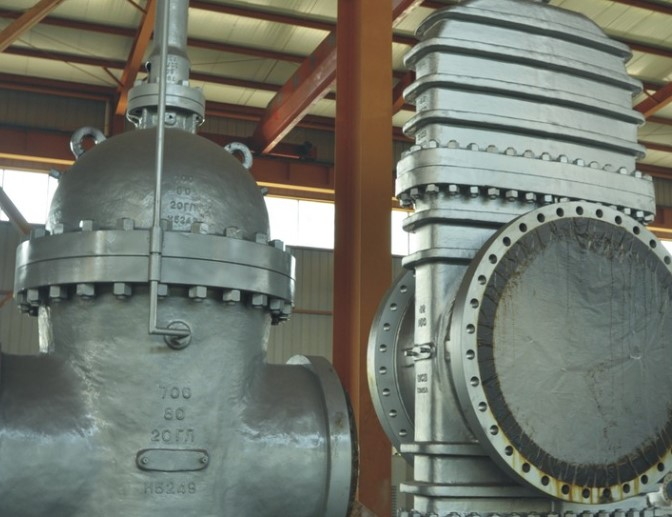
In industrial piping systems, valves play a critical role in controlling, isolating, and regulating the flow of fluids. Among the many types of valves used across industries, gate valves are indispensable due to their simple operation, low flow resistance, and excellent shut-off capability. Gate valves are widely applied in pipelines conveying water, steam, oil, gas, and various chemical media. Within the gate valve family, Single Disc Gate Valves and Double Disc Gate Valves are two of the most representative and commonly used designs. Although these gate valves share the same basic function, fully opening or closing a pipeline, their structural configurations, sealing mechanisms, performance characteristics, and suitable operating conditions differ significantly.
Understanding these differences is essential for engineers, designers, and operators when selecting the most appropriate valve for a given application. An improper choice may lead to leakage, frequent maintenance, reduced service life, or even serious safety risks.
This article provides a comprehensive and in-depth analysis of Single Disc Gate Valves and Double Disc Gate Valves, focusing on their sealing principles, influencing factors, advantages and disadvantages, and practical application scenarios. In addition, elastic wedge gate valves, an optimized form of the single disc design, are discussed as an important alternative. By the end of this article, readers will be better equipped to make informed valve selection decisions based on real operating conditions.
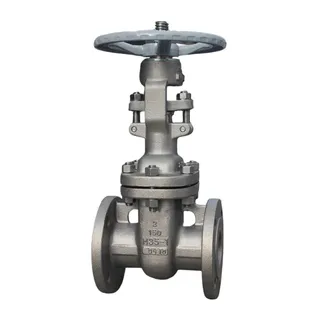
Single Disc Gate Valves stand out in many applications due to their straightforward structure and proven reliability. They are one of the earliest and most widely adopted gate valve designs in industrial piping systems.
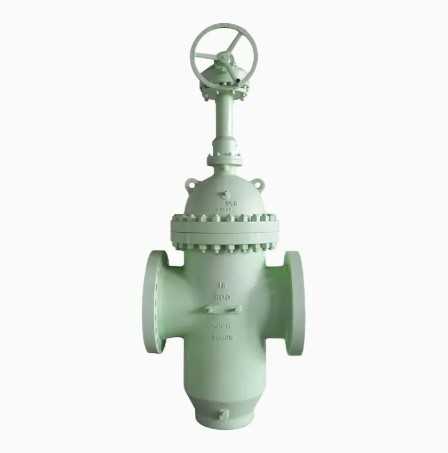
The sealing performance of a Single Disc Gate Valve primarily depends on the tight contact between the gate disc and the valve seat. The valve consists of a single, solid disc that moves vertically along the valve stem.
When the valve is closed, the disc is driven downward by the stem and pressed firmly against the valve seat. The metal-to-metal or metal-to-soft-seat contact forms a sealing pair that blocks the flow of the medium. When the valve is opened, the disc is lifted completely out of the flow path, allowing the medium to pass through with minimal resistance.
This design is mechanically simple and intuitive, making it easy to understand, operate, and maintain.
The sealing effectiveness of a Single Disc Gate Valve is influenced by several critical factors:
- Machining Accuracy: Machining precision of both the gate disc and the valve seat is fundamental. Even minor deviations in flatness, angle, or alignment can prevent full surface contact, resulting in leakage. High-quality machining and strict dimensional control are essential for achieving reliable sealing.
- Surface Flatness: The flatness and smoothness of the sealing surfaces directly affect sealing performance. A flatter and smoother surface enables more uniform contact pressure, improving the valve’s ability to seal effectively under normal operating conditions.
- Sealing Materials: The choice of sealing materials plays a crucial role in valve performance. Common materials include: Metal materials such as stainless steel, bronze, or alloy steel. Non-metal materials such as rubber, PTFE (polytetrafluoroethylene), or elastomers. Each material behaves differently under varying temperatures, pressures, and media: Rubber and PTFE seals offer excellent elasticity and self-adjustment but may degrade or deform at high temperatures. Metal sealing surfaces provide superior strength, wear resistance, and high-temperature capability but demand higher machining accuracy to ensure effective sealing.
- Advantages: Simple structure with fewer components, Easy to manufacture, install, and maintain; Lower production and maintenance costs; Reliable sealing performance under medium- and low-pressure, normal-temperature conditions
- Disadvantages: Susceptible to deformation caused by thermal expansion, pressure fluctuations, or mechanical stress; Sealing performance may degrade in high-temperature or high-pressure environments; Once sealing surfaces are worn or damaged, the entire sealing pair may fail, requiring repair or replacement; Risk of jamming or wedging during temperature changes due to thermal expansion.
Single Disc Gate Valves are well suited for general-purpose applications with moderate sealing requirements. Typical applications include:
- Medium- and low-pressure pipeline systems
- Normal-temperature services
- Industrial water supply and drainage systems
- Small- to medium-diameter pipelines
However, as the valve size increases, maintaining uniform sealing pressure across the entire disc becomes more challenging, which may negatively affect sealing reliability.
Double Disc Gate Valves employ a more sophisticated structural design to achieve superior sealing performance, especially under demanding operating conditions.
A Double Disc Gate Valve features two separate gate discs instead of one. These discs are connected by a spreading mechanism, such as a wedge block or spring assembly.
During the closing process, both discs are pushed toward the valve seats. The internal wedge or spring mechanism forces the discs outward, pressing them tightly against the opposing seat surfaces. Sealing is achieved through:
Contact between each disc and its corresponding valve seat
Mutual interaction between the two discs that ensures balanced contact pressure
Although this design is structurally more complex, it significantly enhances sealing reliability.
The double disc configuration offers several distinct advantages:
- Self-Adjusting Capability: The two discs can compensate for minor deformation, wear, or misalignment. If one disc experiences slight wear, the other can still maintain effective contact with the seat, reducing the risk of leakage.
- High Sealing Reliability: Double Disc Gate Valves perform exceptionally well in high-pressure, high-temperature, and demanding sealing applications. The distributed sealing force ensures consistent performance even under severe operating conditions.
- Wider Operating Range: Thanks to their robust sealing mechanism, these valves are suitable for harsh environments found in industries such as oil and gas, petrochemical processing, and power generation.
- Advantages: Excellent sealing performance under high pressure and high temperature; Longer service life due to wear compensation; High reliability in critical applications; Suitable for harsh and demanding industrial environments
- Disadvantages: More components and complex internal structure; Higher manufacturing and maintenance costs; Increased risk of sticking or bonding when used with viscous or contaminated media; Long-term operation may cause corrosion of internal components, potentially leading to disc detachment if not properly maintained
Double Disc Gate Valves are ideal for applications where sealing reliability is critical, including:
- High-pressure and high-temperature pipeline systems
- Oil, gas, petrochemical, and refining industries
- Power plants and steam systems
- Large-diameter pipelines with strict leakage requirements
Elastic wedge gate valves represent an improved version of the Single Disc Gate Valve, combining simplicity with enhanced sealing adaptability.
The gate disc in an elastic wedge gate valve has a certain degree of elasticity. When the valve is closed, the disc undergoes slight elastic deformation, allowing it to conform more closely to the valve seat.
This design compensates for small machining inaccuracies in the sealing surface angle and improves overall sealing performance without significantly increasing structural complexity.
- Advantages: Retains the simple structure and reliability of single disc valves; Elastic deformation improves sealing performance; Reduced dependence on extremely high machining precision; Lower maintenance costs compared to double disc designs.
- Disadvantages: Sealing reliability still limited under extreme high-temperature or high-pressure conditions; Not as robust as double disc gate valves in severe service.
Elastic wedge gate valves are commonly used in:
- Medium- and low-pressure systems
- Normal-temperature services
- Water, steam, and general industrial fluid control
Applications requiring better sealing than conventional single disc valves but not extreme conditions
When choosing between a Single Disc Gate Valve and a Double Disc Gate Valve, several factors should be carefully evaluated:
- Operating Conditions: Media type, temperature, pressure, and pressure fluctuations must be considered. Double disc designs are better suited for severe conditions, while single disc valves are often sufficient for general service.
- Sealing Requirements: Applications with strict leakage control demands benefit from the superior sealing reliability of double disc gate valves.
- Maintenance and Cost: Single disc valves offer lower initial and maintenance costs, while double disc valves require more investment but provide higher reliability.
- Service Life: Thanks to their self-adjusting capability, double disc gate valves typically achieve a longer operational lifespan.
Single Disc Gate Valves and Double Disc Gate Valves each offer distinct advantages and are suited to different operating conditions. Single Disc Gate Valves are valued for their simple structure, cost-effectiveness, and reliable performance in medium- and low-pressure, normal-temperature applications. Double Disc Gate Valves, on the other hand, excel in high-pressure, high-temperature, and demanding sealing environments due to their superior adaptability and sealing reliability.
Elastic wedge gate valves further expand the range of available options by improving sealing performance while maintaining structural simplicity. Ultimately, selecting the right gate valve requires a comprehensive evaluation of operating conditions, sealing requirements, maintenance considerations, and expected service life. A well-informed valve selection not only ensures optimal performance but also enhances system safety, reliability, and long-term operational stability.