Electric Ball Valves: On–Off vs. Modulating Types
In the field of industrial automation, pipeline system control is one of the key factors ensuring smooth and efficient production processes. As an important component of pipeline pressure systems, electric ball valves are widely used in industries such as petroleum, chemical processing, metallurgy, light industry, papermaking, power generation, and refrigeration, thanks to their high efficiency and convenient operation. This article provides an in-depth analysis of the two main types of electric ball valves, on–off type and modulating type, highlighting their principles, features, advantages, and practical applications.
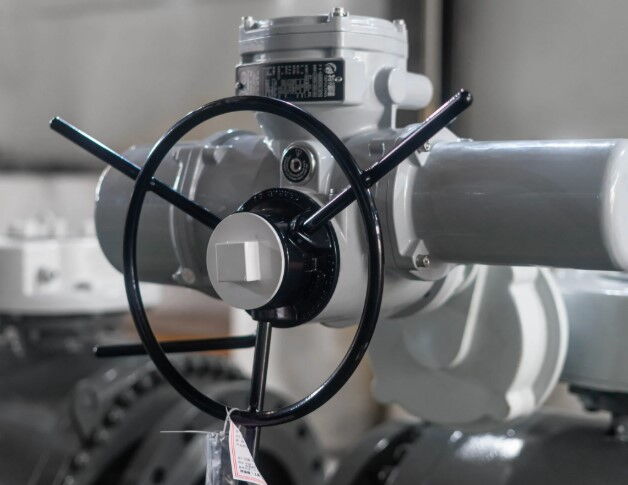
An electric ball valve is a valve that controls the flow of media in a pipeline by rotating a ball driven by an electric actuator. The valve and actuator are connected directly, allowing the actuator to incorporate a built-in servo system without the need for an external servo amplifier. By simply supplying a 4–20 mA control signal and a 220 V AC power source, the valve can be operated smoothly.
This simplified wiring, combined with a compact structure, small size, light weight, low flow resistance, and stable, reliable operation, enables electric ball valves to stand out among various valve types and makes them highly suitable for automated control systems.
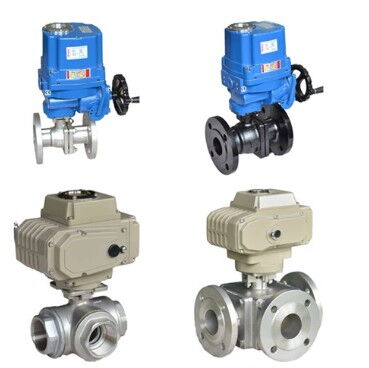
In industrial automation, on–off type electric ball valves are widely regarded as the preferred solution for media isolation in pipeline systems due to their simplicity and efficiency. With a reliable structure, easy operation, and broad applicability, they play an indispensable role in many industrial scenarios.
An on–off type electric ball valve consists of an on–off electric actuator and a ball valve. Its primary function is to remotely open or close the pipeline medium. This type of actuator performs only two actions, open and close, meaning the valve can operate only in fully open or fully closed positions. It cannot regulate the degree of opening and therefore cannot control flow rate.
Structurally, on–off type electric ball valves are available in two configurations: split type and integrated type.
- Split structure: In this design, the control unit is separated from the electric actuator. The actuator alone cannot control the valve and must be used together with an external control unit, typically in the form of a controller or control cabinet. The disadvantages of this structure include inconvenient system installation, increased wiring and installation costs, and greater difficulty in fault diagnosis and maintenance, resulting in a relatively low cost-performance ratio.
- Integrated structure: In this configuration, the control unit and electric actuator are combined into a single assembly. No external control unit is required for local operation, and remote control can be achieved simply by transmitting control signals. This structure offers easy installation, reduced wiring and installation costs, and simpler fault diagnosis and troubleshooting.
On–off type electric ball valves are generally used for two-position shut-off service, with only fully open and fully closed states. Their primary function is to open or close the valve to allow or block the flow of the working medium. While flow characteristics are not a critical requirement, higher standards are typically placed on opening/closing speed and leakage performance compared with regulating valves.
These valves are commonly used in applications where precise flow control is not required, such as simple pipeline systems that only need basic on–off control.
On–off type electric ball valves operate by energizing the actuator to open or close the valve. When powered, the valve opens gradually until fully open and closes gradually until fully closed. If a power failure occurs during opening or closing, the valve remains in its current position. This feature makes on–off type electric ball valves particularly suitable for applications with high safety and reliability requirements.
Unlike on–off type electric ball valves, modulating type electric ball valves not only perform basic opening and closing functions but also enable precise flow regulation between the fully open and fully closed positions. They are designed to meet the stringent control requirements of complex industrial processes involving flow rate, pressure, and temperature, and are widely used in industries such as petroleum, chemical processing, metallurgy, light industry, papermaking, power generation, and refrigeration. As a result, they are essential intelligent control valves in modern industry.
Modulating type electric ball valves are mainly used for controlling pipeline flow, pressure, and temperature in industrial automation systems. In addition to on–off control, they allow precise adjustment of valve opening to regulate media flow. Based on operating characteristics, modulating electric actuators can be classified into electric-open type and electric-close type.
- Electric-open type: A 4 mA signal corresponds to the valve fully closed, while a 20 mA signal corresponds to the valve fully open.
- Electric-close type: A 4 mA signal corresponds to the valve fully open, while a 20 mA signal corresponds to the valve fully closed.
Modulating type electric ball valves are equipped with modulating electric actuators containing built-in control modules. When the module is powered, the valve does not respond until a current signal (typically 4–20 mA, customized at the factory) is applied. In general, 4 mA corresponds to the fully closed position, 20 mA to the fully open position, and intermediate signals (for example, 12 mA) correspond to proportional mid positions.
Common control signals for modulating electric ball valves include current signals (4–20 mA, 0–10 mA) and voltage signals (0–5 V, 1–5 V). During selection, it is essential to clearly specify the signal type and parameters to ensure compatibility with the control system.
In addition, modulating type electric ball valves are equipped with signal-loss protection functions. When the actuator cannot receive a control signal due to wiring faults or other issues, the valve will automatically move to a preset safe position, typically fully open, fully closed, or remain in its last position.
Modulating type electric ball valves are primarily used to regulate parameters such as flow rate, pressure, and liquid level. Compared with on–off valves, they require higher flow characteristic performance throughout the entire opening and closing process, as well as greater stability at intermediate openings.
These valves are widely used in applications requiring precise flow control. For example, in chemical production, accurate control of raw material flow is essential to ensure product quality; in power plants, precise regulation of cooling water flow is critical for safe and stable equipment operation.
Modulating type electric ball valves control the valve opening through analog signals, most commonly 4–20 mA. This precise control capability allows them to play a vital role in complex industrial processes. For instance, in oil extraction, modulating electric ball valves enable accurate control of oil flow, thereby regulating production rates.
- Functional Differences: On–off type electric ball valves are mainly used for simple media isolation, while modulating type electric ball valves are designed for precise control of flow, pressure, and temperature. On–off valves have only open and close actions and cannot regulate opening degree, whereas modulating valves can precisely control valve opening through control signals.
- Structural Differences: On–off type electric ball valves are available in split and integrated structures. Split structures require external control units, while integrated structures combine the control unit and actuator into one assembly. Modulating type electric ball valves typically adopt an integrated structure, which simplifies installation, reduces wiring costs, and facilitates fault diagnosis and maintenance.
- Application Differences: On–off type electric ball valves are suitable for applications where precise flow control is unnecessary, such as simple pipeline systems requiring only media isolation. Modulating type electric ball valves are widely used in industries such as chemical processing, power generation, and refrigeration, where accurate control of flow and operating parameters is essential.
- Define Control Requirements: If only on–off control is required, an on–off type electric ball valve is sufficient. If precise control of flow, pressure, or temperature is needed, a modulating type electric ball valve is the better choice.
- Consider Structural Configuration: On–off type electric ball valves are available in split and integrated designs. Split structures offer flexibility but require external control units and higher installation costs. Integrated structures simplify installation and reduce wiring but require compatibility between the control unit and actuator.
- Determine Control Signal Type: Modulating type electric ball valves typically use current signals (4–20 mA, 0–10 mA) or voltage signals (0–5 V, 1–5 V). Signal type and parameters must be clearly defined during selection to ensure system compatibility.
- Evaluate Signal-Loss Protection: Modulating electric ball valves feature signal-loss protection, enabling them to move to a predefined safe position in case of signal failure. The appropriate fail-safe function should be selected based on application-specific safety requirements.
- Chemical Industry: In chemical production, modulating type electric ball valves are widely used for controlling raw material flow. Precise flow regulation ensures stable production processes and product quality. For example, in a chemical plant, modulating electric ball valves are used to control sulfuric acid flow, maintaining operational stability and safety.
- Power Generation Industry: In power plants, modulating type electric ball valves are used to regulate cooling water flow. Accurate flow control ensures reliable equipment operation. In a power plant cooling system, these valves precisely adjust cooling water flow to maintain normal operation.
- Papermaking Industry: In papermaking processes, on–off type electric ball valves are commonly used for media isolation. For instance, in a papermill production line, on–off electric ball valves control pulp flow, ensuring smooth and efficient production.
As essential components of pipeline pressure systems, electric ball valves play a vital role in industrial automation. On–off type and modulating type electric ball valves each have distinct features and application areas. On–off type valves are primarily used for simple media isolation, while modulating type valves enable precise control of flow, pressure, and temperature. When selecting an electric ball valve, it is important to consider control requirements, installation conditions, and safety needs to determine the most suitable type and structure. Regular maintenance and proper operation are also critical to ensuring long-term reliability. With continuous technological advancement, electric ball valves will play an increasingly important role in future industrial production.