Guide to Ball Valve Design: One-Piece, Two-Piece & Three-Piece
In the industrial field, ball valves are an extremely common type of valve, widely used in various fluid control scenarios. However, when faced with the vast number of ball valve products on the market, selecting the right type of ball valve is a challenge for many engineers and procurement personnel. This article will provide an in-depth exploration of one-piece ball valves, two-piece ball valves, and three-piece ball valves, covering their characteristics, application scenarios, and differences, helping you better understand the classification and applications of ball valves.
A ball valve is a valve that uses a spherical ball with a circular passage as the closing element. The ball rotates with the valve stem to achieve the opening and closing action. Its closing element is a perforated ball that rotates around an axis perpendicular to the passage, thereby opening or closing the passage. Ball valves have the following significant advantages.
Low Fluid Resistance: The internal passage design of ball valves ensures minimal resistance to fluid flow. This makes ball valves perform excellently in scenarios requiring efficient fluid transportation, effectively reducing energy consumption and improving overall system efficiency.
Simple Structure: Ball valves have a relatively simple structure, mainly composed of the valve body, ball, seal rings, valve stem, and actuator. This simple structure not only makes the manufacturing cost of ball valves relatively low, but also makes maintenance and repair more convenient and quick, greatly reducing maintenance cost and time.
Compact Size and Light Weight: Due to the compact structure of ball valves, their volume and weight are relatively light. This makes ball valves more convenient to install and transport, especially suitable for space-limited scenarios such as ships and aerospace applications.
Reliable Sealing Performance: Ball valves have excellent sealing performance and can effectively prevent fluid leakage. This is due to their unique sealing structure, which can maintain good sealing even under high-pressure and high-temperature harsh conditions, ensuring the safe operation of the system.
Convenient Operation and Maintenance: Ball valves have multiple operating methods: manual, electric, or pneumatic, and can be equipped with a 90° open-close positioning mechanism. They can also be locked to prevent misuse. Additionally, the maintenance process is relatively simple, requiring no complex tools or equipment, significantly improving maintenance efficiency.
One-piece ball valves are a type of valve with a relatively simple structure. Their valve body is integrated, and the ball is secured with a single end cap. This design makes one-piece ball valves very convenient to maintain because of their compact structure and fewer components, allowing maintenance personnel to quickly locate and solve issues.
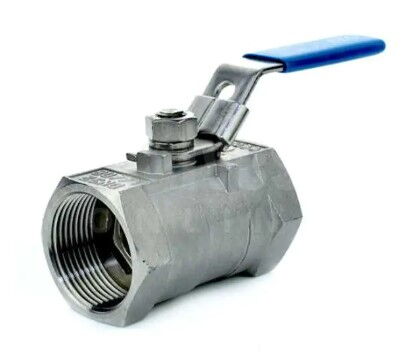
In a one-piece ball valve, the ball, valve seat, and valve stem are inserted from one side of the valve body passage. Due to the size limitation of the valve body passage, a full-bore ball cannot be installed inside, so the passage of the ball is reduced in diameter. This limits the flow capacity of one-piece ball valves but brings cost advantages, making them an economical and practical valve choice.
One-piece ball valves are usually used in applications requiring strict sealing. In addition to controlling common media such as gas, liquid, and steam, they are particularly suitable for controlling sewage and media containing fibrous impurities. Due to their small size and light weight, one-piece ball valves are widely used in low-pressure piping systems, such as small chemical equipment and food processing equipment.
Advantages: Simple structure, easy maintenance, low cost; suitable for small valves and low-pressure piping systems.
Disadvantages: Flow capacity is relatively limited and not suitable for high-flow scenarios. Although sealing is reliable, it may face challenges in high-pressure environments.
Two-piece ball valves consist of a main body and a secondary body. After inserting the ball, valve seat, and valve stem into the main body, the secondary body is connected via threads or bolts. This design allows the ball passage to be full bore, with low flow resistance and high flow capacity.
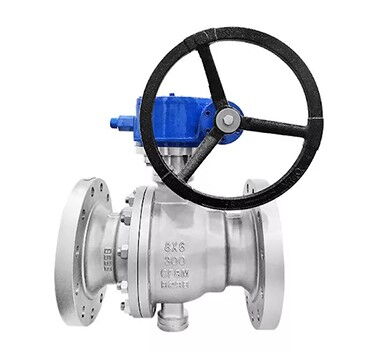
Two-piece ball valves provide relatively good sealing but have more complex maintenance. The tightness of the middle bolts is critical, directly affecting the valve's sealing performance. Loose bolts may cause leakage, while over-tightening may damage the valve body or seals. Therefore, special attention is required to bolt tightness during installation and maintenance.
Two-piece ball valves are widely used in normal and high-pressure environments, suitable for non-standard nominal diameters below DN50. Due to their structural characteristics, two-piece ball valves perform well in applications requiring high flow capacity and good sealing performance, such as in petroleum, chemical, and urban water supply industries.
Advantages: Full-bore passage design ensures low flow resistance and high flow capacity; good sealing performance suitable for multiple media and conditions.
Disadvantages: Maintenance is relatively complex, requiring skilled personnel. Tightness of bolts is crucial, as improper tightness may affect sealing performance.
Three-piece ball valves consist of a main body and two secondary bodies. After assembling the ball and stem into the main body, the secondary bodies are installed with valve seats, and bolts connect the main and secondary bodies. This design provides many unique advantages, making three-piece ball valves the preferred choice for high-end applications.
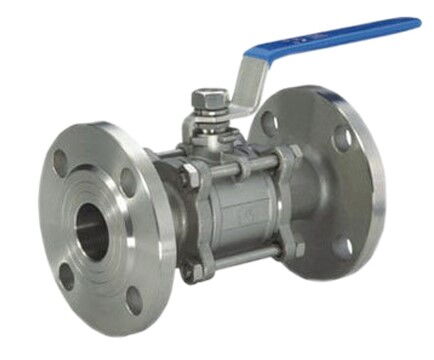
The most notable feature of three-piece ball valves is their online maintenance capability. By loosening the bolts on the valve body and removing a bolt passing through the main body, the main body can be rotated to replace the valve seat seal. Even the main body can be fully removed for maintenance while leaving the secondary bodies in the pipeline. This design greatly reduces maintenance workload and improves efficiency.
Three-piece ball valves are suitable for ultra-high-pressure environments, with nominal diameters generally above DN50. Due to excellent sealing and strong pressure resistance, three-piece ball valves are widely used in petroleum, chemical, metallurgy, light industry, paper, power, refrigeration, and other applications requiring strict shut-off. They can handle air, steam, water, gas, petroleum, petrochemical products, and corrosive media.
Advantages: Full-bore passage, strong pressure resistance, and excellent online maintenance capability; ideal for high-end applications.
Disadvantages: Higher cost compared to one-piece and two-piece valves; complex structure requires professional installation and maintenance.
Selecting the right ball valve requires consideration of multiple factors, including operating conditions, media characteristics, flow requirements, pressure rating, temperature range, installation space, and budget. Suggestions include:
Based on Operating Conditions: Different conditions require different valve types. For high-pressure environments, three-piece valves should be prioritized; for low-pressure environments, one-piece or two-piece valves may be more economical.
Based on Media Characteristics: Sealing and corrosion resistance must match the media. For corrosive media, choose corrosion-resistant materials; for media containing solid particles, select wear-resistant valves.
Based on Flow Requirements: For applications with high flow requirements, select full-bore two-piece or three-piece valves due to their low flow resistance and high capacity. One-piece valves, with reduced flow passage, are suitable for low-flow scenarios.
Based on Pressure Rating: Pressure rating must meet operational requirements. Three-piece valves are suitable for ultra-high-pressure environments, two-piece valves for medium-high pressure, and one-piece valves for low pressure. Choosing the correct pressure rating ensures safe operation and avoids unnecessary costs.
Based on Temperature Range: Valve seal material determines the applicable temperature range. Reinforced PTFE seals work from -29°C to 180°C, while PEEK seals work from -29°C to 300°C. Selecting the proper seal material ensures sealing performance.
Based on Installation Space: If space is limited, select compact, lightweight valves. One-piece valves are usually a good choice. If space allows, three-piece valves offer convenient online maintenance.
Based on Budget: Valve cost relates to structure, material, and performance. One-piece valves are cheapest; two-piece valves offer balanced cost and performance; three-piece valves are premium with superior performance and maintenance convenience. Choose a valve type that meets operational requirements while controlling costs.
Ball valves, as efficient and reliable fluid control devices, are widely used in industrial applications. One-piece, two-piece, and three-piece valves each have distinct characteristics and advantages, suitable for different applications.
One-piece valves: Economical, easy to maintain, suitable for small valves and low-pressure systems.
Two-piece valves: Full-bore design with good sealing, ideal for medium-high pressure applications.
Three-piece valves: High-pressure capacity, excellent sealing, online maintenance capability, suitable for high-end applications.
When selecting a ball valve, consider operating conditions, media characteristics, flow requirements, pressure rating, temperature range, installation space, and budget. Choosing the proper valve type and specifications ensures safe, efficient system operation while reducing maintenance cost and time. This guide aims to help you understand ball valve classification and applications, providing a reference for engineering design and procurement decisions.
Whether you are an engineer, procurement specialist, or general user, understanding the classification and applications of ball valves is essential. By learning about the features and advantages of ball valves, you can choose the most suitable product for your needs, enhancing system reliability and efficiency. For any further questions or advice, please feel free to contact us; we are committed to providing professional support.